Clearance CLR-8570 · AIR725
AIRCMA
Air CargoClearance sheet
CMA CGM shipping surge exposes Ceva logistics margin gap against Maersk
CMA CGM's net profit more than tripled to $2.32bn, but logistics EBITDA fell 14.4% to $366m, widening the margin gap with Maersk ahead of Ceva's restructuring.
Read-back
- Group net profit more than tripled to $2.32bn in Q3; EBITDA rose 61.6% to $4.78bn.
- Logistics EBITDA fell 14.4% to $366m on $5.46bn revenue, versus Maersk's $519m on $4.49bn.
- Shipping EBITDA reached $4bn at a 32.4% margin; volumes rose 5.5% to 6.51m teu.
- Ceva CEO Patrick Moebel targets over $1bn of additional value over three years, with new structures due by 1 January 2027.
- CMA CGM completed its $1.4bn FedEx Supply Chain acquisition on 1 October; FedEx bought two CMA CGM 777 freighters.
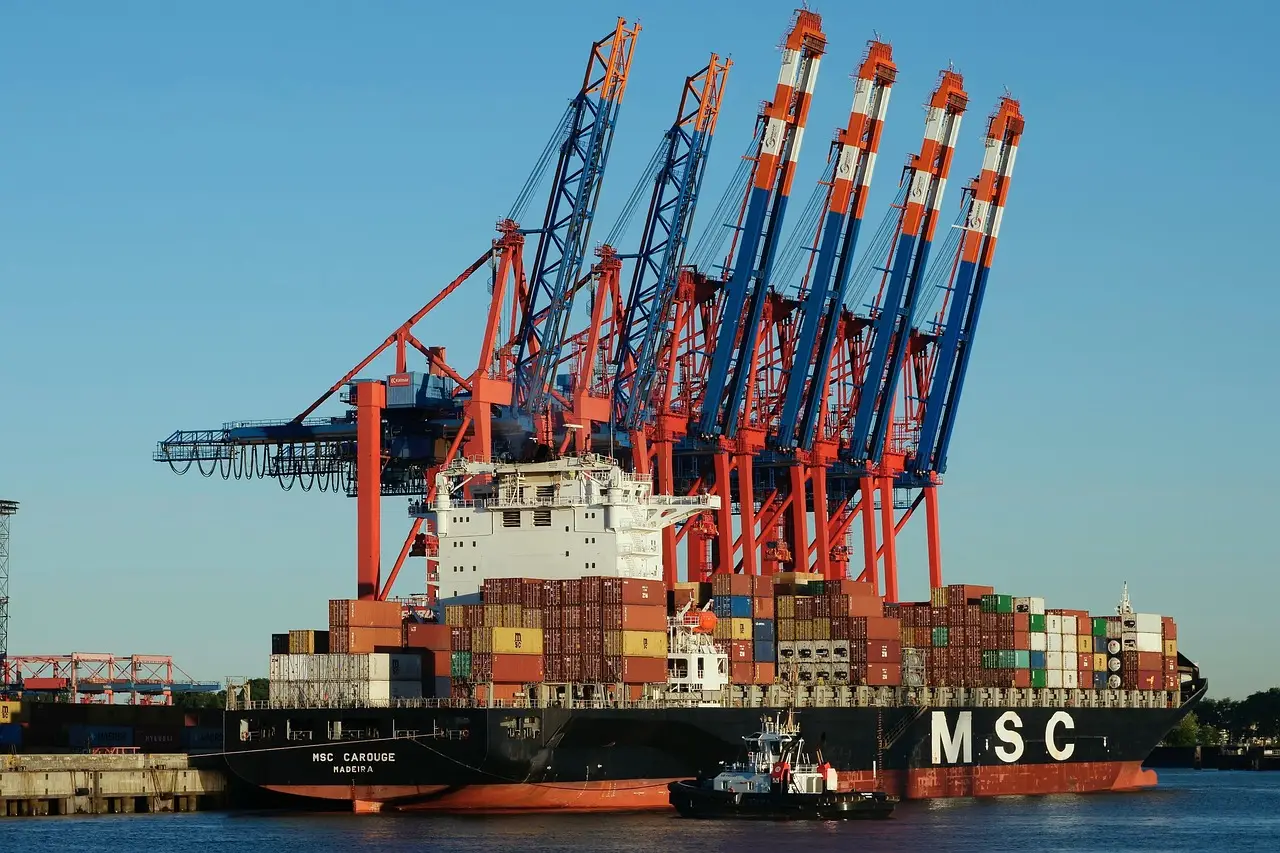
CMA CGM's net profit more than tripled to $2.32bn in the third quarter, yet its logistics division earned less on more revenue — an EBITDA decline of 14.4% that widens the profitability gap with Maersk and frames the overhaul now under way at subsidiary Ceva Logistics.
The numbers expose the divergence starkly. CMA CGM's logistics arm posted EBITDA of $366m on $5.46bn of revenue in the quarter. Maersk generated $519m of logistics EBITDA on $4.49bn — higher earnings on roughly 18% less revenue. The two carriers have different business mixes and acquisition histories, but Ceva enters its latest restructuring growing faster and earning less than its Danish rival.
Across the group, revenue rose 31.1% to $18.4bn and EBITDA increased 61.6% to $4.78bn. Shipping carried the improvement. Volumes increased 5.5% to 6.51m teu (twenty-foot equivalent units), revenue per teu rose 30% to $1,891, and shipping EBITDA reached $4bn at a 32.4% margin.
What drove the shipping boom?
Chairman and chief executive Rodolphe Saadé said: "We are determined to pursue our investments to strengthen our market positions and keep providing innovative solutions to our customers."
CMA CGM identified restocking, AI infrastructure, and Chinese clean-technology and electric vehicle exports as demand drivers. It expects strong volumes and freight rates to persist, while warning of geopolitical and trade policy uncertainty.
A source close to the group told AFP that companies, particularly in the United States, had been rebuilding inventories since the second quarter as a precaution against conflict, oil-price and tariff uncertainty. The source also cited industrial components for data centre construction as a source of container demand.
Why did logistics margins fall?
Logistics revenue increased 19.2%, but EBITDA fell 14.4%, compressing the margin from 9.3% to 6.7%. CMA CGM attributed the pressure to "difficult forwarding conditions and automotive sector weakness."
Acquisitions supported the top line. AFP identified contributions from Borusan, Fagioli, and Fattal's distribution businesses, now branded Tamina, though individual contributions were not disclosed.
Maersk's Logistics & Services division offers a counterpoint. It increased revenue 12.7% and EBITDA 10.9%, holding its margin broadly stable at 11.6% against 11.7% a year earlier. Its forwarding improved the EBIT margin from 3.5% to 4.3%, supported by strong air and project logistics volumes — a contrast to CMA CGM's description of forwarding market difficulties, though exposures differ between the two groups.
What changes for Ceva?
The quarter is the starting point for chief executive Patrick Moebel's restructuring. As The Loadstar Premium previously reported, Moebel told senior leaders that "clear pain points" were slowing the business and contributing to performance below industry standards and internal expectations.
The changes consolidate activities around freight management and contract logistics, strengthen regional accountability, and move decisions closer to customers. New organisation and reporting lines are to be implemented no later than 1 January 2027, subject to consultation processes. Moebel targets more than $1bn of "additional value" over three years, though the financial measure behind that target remains unclear.
Integration work continues. CMA CGM completed its $1.4bn acquisition of FedEx Supply Chain on 1 October, adding a business that did not contribute to the latest results and will begin appearing in fourth-quarter figures.
The deal also moved aircraft. Cargo Facts reported on 11 November that FedEx acquired two CMA CGM 777 freighters as part of the transaction. A FedEx spokesperson linked the purchase to its MD-11F replacement strategy.
Air cargo within the wider picture
CMA CGM's quarterly update describes eight aircraft operating under its Air Cargo and Air Belgium brands, supported by hubs in France, Belgium and the US. Standalone air cargo financial results were not disclosed.
The Air Cargo and Terminals division contributed to growth in "other activities," where revenue increased 27.1% to $1.51bn and EBITDA rose 41.9% to $413m. CMA CGM cited the solid momentum of both businesses.
With FedEx Supply Chain's contribution beginning in Q4 and the operating overhaul due by January, subsequent results will show whether Ceva can pair its next increase in scale with a recovery in profitability.
via boursorama.com (Original)
More from Priya Raman
Show full bio
Market editor covering money, funding and market shifts around Commercial aviation industry coverage at Flightdeck Report.
653 articles
Same bay
- FDR847Airbus Q3 profit falls 9% as deliveries slow, 870 target stands · October 29, 2026
- FDR795Cargojet posts record Q3 revenue of $201.4m on fleet integration · November 17, 2026
- FDR278CMA CGM closes $1.4bn FedEx Supply Chain deal, gains air cargo partner · October 10, 2026
- FDR133Lufthansa Lifts Q3 Operating Profit 6% as Cost Discipline Offsets €500m Fuel Hit · November 3, 2026
- FDR196K+N airfreight ebit up 84% as share gains outrun a 3-4% market · October 30, 2026