Clearance CLR-6276 · AIR175
AIRAIR
AirportsClearance sheet
Air Greenland Splits Ground Handling Into New Subsidiary
Air Greenland has carved out ground handling into Greenland Handling A/S, live since Oct. 15 with 140+ staff, as new international airports reshape the country's aviation map.
Read-back
- Greenland Handling A/S began operations Oct. 15 with more than 140 employees.
- The subsidiary handles aircraft, passengers and cargo in Nuuk and Ilulissat, plus passenger services in Qaqortoq, Sisimiut and Upernavik.
- Existing handling agreements remain unchanged through the end of 2026.
- Kunuunnguaq H. Overgaard, a 16-year Air Greenland veteran, leads the new company.
- CEO Jacob Nitter Sørensen called it the biggest change to Greenland's aviation infrastructure in decades.
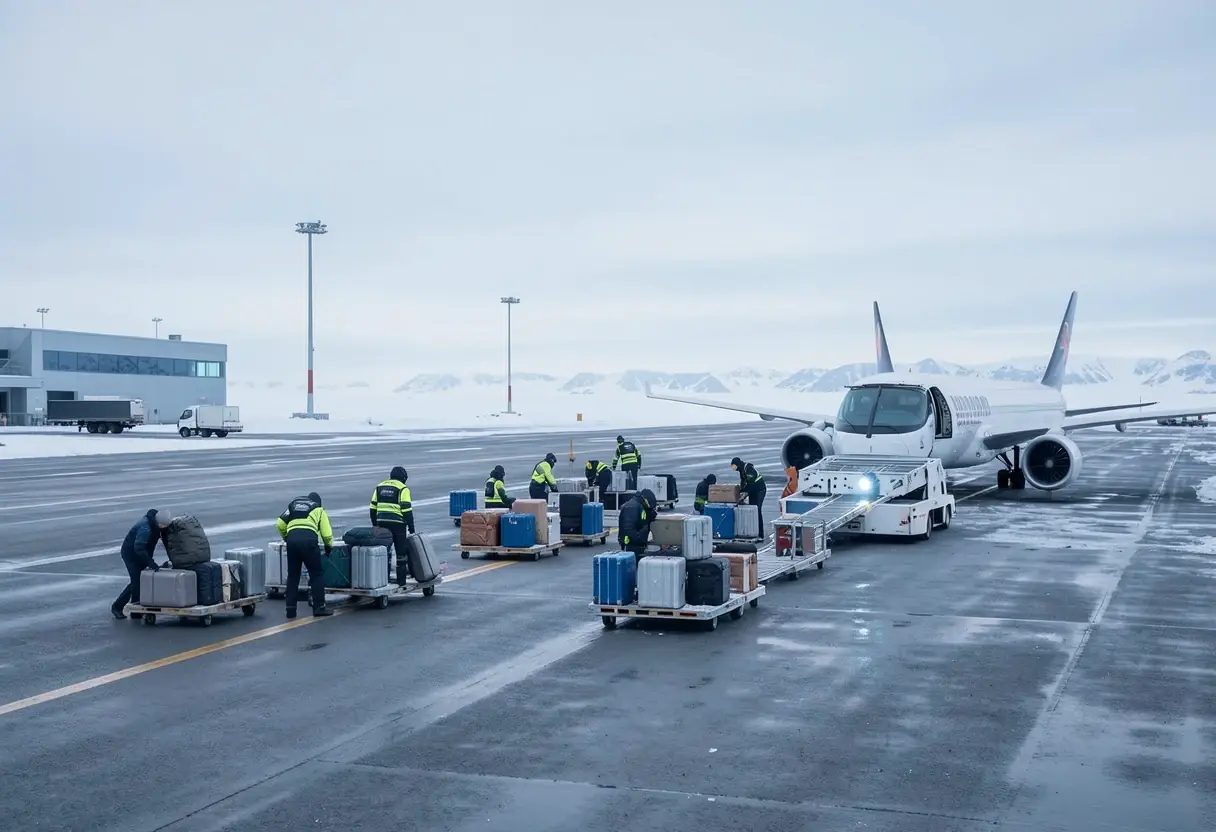
Air Greenland has moved its ground handling operations into a standalone subsidiary, Greenland Handling A/S, which began work on Oct. 15 with more than 140 employees across Nuuk, Ilulissat and Qaqortoq.
The new company handles aircraft, passenger and cargo services at the airports in Nuuk and Ilulissat, Greenland's two busiest gateways. It also provides passenger services in Qaqortoq, Sisimiut and Upernavik.
Air Greenland framed the restructuring as a way to separate airline operations from ground services. The carrier says the clearer division will strengthen handling capability and add capacity for growing traffic volumes.
The timing is not incidental. Greenland is building new international airports to improve connectivity and absorb future demand, and the existing ground handling organization was built for a smaller system.
What does this change for airline customers?
In the short term, nothing. Existing ground handling agreements stay in place through the end of 2026. After that date, Greenland Handling will negotiate individual contracts with each airline customer, replacing the arrangements currently administered through Air Greenland.
That transition matters for foreign carriers. New airports in Nuuk and Ilulissat are expected to draw transatlantic traffic that historically bypassed Greenland, and those airlines will deal with a dedicated handler rather than the flag carrier itself.
For Air Greenland, the separation reduces a structural conflict: the airline competes with the very customers its handling business serves. A neutral subsidiary can pursue third-party contracts without that tension.
Leadership and rationale
Kunuunnguaq H. Overgaard will lead the subsidiary. He has spent 16 years in commercial and operational roles at Air Greenland, giving the new company leadership familiar with both the carrier and the airports it will serve.
Group CEO Jacob Nitter Sørensen tied the restructuring directly to infrastructure investment. "We are in the midst of the biggest change to Greenland's aviation infrastructure in several decades," he said, adding that rising traffic demands greater specialization and capacity in ground handling.
Specialization is the operative argument. Handling widebody international traffic requires staffing, equipment and procedures at a different scale from domestic turboprop operations. A dedicated unit can recruit and invest against that benchmark.
Why the structure matters commercially
A handling subsidiary with its own profit-and-loss accountability also gives Air Greenland Group a cleaner view of where money is made. Ground handling at small remote airports is often a marginal business; international traffic growth is what could turn it into a sustainable one.
The 140-plus employees now sit inside an organization whose sole task is turning aircraft around, moving cargo and processing passengers. Under the old structure, those functions competed for attention with flight operations, maintenance and network planning inside a single airline.
The end-2026 deadline for new customer agreements gives airlines currently served roughly two years of certainty. It also gives Greenland Handling a fixed window to prove it can hold service levels before customers must decide whether to re-sign or look elsewhere.
Whether the subsidiary can convert Greenland's airport build-out into a durable handling business will become clear as the new international airports open and the 2026 contracting round approaches.
via Aviation Pros (Source)
More from Sophie Lindqvist
Show full bio
Senior reporter covering people, launches and day-to-day practice in Commercial aviation industry coverage at Flightdeck Report.
599 articles
Same bay
- FDR223Greenland Dispute Traced Back to Airport Construction Concerns · September 30, 2026
- FDR779SAHCO Calls for Industry Collaboration to Strengthen Air Cargo · October 17, 2026
- FDR374Norse Atlantic capacity falls a third as carrier exits US transatlantic routes · October 9, 2026
- FDR310Cargo Handler Consolidation Could Squeeze Airlines' Ground Costs · September 30, 2026
- FDR846Airlines warned of cargo handling squeeze as networks consolidate · October 10, 2026