Clearance CLR-5648 · AIR477
AIRSAN
AirportsClearance sheet
Santiago’s FBOs plan fuel and ramp capacity before landing
Aerocardal’s 31,701-gallon private fuel farm shows why Santiago operators must reserve fuel, ramp and hangar capacity before aircraft land or depart for remote legs.
Read-back
- Aerocardal’s private fuel farm at Santiago holds 31,701 US gallons (120,000 liters).
- Aerocardal says it is the only fuel farm inside Santiago airport’s security zone.
- The farm replenishes Aerocardal’s three refueling trucks significantly faster.
- Chile’s AIP says non-scheduled international operations should coordinate with a handling company before arrival.
- Some non-scheduled passenger aircraft should coordinate parking before commencing flight.
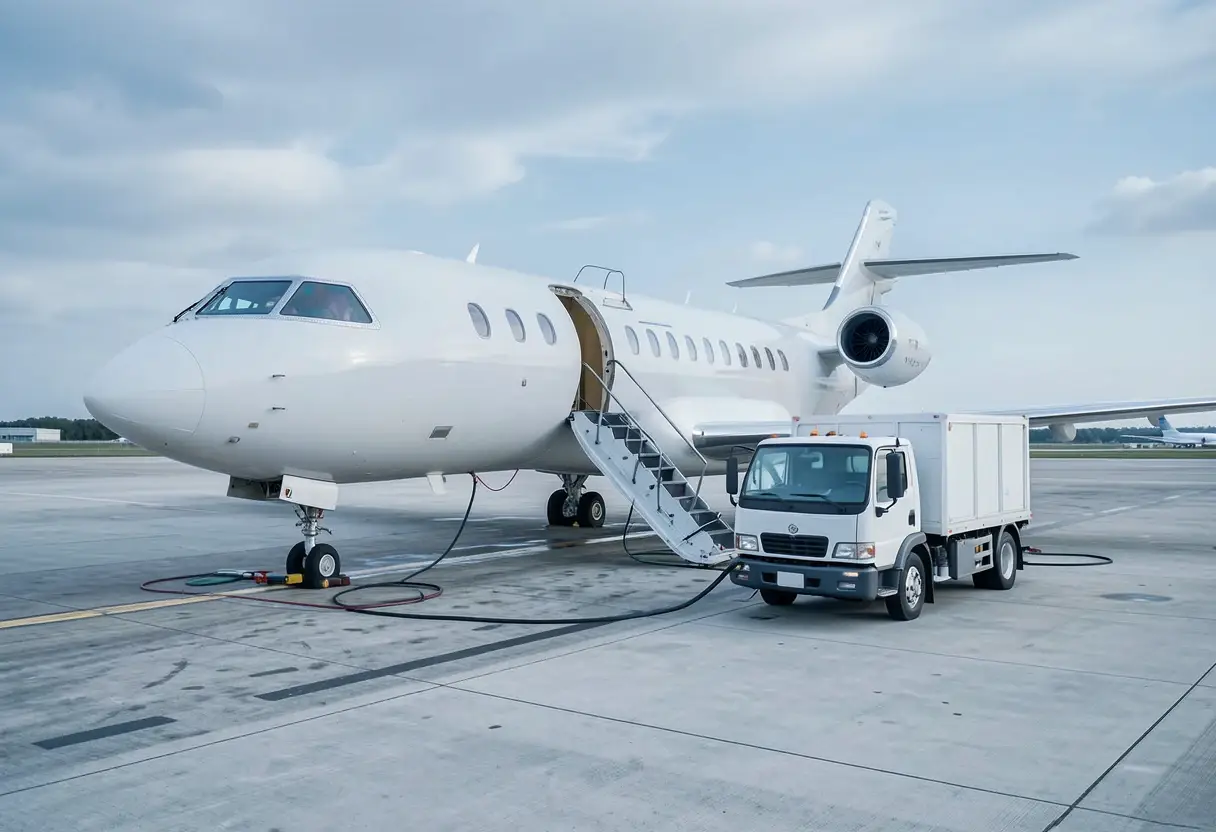
By Sophie Lindqvist
Aerocardal’s private fuel farm at Santiago International Airport holds 31,701 US gallons (120,000 liters), according to the company. The fixed-base operator (FBO), which handles aircraft on the ground, says it is the airport’s only private-jet handler with such infrastructure and the only fuel farm inside the airport’s security zone.
The 31,701-gallon capacity allows Aerocardal to replenish its three refueling trucks significantly faster. The company says this supports fuel availability and efficient aircraft turnarounds, both of which matter when an aircraft will continue beyond Santiago.
What does early planning change for operators using Santiago?
Santiago as a staging point. South America combines vast distances with major international airports, smaller regional fields and remote destinations that offer fewer support services. Santiago often prepares flights for Patagonia, southern Chile and Rapa Nui, while specialized ambulance flights can continue to the Falkland Islands.
Before moving onward, operators arrange several services at the aviation center:
- Catering
- Drinking water
- Oxygen
- Ground power
- Aircraft cleaning
A weather delay or other disruption can turn a quick refueling into an overnight stay. That requires a different set of resources:
- Extra hangar parking
- Passenger ground transportation
- Crew accommodation
These changes extend ground time and add service costs. FBO managers must therefore plan beyond touchdown, including the possibility that the onward departure will move.
Fuel for the second leg. Operators need to know whether an airport can provide the required fuel quantity and deliver it on schedule. At Santiago, the private farm gives Aerocardal a stated means of replenishing three trucks faster and maintaining fuel availability.
That matters when Santiago is not the final destination. Aircraft arriving from North America, Europe or elsewhere in South America often prepare immediately for another leg within Chile or onward to Rapa Nui or Robinson Crusoe Island. The onward flight can offer fewer airport choices and less infrastructure, so fuel planning must cover the complete mission.
Parking and ramp coordination. Landing permission does not guarantee parking availability. An aircraft may stay for several hours, overnight or several days, and its size determines the space required.
During peak travel seasons, several arrivals over a short period can alter conditions on the ground. Operators should coordinate three details before arrival:
- Arrival time
- Expected duration of stay
- Possibility of schedule changes
Chile’s official Aerodrome Information Publication (AIP) sets out related guidance for non-scheduled activity. Operators should coordinate with a handling company before arrival, and some non-scheduled passenger aircraft should coordinate parking before commencing the flight.
Advance coordination connects the flight schedule with available ramp and parking capacity. It also gives the FBO time to arrange ground resources before the aircraft arrives.
Hangar space as operational capacity. A quick technical stop may not require much hangar space, but maintenance, weather or schedule delays can extend the stay. Under those conditions, hangar parking becomes an operational requirement rather than a convenience.
Aerocardal FBO manager Marco Núñez puts it plainly: “Fuel, parking, hangar space, ground handling and maintenance are all interconnected.” The more an FBO can coordinate those services in one place, the more easily it can absorb a schedule change.
For smaller regional airports, that coordination matters because remote destinations can have limited fuel, parking and overnight support. Early planning determines whether an itinerary retains its original schedule or needs a revised ground plan.
For operators using Santiago as a gateway, the practical change is to reserve fuel and handling capacity around the full itinerary, including possible delays and overnight requirements, before the aircraft arrives. The next operational test is whether those resources keep pace with changing schedules as aircraft move toward remote onward sectors.
via aerocardal.com (Original)
More from Sophie Lindqvist
Show full bio
Senior reporter covering people, launches and day-to-day practice in Commercial aviation industry coverage at Flightdeck Report.
599 articles
Same bay
- FDR199Exolum to bring sustainable aviation fuel to Madeira · October 14, 2026
- FDR288ASUR lines up $1.3 billion loan to fund airport expansion · October 10, 2026
- FDR915Petrobras Delays Start-Up of Three Sustainable Aviation Fuel Plants · September 27, 2026
- FDR225Minnesota SAF plant to supply 30 million gallons yearly to MSP · September 30, 2026
- FDR614$1.4B Sustainable Aviation Fuel Plant Planned for Louisiana · September 28, 2026