Clearance CLR-2126 · AIR865
AIRTWE
AirportsClearance sheet
Tweed New Haven Enplanements Near 800,000 as Avports Bets Small
Avports' Tweed New Haven operation drew nearly 800,000 enplaned passengers last year across 34 destinations, proof, the company says, that low-cost secondary airports expand travel markets.
Read-back
- Tweed New Haven grew from near-zero to nearly 800,000 enplaned passengers last year, serving 34 destinations.
- Avports plans scheduled commercial service at Washington Manassas and early-stage work at Long Island MacArthur.
- A planned 60,000 sq ft terminal at New Haven will replace a 94-year-old hangar and modular trailers.
- Avelo and Breeze serve 30+ destinations from New Haven; Avports became developer and concessionaire in 2021-2022.
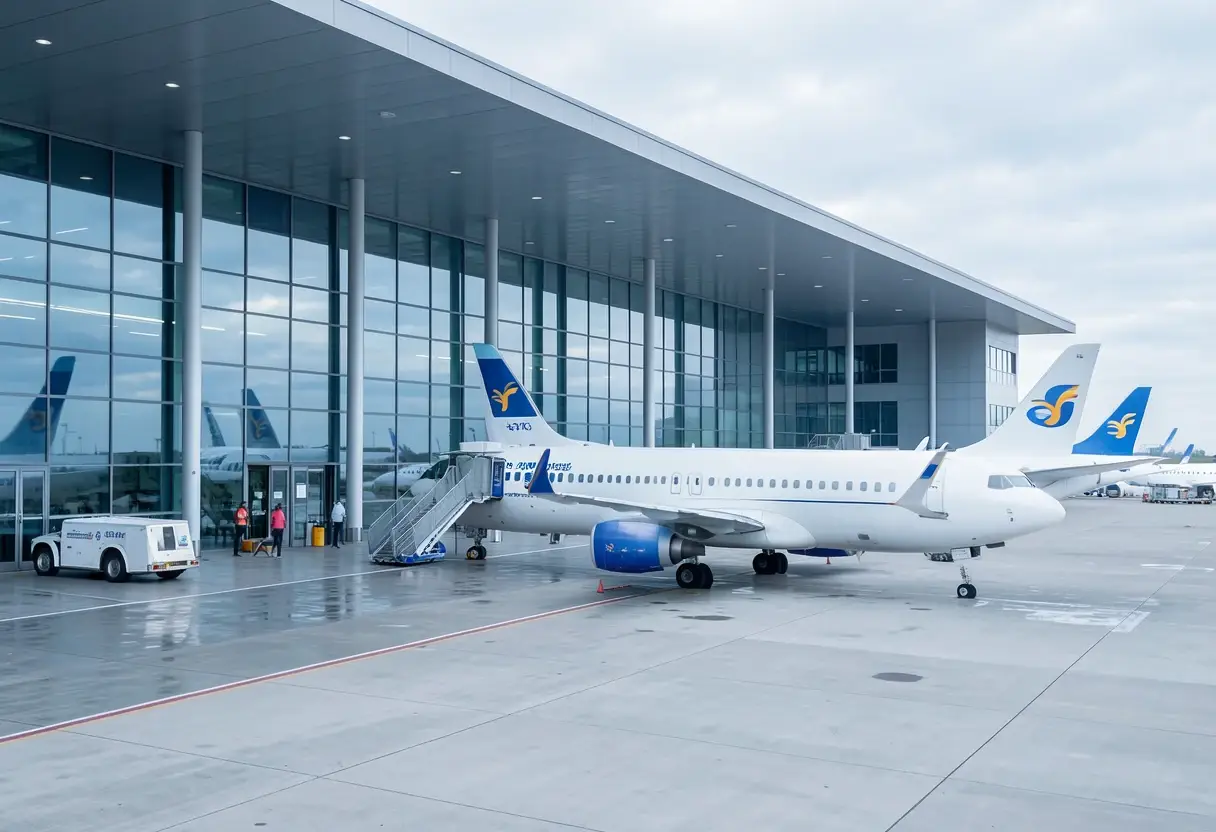
Tweed New Haven Airport grew from almost no enplaned passengers — the count of travelers boarding aircraft — to nearly 800,000 last year across 34 destinations. That figure anchors Avports' argument that small, cheap-to-operate secondary airports can expand the US travel market rather than siphon traffic from congested hubs.
The airport management company is now preparing to introduce scheduled commercial service at Washington Manassas Airport in Northern Virginia, alongside its New Haven operation and an early-stage project at Long Island MacArthur. CEO Marc Ricks laid out the economics in an interview with AviationPros editor Jenny Lescohier.
What does Avports want at Manassas?
Washington Manassas will serve a region already covered by Reagan National, Dulles and BWI. Ricks said the goal is to supplement, not replace. Reagan National is convenient but highly congested; Dulles offers strong connectivity but a complicated operating environment for shorter trips; BWI has low-cost options but sits far from Northern Virginia travelers.
"We see an opportunity for a conveniently located airport offering an affordable environment where carriers, especially low-cost carriers, can thrive," Ricks said. He pointed to New York, where Westchester County, Long Island MacArthur and Trenton already complement the region's three major airports as a system.
Why would an airline choose a secondary airport?
The core incentive is cost. Smaller airports offer dramatically lower cost per enplanement (CPE), the standard measure of what airlines pay to operate at an airport per boarding passenger. As operating costs climb industry-wide, carriers are hunting for ways to control expenses.
Gate access adds another incentive. New entrants often struggle to secure gates at large airports; smaller fields offer access plus room to differentiate products. That is why Allegiant, Avelo and Breeze connect secondary airports through point-to-point routes.
Ricks said the target passenger is the local who prefers an airport close to home, with shorter curb-to-gate times and lower total travel time. He was blunt about limits: no one will fly a Middle Eastern flag carrier to Dubai from Manassas. The product is domestic, nonstop and cheap.
How do terminals fit in?
Avports' development philosophy rejects the billion-dollar terminal. At New Haven, where the company became developer and concessionaire in 2021-2022, it has operated scheduled service using a 94-year-old hangar and modular trailers while planning a 60,000-square-foot terminal. Passengers still reach more than 30 destinations through Avelo and Breeze.
"It's about the air service, not the architecture," Ricks said. His amenity baseline is minimal: "passengers care most about cold beer, hot coffee, fast Wi-Fi and clean bathrooms."
He also described what he sees as circular logic at major hubs: architectural grandeur requires revenue, which drives more retail, which pushes passengers to arrive earlier and spend more — lengthening curb-to-gate times. At Avports fields, passengers can arrive 45 minutes before departure and clear security in five minutes.
Can the model scale?
Ricks expects major airports to keep serving most passengers and absorbing most growth, but infrastructure limits, permitting challenges and escalating costs mean they cannot absorb all of it. Secondary airports can take the remainder.
The New Haven case illustrates the market-expansion thesis: a Connecticut traveler who once drove two hours to LaGuardia for one annual Florida trip can now drive 15 minutes to Tweed and fly nonstop — perhaps three times a year. Avports says it increases both the number of travelers and their trip frequency.
The obstacles are demand, capital, expertise and vision alignment. Without genuine underlying demand, Ricks said, development wastes resources. Communities that want an architectural landmark are a poor fit; airlines operate on thin margins and the airport must make commercial sense.
Avports is now in discussions with additional airports interested in scheduled passenger service, suggesting the low-CPE secondary model will be tested well beyond its three current projects.
via avports.com (Original)
More from Sophie Lindqvist
Show full bio
Senior reporter covering people, launches and day-to-day practice in Commercial aviation industry coverage at Flightdeck Report.
599 articles
Same bay
- FDR261Federal Court Upholds Tweed New Haven Expansion Approval · September 27, 2026
- FDR734US appeals court upholds FAA approval of Tweed airport expansion · September 30, 2026
- FDR359US Appeals Court Rejects Environmental Challenge to Tweed Airport Expansion · October 10, 2026
- FDR136Federal court upholds approval of Tweed New Haven expansion · September 30, 2026
- FDR303Tweed New Haven Holds Public Meeting on Airport Expansion Plan · October 20, 2026