Clearance CLR-7890 · AIR167
AIRAIR
Airlines & NetworksClearance sheet
airBaltic to Shrink Fleet From 54 to 36 Aircraft by Year-End
airBaltic will shrink from 54 to 36 aircraft by year-end, abandoning its 100-A220 ambition as Lufthansa winter capacity demand collapses and GTF engine constraints bite.
Read-back
- airBaltic will cut its fleet from 54 to 36 aircraft by end of year, growing back to only 40 by 2031
- Lufthansa Group wet-lease block hours fall from over 7,300 in May to just over 1,000 in November
- airBaltic's own flying accounted for only about 55 percent of total block hours this summer
- The carrier blames demand moderation, geopolitical costs, and Pratt & Whitney GTF engine availability constraints
- Only 12.7 percent of airBaltic's Riga seats compete directly with Ryanair in 2026, rising to 23.3 percent including secondary airports
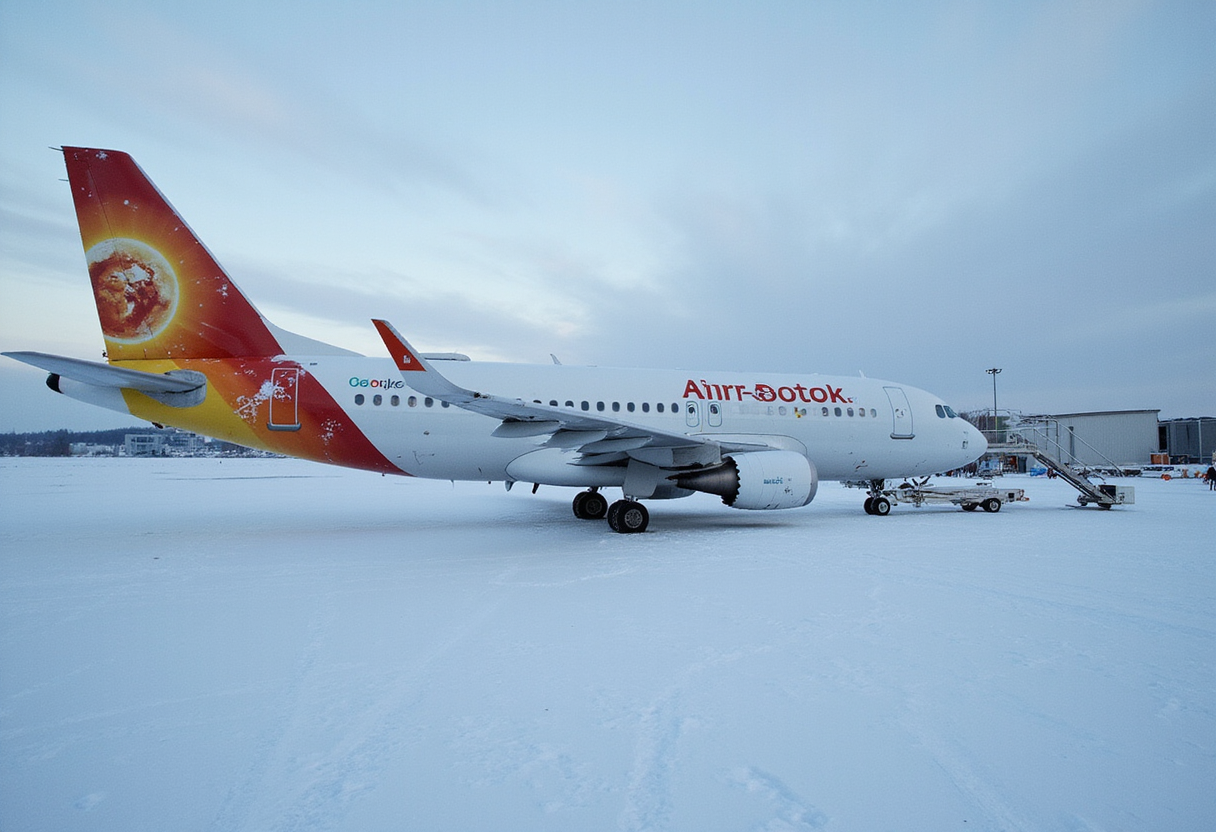
airBaltic will cut its fleet from 54 aircraft to 36 by the end of this year, abandoning its long-standing ambition of operating 100 Airbus A220s and shrinking instead into a financially focused airline built around its Riga hub.
The Latvian carrier laid out the retrenchment in a business plan it says will strengthen long-term sustainability. Under the new plan, the airline will climb back only gradually, reaching 40 aircraft by 2031 — a net gain of four jets over five years.
The reversal ends a decade in which airBaltic positioned itself as Europe's signature A220 operator and a provider of wet-lease capacity to carriers across the Continent. The economics that drove that strategy have collapsed under the weight of seasonality.
What went wrong with the growth model?
airBaltic's fleet history was jumbled until 2017, when it began transitioning to an all-A220 operation. The backbone had been Boeing 737-300s and -500s, supplemented by Fokker 50 turboprops, later Q400s, and a pair of Boeing 757s. The all-A220 fleet was achieved during COVID, with a brief backtracking when Pratt & Whitney GTF engine issues grounded enough aircraft that airBaltic had to bring in outside capacity.
The growth thesis rested on Riga being a small home market. To absorb a large A220 fleet, the airline expanded beyond its natural borders, wet-leasing aircraft to European carriers that needed capacity without owning it. Pre-pandemic, it flew for Thomas Cook and Condor, then began working for Lufthansa Group just before COVID-19. SAS used the carrier briefly after the pandemic; more recently the customer mix has been some Air Serbia and, overwhelmingly, Lufthansa Group.
That dependence has produced severe seasonal swings. This summer, airBaltic's own flying accounted for only about 55 percent of its total block hours, with most of the rest flown for Lufthansa Group. In May, airBaltic was scheduled to fly more than 7,300 block hours for Lufthansa. In November, that figure falls to just over 1,000.
Running an airline that is huge in summer and tiny in winter is structurally difficult. Cross-seasonal arrangements exist — Czech carrier Smartwings historically sent aircraft to Canada in winter under a swap with Sunwing — but airBaltic has no realistic outlet for half a growing fleet each winter.
What does airBaltic blame?
The airline's own framing points elsewhere. In its business plan announcement, airBaltic cited moderating demand and revenue growth, geopolitical developments in Ukraine and the Middle East increasing uncertainty and operating costs, and what it called "prolonged Pratt & Whitney engine availability constraints" that affected the airline's ability to deploy its full fleet.
The carrier does not present seasonality as the core problem. But the schedule data showing the collapse from 7,300 Lufthansa block hours in May to roughly 1,000 in November points to the structural issue no amount of fleet growth could solve.
How does the fleet plan change?
The numbers define the retreat:
- 36 aircraft by the end of this year, down from 54 today
- 40 aircraft by 2031 — four additions over five years
- 100 aircraft — the long-term ambition, now off the table
- Riga becomes the focus, with "selected point-to-point services" retained
- ACMI contracts will be structured to deploy capacity "in a more balanced way during both the summer and winter seasons"
The plan shifts airBaltic from an airline prioritizing growth to one prioritizing financial performance. That is the right strategy, but it means a smaller airline.
What happens at Riga?
airBaltic's share of Riga seat capacity has held surprisingly steady for the last decade with some small gains, even as competitors churned around it. Wizz Air entered big and then disappeared. Russian carriers have not flown to Riga since the pandemic because of the Ukraine war.
Ryanair has taken the most advantage of the changed competitive field and is now the clear number two in Riga, with Norwegian in third. But Ryanair has shrunk in Riga every year since 2022, largely in protest over Latvia's high fees and taxes.
The two carriers have not been head-to-head competitors — yet. Cirium schedules for full-year 2026 show only 12.7 percent of airBaltic seats from Riga operate on routes also flown by Ryanair. Counting secondary airports as equivalents — Charleroi with Brussels, Torp with Oslo — that overlap climbs to 23.3 percent. Ryanair's history argues against complacency, and Riga is by far airBaltic's most important market, which makes the refocus on the home base long overdue.
The bet now is that a smaller, Riga-centric airBaltic with seasonally balanced ACMI contracts can deliver the profitability that a 100-aircraft pan-European wet-lease operation could not.
via corporate.ryanair.com (Original)
More from Grace Kim
Show full bio
News editor covering consumer brands and retail at Flightdeck Report.
298 articles
Same bay
- FDR793AirAsia Weighs Largest-Ever A220 Order for Fleet Renewal · September 28, 2026
- FDR141Animawings suspends operations and files for reorganisation · October 2, 2026
- FDR561Wizz Air lifts September capacity 25% ahead of second-half cuts · October 2, 2026
- FDR475Animawings Enters Insolvency, Returns All Six A220s to Lessors · October 1, 2026
- FDR770Airbus needs 108 deliveries a month to hit 870-aircraft 2026 target · October 9, 2026