Clearance CLR-9906 · AIR627
AIRBRE
Airlines & NetworksClearance sheet
Breeze’s roughly 60 A220s have not produced sustained profitability
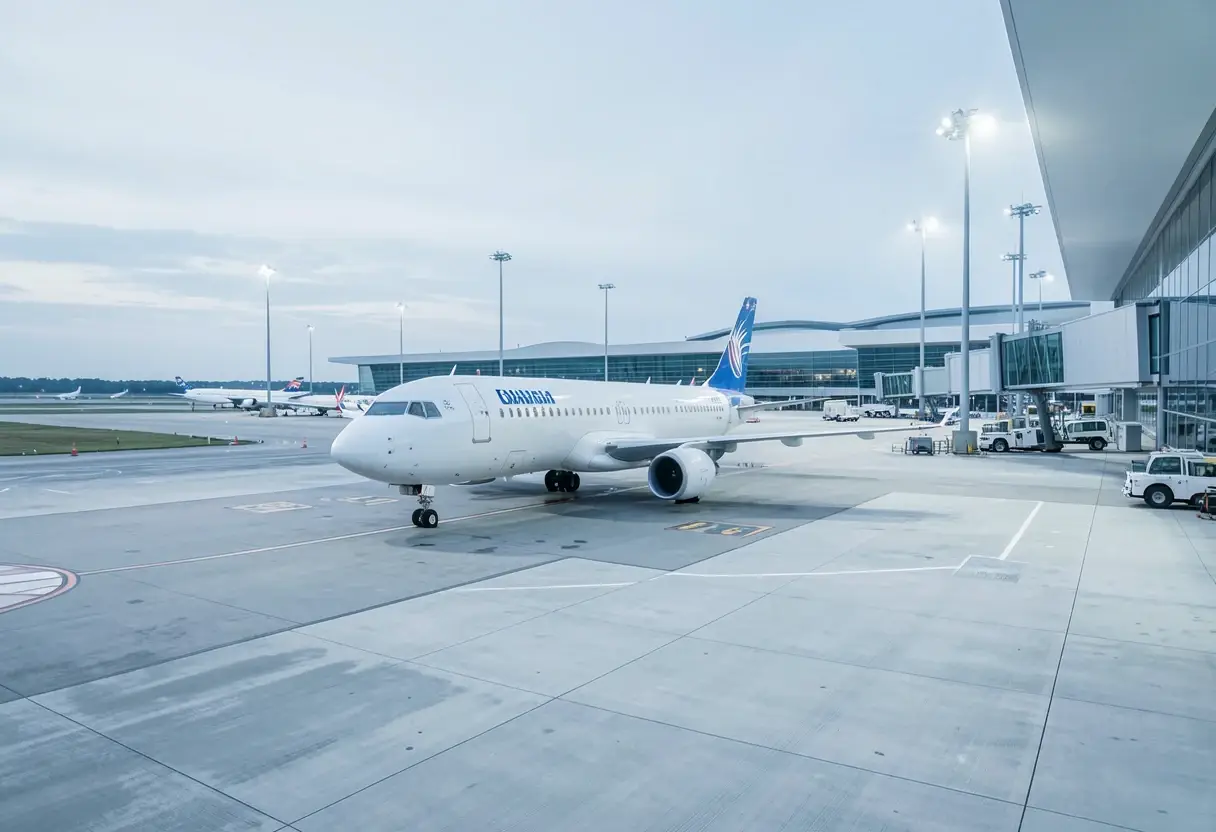
Breeze Airways has roughly 60 Airbus A220s and more than 300 routes to 95 destinations. It touts strong operations but has yet to achieve consistent profitability.
Read-back
- Breeze built a fleet of roughly 60 Airbus A220s over five years
- The network includes more than 300 year-round and seasonal routes
- Breeze serves 95 destinations on a largely point-to-point basis
- Most routes have no nonstop competition
- Aircraft return to their respective bases nightly, but profitability remains inconsistent
By James Calloway
Breeze Airways operates roughly 60 Airbus A220s across more than 300 year-round and seasonal routes to 95 destinations, but the US carrier has not achieved consistent profitability.
Five years of expansion have produced scale. They have not produced the steady financial result required to validate the model.
Operational reliability and economic performance can diverge for long periods. The network may look difficult for rivals to copy. The income statement still has to show whether that advantage earns enough.
What has Breeze built?
The five-year build-out rests on four disclosed markers:
- Fleet: roughly 60 Airbus A220s.
- Network: more than 300 year-round and seasonal routes.
- Destinations: 95, with a largely point-to-point structure.
- Competition: most routes have no nonstop competitor, as Breeze avoids tangling with the largest US carriers.
Breeze touts strong operational performance. Its route positioning keeps it away from the country’s largest airlines. The missing financial figures are equally important.
The combined route count mixes year-round and seasonal services. It does not reveal the permanent network, aircraft assigned to each market, or available seats outside peak periods.
Neither does the account disclose passenger loads, fares, or revenue by route. Those omissions prevent outsiders from testing whether traffic supports profitable flying.
The fleet number is approximate. No delivery schedule, aircraft ownership split, lease terms, or financing costs appear.
Airbus is the only manufacturer named. No lessor, MRO, regulator, certification milestone, or type-certificate change is identified. The story concerns operating scale and economics, not an Airbus approval event.
What the operating model proves
Breeze says aircraft “return to their respective bases on a nightly basis.” That sits at the center of its “simplified flying structure.”
The carrier presents this arrangement as a driver of strong operational performance. It also presents the resulting simplicity as unavailable to other airlines.
That is a clear operating proposition. It is not yet a measurable financial advantage.
The source gives no dispatch-reliability, on-time, completion-factor, utilization, or turnaround-time figures. A strong claim therefore remains a claim to verify against operating records.
Aircraft can return nightly and still fly too few hours each day. They can also return on schedule while carrying too few passengers.
Nor does the account break down fuel, labor, maintenance, ownership, or distribution costs. The claimed link between nightly returns and lower unit costs remains unquantified.
The practical test is Breeze’s operating and financial data, not management’s characterization of them.
Why profitability has lagged
The analysis uses a demanding phrase: “sustained profitability.” Consistent profitability has not accompanied the stated operational consistency.
The current fuel environment makes the shortfall “somewhat understandable,” according to the assessment. That is a condition-specific caveat, not a complete explanation.
No fuel-price assumption, hedge position, fare trend, or route-cost bridge is supplied. Fuel therefore cannot be weighed against network revenue, aircraft expense, or overhead from the available information.
Breeze’s 95-destination network gives it fewer direct comparisons on many routes. The source does not show whether that produces enough passengers or higher fares to cover the cost of serving those markets.
A 60-aircraft fleet can add capacity. It can also add aircraft-related cost. More than 300 routes can broaden the offer, but every market still requires demand to justify its contribution.
No route-level contribution, corporate cost, cash-burn figure, or earnings target appears. Without them, the distinction between operating maturity and financial maturity cannot be tested from the disclosed data.
What does this change for Breeze?
It changes the standard of proof. Breeze must show that its operating consistency also produces dependable earnings.
For passengers, the visible proposition remains a point-to-point network with few nonstop alternatives. Whether that network remains financially durable is not yet established.
No delivery date, earnings target, cost forecast, or certification milestone marks the next stage. Any forecast of the turnaround would therefore outrun the evidence.
Breeze’s next test is straightforward: match the reliability of its nightly-base operating model with sustained profitability, with fuel no longer able to serve as the sole explanation for the gap.
via CAPA News (Source)
More from James Calloway
Show full bio
Staff writer covering people, launches and day-to-day practice in Commercial aviation industry coverage at Flightdeck Report.
611 articles
Same bay
- FDR577Breeze Airways Adds 22 Routes, Four Cities for 2027 · October 14, 2026
- FDR624Breeze Targets May 2027 for Two New Orlando Routes · October 13, 2026
- FDR892Breeze Airways Opens Birmingham Base with Two Nonstop Routes · September 30, 2026
- FDR606Breeze Adds 16 Routes Across US and Caribbean Network · October 15, 2026
- FDR176Breeze Airways Adds Seven Florida Routes for 2027 · October 14, 2026