Clearance CLR-1495 · AIR262
AIRAIR
Airspace & RegulationClearance sheet
Airservices holds OneSKY-CMATS rollout to end-2027 despite US ATC meltdown
Airservices Australia says OneSKY-CMATS will begin cutover by end-2027 after practical completion at Brisbane, Perth and Melbourne, as a US router failure grounds flights nationwide.
Read-back
- Airservices Australia targets end-2027 for start of OneSKY-CMATS transition, with staged cutover through 2028.
- Practical completion of OneSKY-CMATS infrastructure was reached at Brisbane, Perth and Melbourne in early 2025.
- OneSKY replaces The Australian Advanced Air Traffic System, in service since the early 2000s.
- A US nationwide ground stop lasted around four hours after data-overloaded routers forced a shutdown.
- US Transportation Secretary Sean Duffy asked Congress for $50 billion in emergency ATC funding, up from $30 billion.
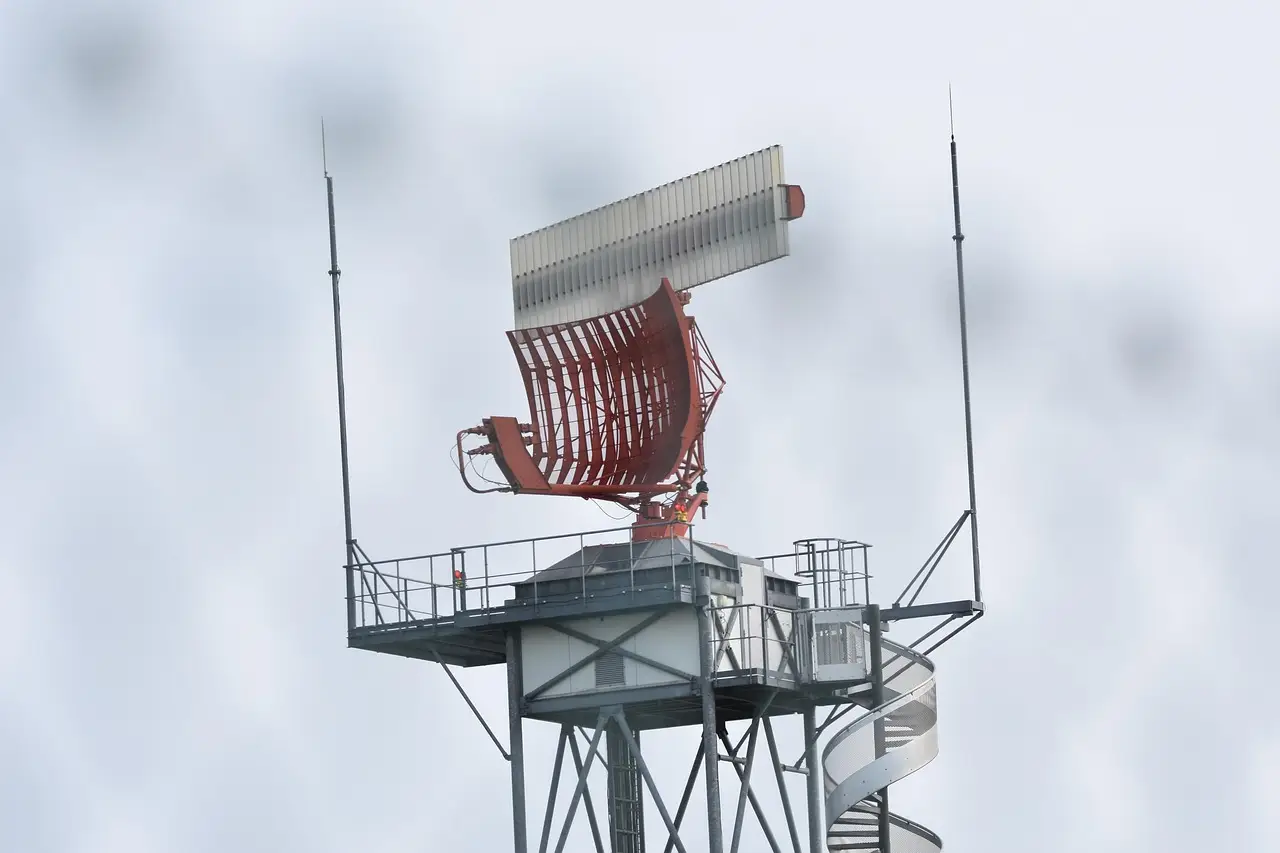
Airservices Australia is targeting the end of 2027 to begin transitioning to OneSKY-CMATS, the system that will unify civil and military air traffic control across the whole of Australian airspace. The confirmation came days after outdated equipment forced a four-hour nationwide ground stop in the United States.
"We are working towards beginning the transition to CMATS by the end of 2027 subject to regulatory approvals and major milestones, with implementation continuing through a staged cutover across 2028," an Airservices spokesperson said.
The schedule is a target, not a commitment. The spokesperson tied the date to two conditions: regulatory approvals and major milestones. Neither was specified.
What is OneSKY replacing?
OneSKY-CMATS replaces The Australian Advanced Air Traffic System, which entered service in the early 2000s. The new platform will place civil and military air traffic management on a common system covering all of Australia's airspace.
Airservices reached practical completion on OneSKY-CMATS infrastructure at its three sites — Brisbane, Perth and Melbourne — in early 2025.
"Airservices has a significant and established pipeline of investment to modernise our systems and capabilities so that we can support the growth of Australian aviation," the spokesperson said.
Note what that statement does not contain: no budget figure, no revised cost estimate, no delivery guarantee. "Pipeline of investment" is a funding promise framed as achievement.
Where does the program stand?
Speaking at this year's Australian Aviation Summit, Airservices CEO Rob Sharp confirmed OneSKY "is now in verification, validating system performance and support integration into Australia's airspace system" following completion of design and development.
"CMATS will provide a shared national view through a common platform for civil and military air traffic management," Sharp said.
"By giving us a more complete operational picture, it will enable more coordinated and efficient use of airspace while strengthening safety, operational efficiency, national security and Defence readiness."
He framed the program as more than asset replacement.
"OneSKY will replace ageing civil and military systems, but its significance extends beyond asset replacement by providing the platform for future advances in trajectory management, automation, airspace coordination and network decision making."
That claim is untested. Trajectory management, automation and network decision-making are capabilities promised, not certified. Sharp himself acknowledged the remaining risk: "Delivery within a live operational environment requires rigorous testing, training, operational readiness and change management."
What does this change for operators? Nothing yet. Verification precedes cutover, and cutover stretches across 2028 in staged form. Airlines should treat 2027 as the earliest plausible start date.
The US contrast
The Australian confirmation follows what was effectively a meltdown of ageing US air traffic control infrastructure over the weekend, which forced a nationwide ground stop.
At a White House press briefing on Friday evening US time, US Transportation Secretary Sean Duffy confirmed the ground stop had been lifted after around four hours. He blamed outdated equipment.
"What we have is an incredibly old air traffic control system. The president, for the last year, has been asking Congress to fully fund a full build of a brand-new air traffic control system," Duffy said.
"Our routers actually got overloaded with data, and … they started to give us inconsistency in the data from those routers. And because of that, we shut the system down."
Duffy called on Congress to approve "emergency funding" to overhaul the US system — some parts of which still run on floppy disks. He asked for $50 billion, up from $30 billion requested previously.
The gap between the two countries is instructive. Australia has infrastructure built and a system in verification. The US has a router failure, a funding plea and a $20 billion increase in its ask. Whether Airservices holds its end-2027 date will depend on regulatory approvals and milestones the agency has not yet named — the staged cutover through 2028 gives it margin, but also gives it room to slip.
via australianaviation.com.au (Source)
More from James Calloway
Show full bio
Staff writer covering people, launches and day-to-day practice in Commercial aviation industry coverage at Flightdeck Report.
688 articles
Same bay
- FDR9417NEWS Spotlight turns to Australia's air traffic crunch · September 30, 2026
- FDR198Sydney near-misses put Airservices Australia staffing under review · October 10, 2026
- FDR803Panasonic expands aircraft line maintenance across 14 locations · October 30, 2026
- FDR528Burketown Airport reopens after $24 million flood-resilience rebuild · November 13, 2026
- FDR482Sydney controllers warn of collision risk after airspace redesign · September 30, 2026