Clearance CLR-4927 · AIR734
AIRAMA
Air CargoClearance sheet
Amazon Air Crash Revives Pilot Complaints Against 21 Air
A crash involving an Amazon Air freighter has revived a pilot complaint against contract carrier 21 Air, renewing scrutiny of conditions across Amazon's cargo network.
Read-back
- A crash of an Amazon-partnered freighter has revived a pilot complaint against cargo carrier 21 Air, The Seattle Times reported.
- 21 Air is one of the third-party carriers that operate flights for Amazon's air logistics network.
- The complaint predates the crash; its relationship to the accident's cause has not been established.
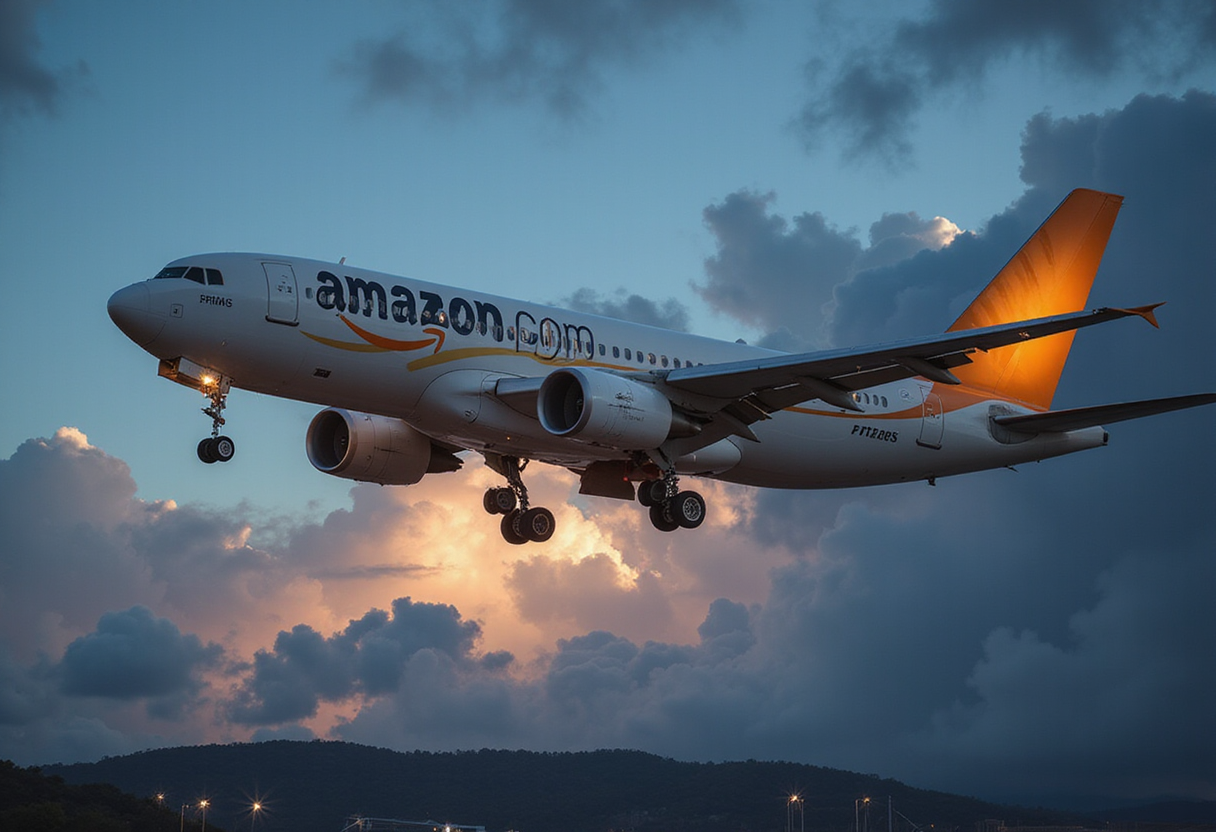
The crash of an Amazon-partnered freighter has revived a pilot complaint against the cargo carrier 21 Air, refocusing attention on conditions at one of the operators that fly under the Amazon Air network.
The Seattle Times, which first reported the connection, links the accident to a previously filed pilot complaint against 21 Air — a North Carolina-based cargo airline that operates aircraft for Amazon's air logistics network. The revival of that complaint in the wake of a crash shifts the story from a single accident investigation to a broader question about oversight of the contract carriers that make up Amazon Air.
Amazon does not operate its own air service in the conventional sense. It assembles a network of third-party carriers — among them Atlas Air, Southern Air and smaller regional freighter operators such as 21 Air — that fly Boeing 767s and other converted freighters on Amazon's behalf, feeding its distribution hubs across the United States. That structure keeps costs low and capacity flexible for the e-commerce giant. It also spreads operational responsibility across multiple certificate holders, each with its own safety culture, pilot contracts and maintenance arrangements.
The complaint at issue predates the crash. Pilots at carriers in the Amazon network have argued for years that aggressive scheduling, thin crew margins and cost pressure inherent in contract flying create fatigue and safety risks. Accidents involving Amazon-leased aircraft have repeatedly brought those arguments back into public view, and this latest event has done so again — this time attached specifically to 21 Air.
What remains to be established is the factual relationship between the complaint's allegations and the cause of the crash. A pilot complaint, however serious its substance, does not by itself establish causation. Regulators and investigators will need to determine what happened, why it happened, and whether conditions described in the complaint — scheduling, training, maintenance or crew-support issues — played any role. Until the investigation reports its findings, the complaint stands as context, not conclusion.
For Amazon, the stakes are operational as much as reputational. The company has built a large part of its delivery promise on controlled air capacity, moving inventory between fulfillment centers on a schedule tuned to its ground network. Any finding that ties a crash to systemic conditions at a contract carrier would put pressure on Amazon's carrier-selection and oversight model — the framework under which it allocates flying across operators on the basis of cost and capacity.
For 21 Air, the stakes are more direct. A revived complaint arriving alongside an accident invites scrutiny from the Federal Aviation Administration, which holds the operating certificate, and from potential civil litigation. Carriers in this position typically face a period in which every element of their operation — crew records, maintenance logs, scheduling practices — becomes evidence.
The pattern is familiar in the contract-cargo sector. After the 2019 crash of an Atlas Air 767 near Houston, which killed three people, the NTSB examined issues including pilot experience and the operator's safety culture, and pilot unions argued that the accident validated long-standing concerns about freight operations that operate outside the visibility most passengers have of major airlines. Each subsequent incident involving an Amazon-network aircraft returns the sector to the same debate: whether the economics of contract freighter flying are compatible with the safety margins the regulator requires.
The answer, so far, has varied case by case. Contract cargo carriers hold the same FAA certificates and meet the same regulatory minimums as passenger airlines. What differs is everything around the minimums: pay scales, crew utilization, the intensity of scheduling, and the commercial pressure that comes from serving a single dominant customer. The complaint against 21 Air, as revived by this crash, sits squarely in that gap between regulatory compliance and operational reality.
Investigators will now have to close it with facts. Their findings will determine whether this remains a story about one operator's internal dispute, or becomes the next chapter in the running examination of how Amazon's air network is crewed, flown and overseen.
via Google News: Air cargo (Source)
More from Nathan Brooks
Show full bio
Correspondent covering media and advertising at Flightdeck Report.
149 articles
Same bay
- FDR962Victims Identified in Fatal Amazon Prime Air Cargo Crash · September 27, 2026
- FDR721Amazon Grounds a Cargo Carrier After Fatal Crash · September 28, 2026
- FDR999Amazon Suspends Operations of 21 Air After Miami Runway Excursion · September 30, 2026
- FDR341Amazon Grounds a Cargo Carrier After Fatal Crash, Testing Air Network Depth · September 28, 2026
- FDR310Cargo Handler Consolidation Could Squeeze Airlines' Ground Costs · September 30, 2026