Clearance CLR-8296 · AIR721
AIRAMA
Air CargoClearance sheet
Amazon Grounds a Cargo Carrier After Fatal Crash
Amazon has paused a cargo carrier after a fatal crash, forcing the e-commerce giant to reroute freight across its contracted air network and absorb higher costs.
Read-back
- Amazon paused a cargo carrier in its air network following a fatal crash.
- The suspension tests whether Amazon Air's contracted capacity can absorb the lost lift.
- Rerouting freight to spot or charter markets would raise Amazon's transportation costs.
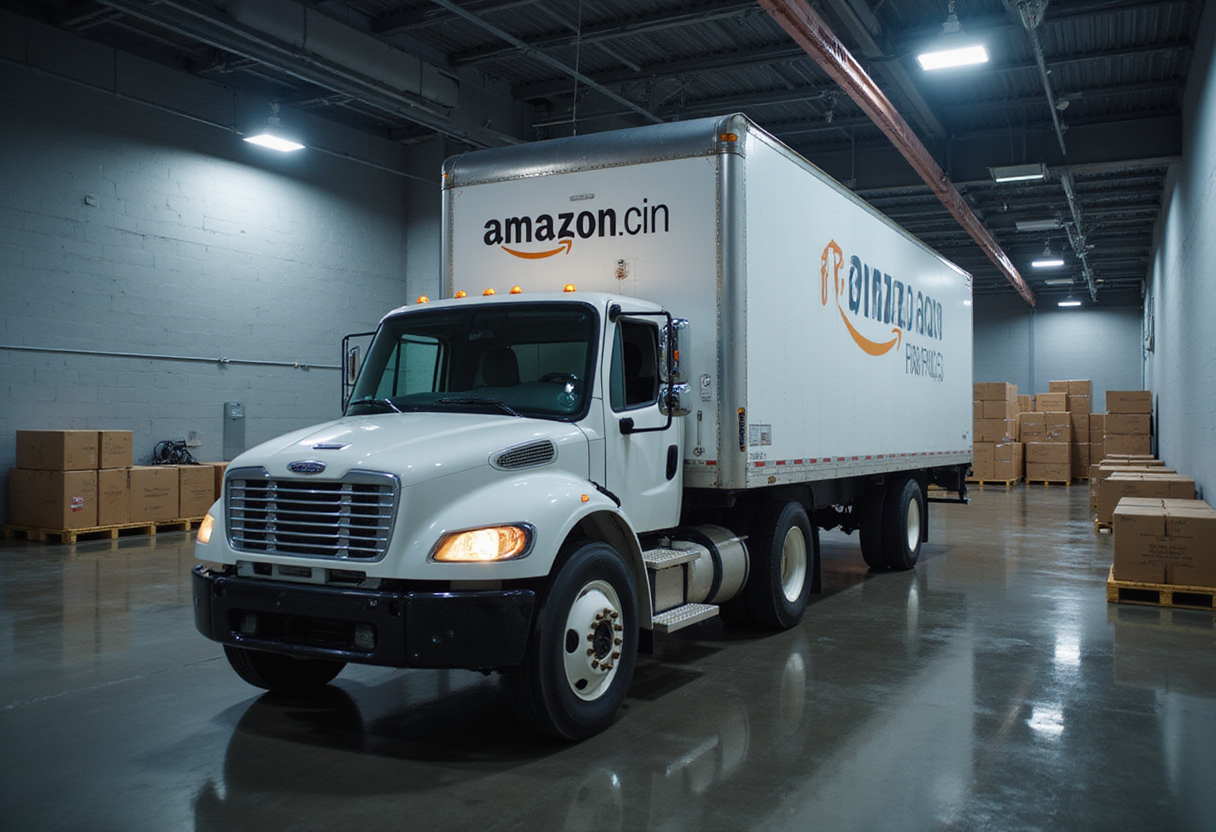
Amazon has paused operations of a cargo carrier in its air freight network following a fatal crash, a decision that immediately raises questions about how the e-commerce giant will absorb the lost lift during a period when its delivery volume depends heavily on dedicated air capacity.
The suspension removes one operator from a network Amazon has built over more than a decade into a core competitive asset. Amazon Air, as the network is known, does not operate as a single airline. It contracts flying to a group of third-party carriers and holds its own air operator's certificate through a subsidiary. When one of those contractors stops flying, Amazon must redistribute freight across the remaining operators, shift volume to airport-to-airport trucking, or buy capacity in the wider air cargo market — each option carrying different cost and reliability implications.
The question posed by the pause is structural: can the network flex without degrading delivery timelines? Amazon's logistics model depends on predictable, high-frequency flights connecting its regional air hubs to the sorting and last-mile apparatus downstream. A fatal accident removes not just aircraft but crews, routes and scheduled block hours that the network had counted on. Rebuilding those hours through other carriers takes time because pilots require qualification on specific routes and aircraft, and spare capacity among contract cargo operators is not always available on short notice.
The financial dimension is equally direct. Air freight is the most expensive leg of Amazon's logistics chain on a per-pound basis, and the company has historically worked to lower that cost by consolidating volume, buying used widebody freighters at a discount to new-build prices, and shifting selection of what flies versus what moves by ground. A capacity shortfall pushes freight into charter and spot markets, where rates are materially higher than contracted lift. Yahoo Finance's report frames the pause explicitly as a test of whether the network can absorb the disruption — a question that will be answered in Amazon's transportation cost line over the coming quarters.
Safety investigators will determine the cause of the crash, and their findings will shape how quickly the paused carrier returns to service. Regulators can extend groundings if inspection findings point to fleet-wide maintenance issues, or clear a return to flight relatively quickly if the investigation isolates the cause to a single aircraft or crew. Amazon, for its part, has an incentive to keep the remainder of the network flying at full utilization while the inquiry runs its course, because every idle aircraft in the broader network compounds the shortfall created by the suspension.
The episode also exposes a recurring tension in Amazon's aviation strategy. Contracting flying to multiple third-party operators spreads operational risk and keeps capital off Amazon's balance sheet, but it means the company's capacity rests on the safety records and regulatory standing of carriers it does not directly control. A fatal accident at one operator becomes Amazon's network problem, not merely the carrier's.
For now, the network continues to fly with one fewer participant. How Amazon rebalances freight across its remaining carriers, and at what cost, will show whether the air network it has spent years assembling has genuine redundancy or whether the pause exposes thinner slack than the company's logistics planning assumes. The next set of delivery and transportation-cost disclosures will provide the first hard evidence.
via Google News: Air cargo (Source)
More from Grace Kim
Show full bio
News editor covering consumer brands and retail at Flightdeck Report.
138 articles
Same bay
- FDR341Amazon Grounds a Cargo Carrier After Fatal Crash, Testing Air Network Depth · September 28, 2026
- FDR999Amazon Suspends Operations of 21 Air After Miami Runway Excursion · September 30, 2026
- FDR734Amazon Air Crash Revives Pilot Complaints Against 21 Air · September 29, 2026
- FDR962Victims Identified in Fatal Amazon Prime Air Cargo Crash · September 27, 2026
- FDR310Cargo Handler Consolidation Could Squeeze Airlines' Ground Costs · September 30, 2026