Clearance CLR-8403 · SUS436
SUSARC
SustainabilityClearance sheet
ARC Bio Shows Forest Residues Can Feed Canadian SAF Supply
ARC Bio has demonstrated a pathway converting Canadian forest residues into sustainable aviation fuel, adding a land-neutral feedstock option to a supply-constrained market.
Read-back
- ARC Bio demonstrated a pathway converting Canadian forest residues into sustainable aviation fuel
- Forest residues offer a land-neutral feedstock that does not compete with agricultural output
- The demonstration establishes process feasibility; certification, scale-up and offtake agreements remain ahead
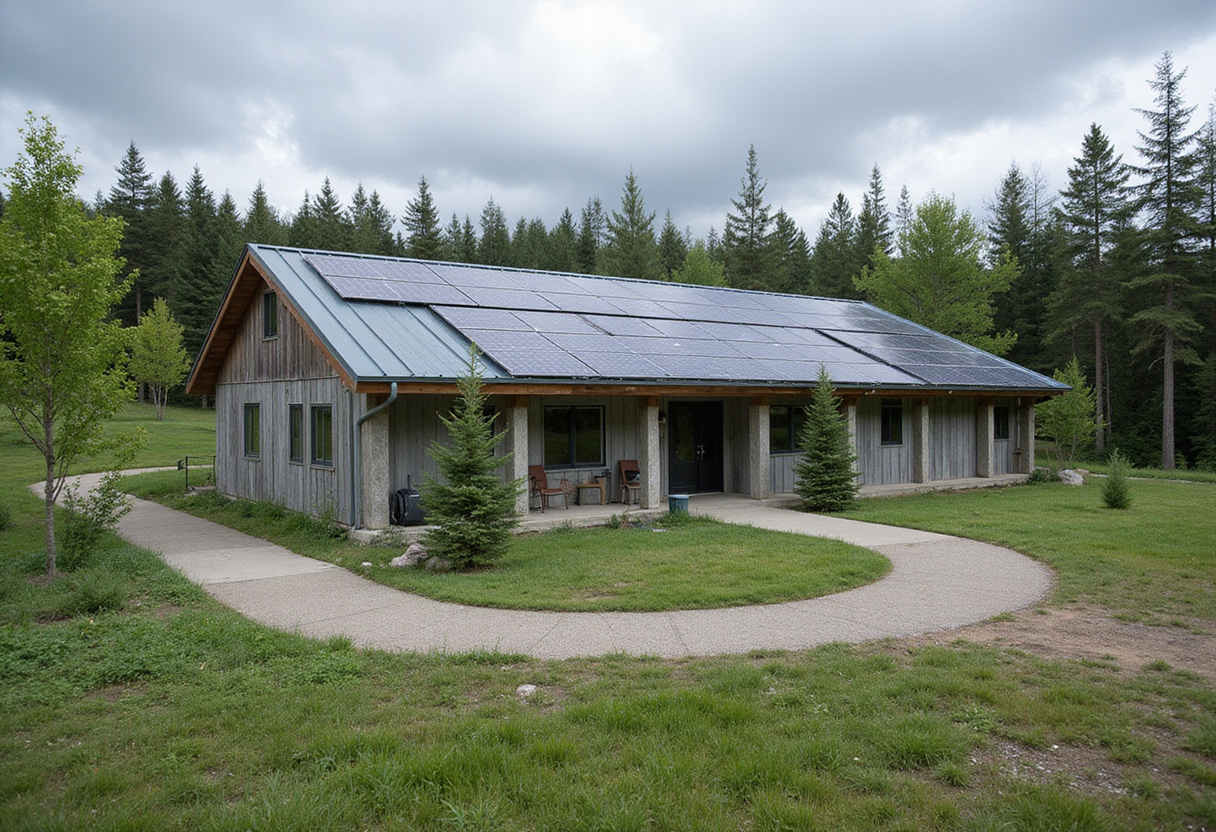
ARC Bio has demonstrated a pathway that converts Canadian forest residues into sustainable aviation fuel, an outcome that addresses one of the industry's persistent constraints: the scarcity of certified feedstock at commercial scale.
The demonstration, reported by Canadian Manufacturing, establishes a technical route from forestry waste — material left after logging and milling operations — to SAF. For airlines and fuel buyers, feedstock availability matters as much as conversion technology. Airlines representing a growing share of global capacity have committed to SAF offtake agreements, and several regulators have mandated blending requirements in the coming decade. Canada, with one of the largest working forest estates in the world, holds a feedstock base that few other countries can match on paper. The question has always been whether that biomass can move from residue piles to refining input at a price and volume the aviation sector can absorb.
ARC Bio's demonstration speaks to that question at the level of process feasibility. Forest residues — slash, branches, sawdust and other mill by-products — are heterogeneous, wet and dispersed across remote geography. Any pathway that uses them must solve collection, drying and pre-treatment economics before conversion chemistry even begins. Demonstrating the pathway confirms the feedstock can be processed into SAF-compatible output; it does not by itself establish commercial viability, certified capacity or delivered cost per litre. Those milestones remain ahead.
The distinction matters because SAF supply today remains a fraction of global jet fuel demand, and announced projects routinely outrun what actually reaches certification and production. Aviation regulators approve fuel pathways against standards such as ASTM D7566, and each new feedstock-to-fuel route must clear that bar before airlines can lift it into commercial tanks. Demonstrations like ARC Bio's sit early in that sequence: proof of concept first, then scale-up, certification and offtake.
For Canadian stakeholders, the stakes are economic as much as environmental. A domestic SAF industry anchored in forest residues would create demand for material that currently carries disposal cost or burns in the field, and would position Canadian producers in a fuel category where demand is regulated and growing. Forestry regions dependent on traditional pulp and lumber markets would gain a diversification option tied to aviation's decarbonisation commitments.
The airlines' side of the ledger is straightforward. SAF remains several times more expensive than conventional Jet A, and supply contracts concentrate among a small number of producers. Every additional certified pathway widens the feedstock pool, and wider pools are the mechanism by which prices compress. A forest-residue route adds volume potential without competing for agricultural land, a criticism levelled at some crop-based pathways.
What ARC Bio has shown is that the chemistry works with Canadian material. What the industry will watch next is whether the company moves from demonstration to engineered capacity, whether the pathway secures certification under recognised fuel standards, and whether airlines or fuel suppliers sign offtakes that anchor the economics. Each of those steps has separated announced SAF ventures from operating ones elsewhere in the market.
The demonstration also lands at a moment when Canadian climate policy is tightening fuel carbon intensity requirements, giving regulated buyers a reason to source domestic supply rather than import. If ARC Bio converts its result into scaled production, Canada's forestry sector could become a measurable input to aviation fuel supply rather than a theoretical one.
For now, the result stands as a verified step: forest residues from Canadian operations can enter an SAF production pathway. The distance between that fact and a commercial fuel stream — certification, capital, logistics, offtake — will determine whether this pathway contributes to airline fuel books or remains a demonstration. ARC Bio's next announcements on scale and certification will indicate which trajectory the project is on.
via Google News: Sustainable aviation fuel (Source)
More from Sophie Lindqvist
Show full bio
Senior reporter covering industry trends and analytics at Flightdeck Report.
161 articles
Same bay
- FDR695ARC Bio Demonstrates Forest-Residue-to-SAF Pathway in Canada · September 30, 2026
- FDR121Biomass-to-SAF Pathway Framed as Route to Canadian Aviation Fuel Targets · September 28, 2026
- FDR923Rowan University Team Wins NSF Grant to Convert Biomass into Jet Fuel · September 29, 2026
- FDR363Cellulosic feedstocks could scale SAF supply, study finds · September 28, 2026
- FDR279New Law Boosts Wisconsin Tree-Based Jet Fuel Project · September 30, 2026