Clearance CLR-7950 · SAF543
SAFARM
Safety & OperationsClearance sheet
Army Cites Systemic Failures Behind DC Midair Collision
The US Army's own investigation into the Washington, DC midair collision attributes the accident to systemic failures and calls for corrective safety measures.
Read-back
- The US Army found systemic failures behind the midair collision over Washington, DC.
- The accident involved an Army helicopter and a commercial passenger flight.
- The Army has called for corrective safety fixes following its investigation.
- Specific recommendations and timelines were not detailed in the initial report.
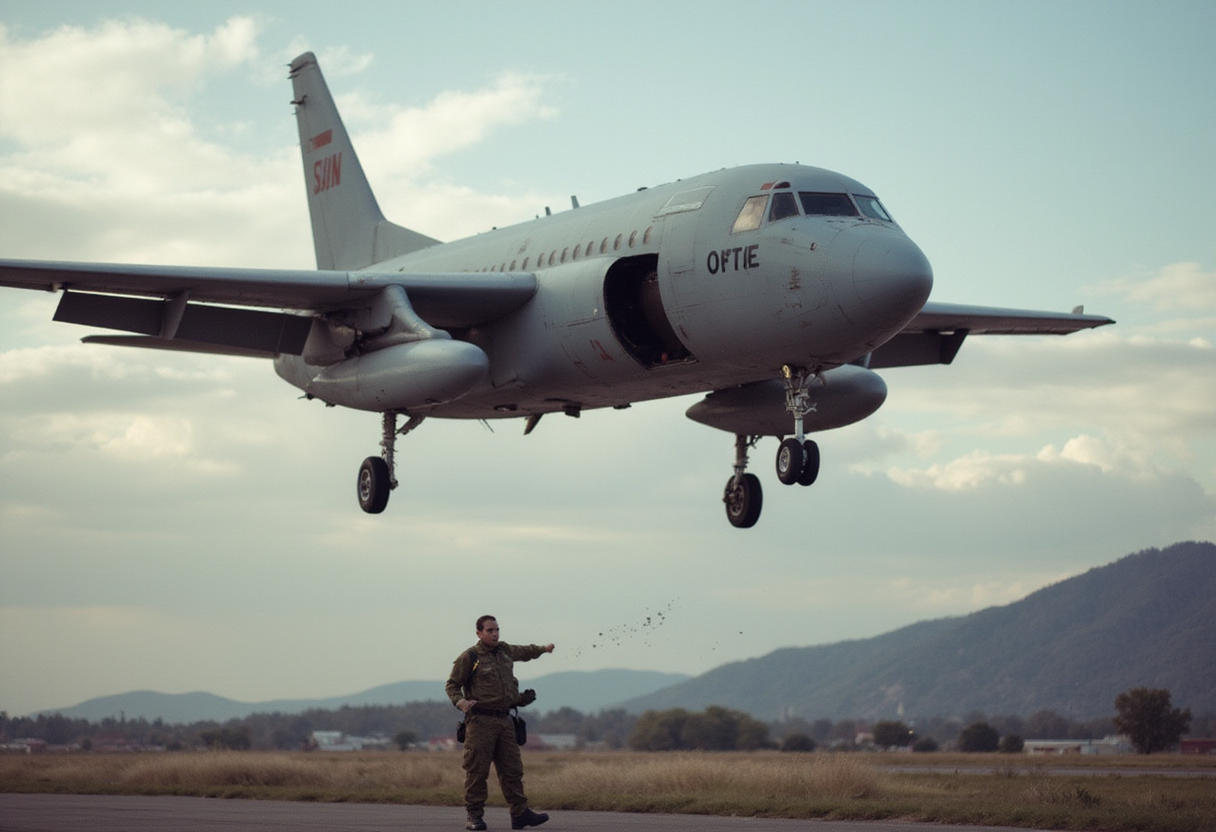
The US Army has concluded that systemic failures lay behind the midair collision over Washington, DC, and has called for a set of corrective safety measures. The finding comes from the service's own investigation into the accident, which involved an Army helicopter and a commercial passenger flight.
That verdict matters. A military service attributing one of its own accidents to systemic breakdowns — rather than to a single pilot's error — shifts the question from individual conduct to how the organization trains, equips, and supervises its aviators. The Army has framed the outcome as a basis for institutional repair, not merely disciplinary review.
What does the finding actually say?
The investigation identified failures that extended beyond the cockpit on the night of the collision. In the Army's telling, the accident did not turn on one decision or one crew in isolation; it reflected deeper weaknesses in the system that put that crew in position over a congested corridor.
The service has paired the finding with recommendations. These are framed as safety fixes — concrete changes intended to prevent a repeat of the sequence that ended in the collision over the capital.
Details of the individual recommendations, and their implementation timelines, were not specified in the initial reporting. Readers should treat any specific corrective action as proposed until the Army publishes it in full or Congress and regulators respond to it.
Why a military finding carries weight here
The midair collision occurred over Washington, DC — airspace that mixes commercial airline traffic, military helicopter routes, and some of the most closely monitored sky in the United States. When an Army aircraft and an airliner occupy the same corridor, the safety architecture of both systems is on trial.
An Army finding of systemic failure therefore implicates more than one service. It invites scrutiny of how military helicopter routes interact with commercial arrival and departure paths, and whether the coordination arrangements in that corridor are adequate for the traffic density they now carry.
For airlines operating into the Washington area, the practical stakes are operational. Airspace revisions, altitude restrictions, or route closures following such findings tend to add track miles, increase controller workload, and constrain capacity at airports that have little of it to spare.
What remains open
The Army's conclusions are the military's own. Parallel investigations — including those by the National Transportation Safety Board, which conventionally leads probable-cause determinations for civil aviation accidents, and by the Federal Aviation Administration — will test whether the systemic failures the Army identified align with the wider record.
Until those reports land, the certified fact is the Army's own account: systemic failures occurred, and the service itself is asking for fixes. The open question is whether regulators and airspace planners will treat that admission as a floor for reform or merely one input among many.
via Google News: Aviation safety (Source)
More from Grace Kim
Show full bio
News editor covering companies, deals and strategy in Commercial aviation industry coverage at Flightdeck Report.
396 articles
Same bay
- FDR226Army Review Finds Systemic Failures Behind DC Midair Collision · October 9, 2026
- FDR683Army review finds systemic failures behind DC midair collision · October 13, 2026
- FDR802Army Probe Finds Systemic Failures Behind DC Midair Collision · October 10, 2026
- FDR884Army Report Finds Systemic Failures Behind DC Midair Collision · October 9, 2026
- FDR768Army Review Finds Systemic Failures Behind DC Midair Collision · October 9, 2026