Clearance CLR-5210 · MRO455
MROASI
MRO & AftermarketClearance sheet
Asia's Largest Wide-body MRO Hangar Enters Service in Shanghai
Shanghai has commissioned Asia's largest wide-body aircraft maintenance hangar, Xinhua reports, adding heavy-check capacity in a region where wide-body MRO slots remain tight.
Read-back
- Asia's largest wide-body aircraft maintenance hangar has been put into operation in Shanghai, Xinhua reported.
- The facility adds heavy-maintenance bay capacity for large aircraft such as the A330, A350, 777 and 787 categories.
- Operator identity, hangar specifications and regulator approvals — CAAC, FAA, EASA — were not detailed in the announcement.
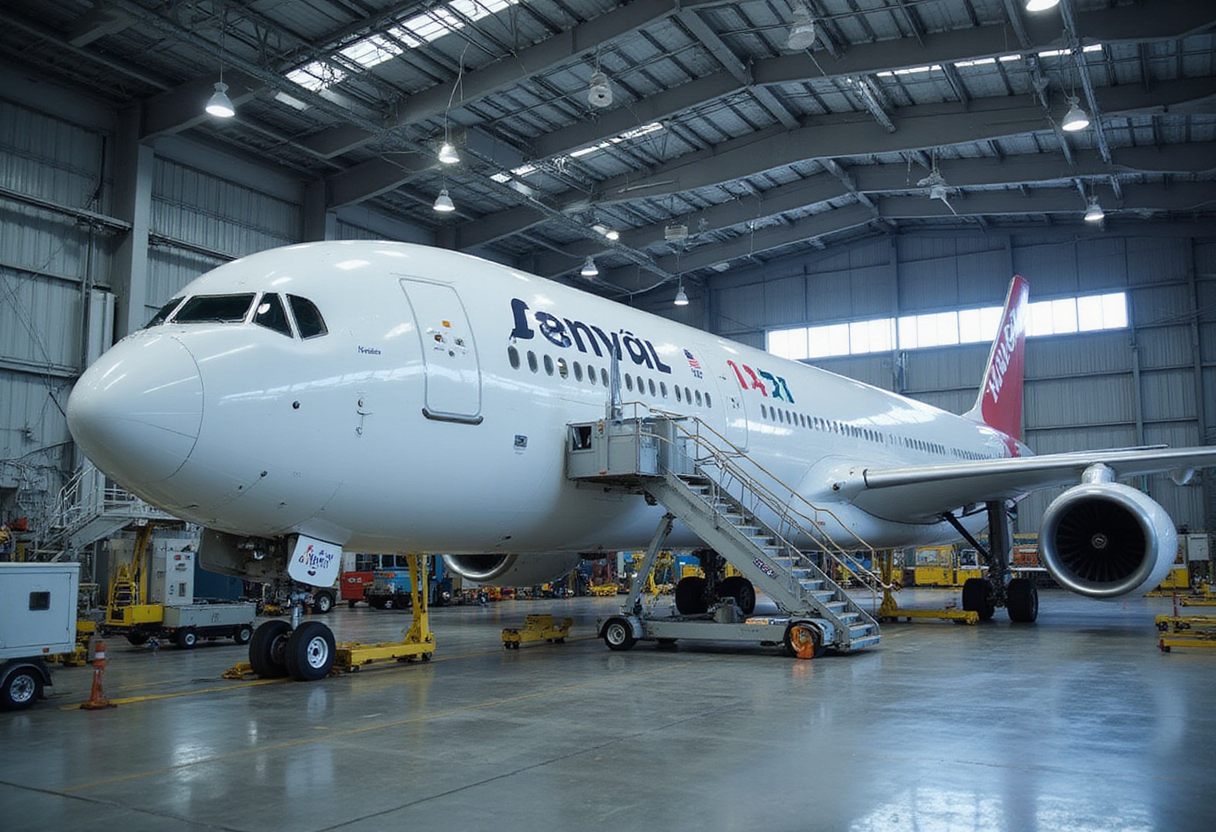
Shanghai has put into operation the largest wide-body aircraft maintenance hangar in Asia, according to a report from China's state news agency Xinhua.
The facility joins an already dense cluster of maintenance, repair and overhaul capacity around Shanghai's two major airports, and its scale positions the city to capture more of the heavy-check work that Asian wide-body operators currently send to domestic and overseas MRO providers. Asia-wide wide-body fleets continue to grow on long-haul network recovery, and airframe maintenance slots for large twins remain among the tightest capacity constraints in the aftermarket.
Xinhua, which announced the commissioning, did not immediately publish detailed specifications for the hangar, including its exact footprint, the number of wide-body positions it accommodates, or the operator running the facility. Shanghai hosts MRO activity linked to China Eastern Airlines and its maintenance subsidiaries, alongside independent providers serving both Chinese carriers and foreign operators routing aircraft through the region.
The designation "Asia's largest wide-body maintenance hangar" signals that the facility can simultaneously house multiple large aircraft — the category that includes the Airbus A330, A350, Boeing 777 and 787 — rather than the narrow-body types that dominate Chinese domestic fleets. Wide-body heavy checks demand deeper bays, stronger crane and docking infrastructure, and longer turnaround windows, typically measured in weeks rather than days. Facilities built for that work can usually take narrow-bodies as well, giving operators scheduling flexibility when wide-body demand softens.
For carriers and lessors with wide-bodies based in or transiting China, additional bay capacity translates directly into schedule protection. A grounded wide-body removes between roughly 300 and 400 seats per departure from a long-haul network, and lease-return conditions increasingly require airframe work to be completed within tight contractual windows. More hangar space in Shanghai reduces the risk of aircraft queuing for maintenance slots, a bottleneck that surfaced during the post-pandemic recovery as airlines rushed deferred heavy checks back into shops.
The timing also matters for the Chinese aftermarket more broadly. Domestic carriers have been refleetting with A350s and 787s on international routes, and each new wide-body type entering service generates a steady cadence of base checks, cabin retrofits and lease-transition work over its life. A hangar of record scale in Shanghai gives operators a nearby option and reduces reliance on MRO capacity in Singapore, Hong Kong or the Gulf for certain airframe work.
Shanghai's role as a maintenance center benefits from its position as a hub for China Eastern, one of the country's three largest state-owned carriers, and from the volume of wide-body traffic through Pudong and Hongqiao airports. Maintenance providers cluster where aircraft naturally overnight or rotate through bases, and the new hangar extends that logic.
Questions that will determine the facility's real impact remain open: which certificate holder will operate it, whether it holds approvals from the Civil Aviation Administration of China and foreign regulators such as the FAA and EASA for third-party work, and how quickly it can staff certified engineers — a persistent constraint across the global MRO sector.
Those details will shape whether the hangar becomes a competitive base for regional wide-body checks or primarily serves a single anchor carrier. For now, its entry into service marks a concrete addition of heavy-maintenance capacity at Asia's leading aviation gateway.
via Google News: Aviation MRO (Source)
More from Grace Kim
Show full bio
News editor covering consumer brands and retail at Flightdeck Report.
138 articles
Same bay
- FDR381WORLDHOISTS and ORIT Back Asia's Largest Wide-Body Hangar in Shanghai · September 30, 2026
- FDR267Chongqing Airport Completes Construction of New Aircraft Maintenance Center · September 28, 2026
- FDR484El Salvador Claims World's Largest Aircraft Maintenance Center · September 30, 2026
- FDR982Boeing Shares Rise on Expected China Aircraft Order · September 27, 2026
- FDR828HAECO locks in ANA, JAL and Garuda maintenance deals through 2033 · September 26, 2026