Clearance CLR-3761 · AIR320
AIRBAG
Airspace & RegulationClearance sheet
Baghdad and Muscat Close to Iranian Carriers as US Sanctions Bite
Baghdad and Muscat stop accepting Iranian flights as a new US mechanism threatens airports and vendors with loss of access to the US financial system.
Read-back
- Baghdad and Muscat stop accepting Iranian flights at midnight local time, with traffic redirected to Najaf
- Treasury Secretary Scott Bessent's mechanism exposes foreign airports, fuel suppliers and ground handlers serving Iranian carriers to loss of US financial system access
- Mahan Air's Muscat route was forced to stop on September 17; Turkey, Georgia and Azerbaijan services are already lost, while Istanbul flights continue
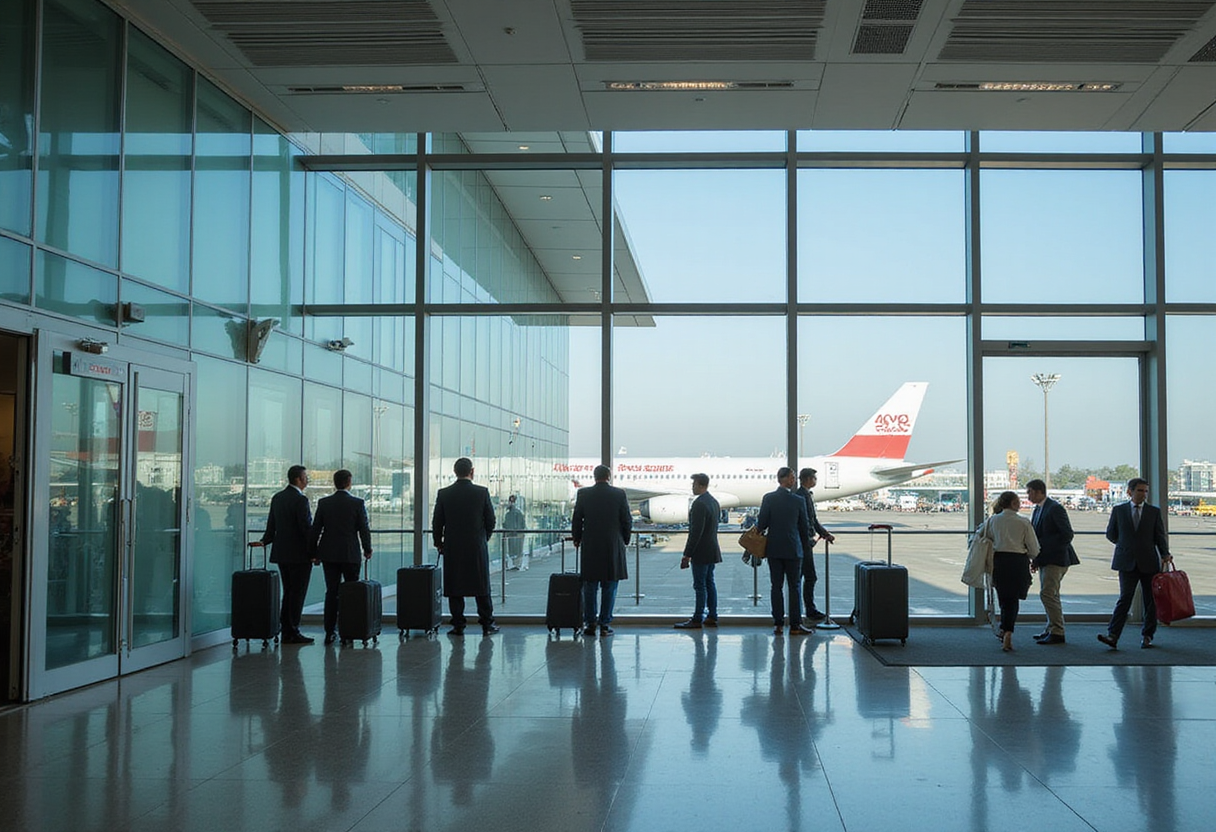
Baghdad and Muscat stop accepting flights from Iran at midnight local time today, the first concrete consequence of a new US sanctions mechanism that took effect the same day and targets the ground infrastructure Iran's carriers depend on rather than the airlines themselves.
Treasury Secretary Scott Bessent announced that any foreign airport, fuel supplier, ground-handling firm or ticketing agent that continues serving sanctioned Iranian airlines risks losing access to the US financial system entirely. The measure reaches every airport and vendor Iranian carriers use abroad, regardless of that country's own relationship with Washington. The US cannot close foreign airspace directly; it can, however, threaten the service providers on the ground.
The effects are already operational, not theoretical. Mahan Air has lost service to Turkey and Georgia. Oman forced the carrier's Muscat route to stop earlier, on September 17, ahead of the broader deadline. Azerbaijan suspended flights by the Iranian carrier immediately. Iraq is separately moving to suspend all US-sanctioned Iranian airlines outright. Iranian authorities are redirecting Baghdad-bound traffic to Najaf and negotiating with Oman over alternatives.
The Iraq route carries weight beyond commerce. Najaf and Karbala are major Shiite pilgrimage sites, and travel between the two countries spikes sharply around religious occasions — above all the annual Arbaeen pilgrimage, which draws millions of travelers. The disruption falls directly on ordinary pilgrims and families trying to reach relatives, not only on the sanctioned carriers.
A tightening net, not a total shutdown. Iran Air says it has not been informed of any blanket ban. Mahan Air stressed that the suspension of specific routes does not mean Iranian airspace is closed or that every Iranian carrier has stopped flying everywhere nearby — Istanbul service, notably, continues as scheduled. The accurate framing is a rapidly narrowing set of landing rights, airport by airport and route by route, not an instantaneous grounding of the fleet.
A different class of pressure. Iran's aviation sector has proven resilient against financial and parts-supply sanctions: front companies, temporary registrations, oil-for-parts barter, and a documented pipeline of at least 66 illegitimate aircraft arriving since 2015. Mahan Air keeps its smuggled Boeing 777s and Airbus A340-600s flying through a black-market parts network built on Iran Air's legitimately acquired Rolls-Royce Trent fleet — the maintenance half of the problem. Sanctions on money and parts have workarounds, expensive and degraded, but real. Sanctions on physical infrastructure access are different. A front company can still source a black-market engine part; it cannot manufacture a foreign airport's willingness to let an aircraft land, refuel and depart.
Seven months into the conflict between the US and Iran, the campaign has shifted from squeezing Iran's ability to maintain aircraft to squeezing its ability to use them internationally. Mahan Air's aging, degraded fleet — held together by costly workarounds — now faces a shrinking map of foreign airports willing to receive it.
via home.treasury.gov (Original)
More from Grace Kim
Show full bio
News editor covering consumer brands and retail at Flightdeck Report.
138 articles
Same bay
- FDR270Dubai Bars Iranian Aircraft and Tehran Retaliates With Airspace Ban · September 26, 2026
- FDR969Iraq's Kata'ib Hezbollah threatens airspace closure over Iran flight ban · September 29, 2026
- FDR770Iran: US Aviation Sanctions Endanger Flight Safety · September 28, 2026
- FDR628EASA Warns Airlines to Avoid Parts of Saudi Airspace · October 1, 2026
- FDR181EASA warns airlines to avoid parts of Saudi airspace · September 30, 2026