Clearance CLR-9077 · AIR270
AIRDUB
Airspace & RegulationClearance sheet
Dubai Bars Iranian Aircraft and Tehran Retaliates With Airspace Ban
Dubai banned Iranian aircraft to avoid secondary US sanctions; Iran retaliated with an airspace ban hitting Dubai-linked flights and raising route costs.
Read-back
- Dubai banned Iranian-registered aircraft to avoid exposure to secondary US sanctions.
- Iran responded with a retaliatory airspace ban on Dubai-linked flights.
- The reciprocal bans force route replanning and raise operating costs on Gulf–Asia corridors.
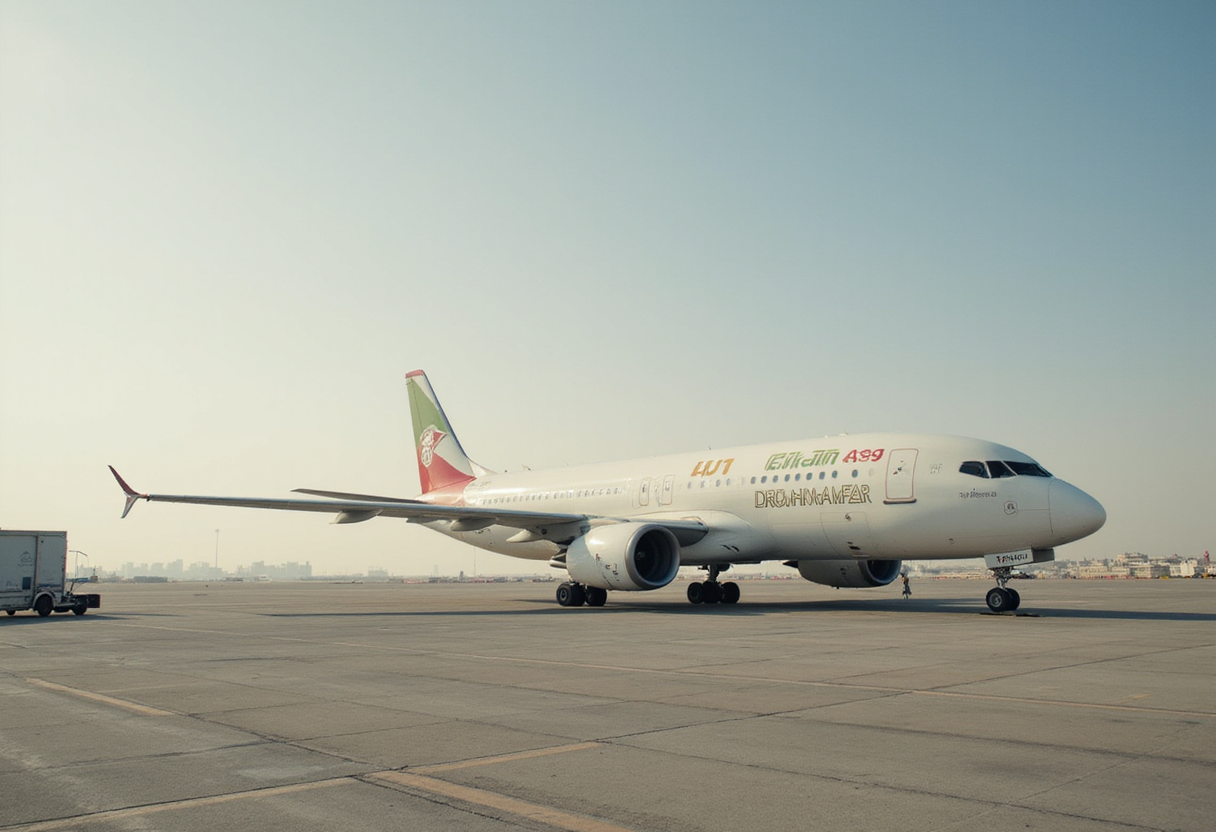
Dubai has banned Iranian-registered aircraft from its airspace and airports, a measure aimed at shielding the emirate from secondary US sanctions, and Iran has responded in kind with a retaliatory airspace ban directed at Dubai traffic.
The exchange, reported by PYOK, marks a sharp deterioration in the air transport relationship between the Gulf hub and Tehran at a time when secondary sanctions exposure has become a decisive factor for airports, regulators and operators doing business with Iranian carriers.
At issue is the reach of US secondary sanctions. Entities that continue to provide services to sanctioned Iranian airlines — including ground handling, overflight clearance and airport access — risk losing access to the US financial system and to American counterparties. For a global connecting hub such as Dubai, whose carriers and aviation suppliers are deeply integrated into Western markets, the calculus favors compliance with Washington's restrictions over continued accommodation of Iranian operators.
Tehran's answer was immediate and symmetrical: a ban on flights connected to Dubai from using Iranian airspace. The retaliation cuts directly at route economics. Iranian overflight sits astride several east–west corridor options between the Gulf, South Asia and points beyond, and closures or restrictions force carriers to replan routings, adding fuel burn and block time on affected sectors.
For Dubai-based operators, the practical consequence is longer flight times and higher trip costs on routes where Iranian airspace previously offered the most direct track. For Iranian carriers, the Dubai ban removes access to one of the region's principal hubs for transfers, cargo and maintenance-related traffic, further isolating a fleet that already operates under extensive US sanctions designations.
The sequence also illustrates a broader pattern in sanctions enforcement since Washington intensified its maximum-pressure campaign: jurisdictional pressure on third-country service providers has proven more effective than measures aimed at Iranian operators themselves, which have long been cut off from Western financing, parts and leasing channels. When hubs like Dubai weigh the cost of a US enforcement action against the revenue from serving sanctioned carriers, the arithmetic rarely favors the Iranians.
The retaliatory dynamic, however, is not costless for either side. Gulf carriers absorb the operational penalty of rerouted traffic, while Iran forgoes overflight fees and deepens the isolation of its own aviation sector. With no indication that either government plans to back down, carriers operating between the Gulf and points east will need to build contingency routings into their network planning, and any future tightening of US secondary sanctions enforcement could prompt similar calculations at other hubs serving Iranian traffic.
How long the reciprocal bans remain in force — and whether other UAE emirates or Gulf states follow Dubai's lead — will shape both the sanctions regime's effectiveness and the cost structure of Gulf–Asia air corridors in the months ahead.
via Google News: Air traffic control and airspace (Source)
More from Priya Raman
Same bay
- FDR320Baghdad and Muscat Close to Iranian Carriers as US Sanctions Bite · September 30, 2026
- FDR770Iran: US Aviation Sanctions Endanger Flight Safety · September 28, 2026
- FDR820EU Aviation Agency Issues Saudi Airspace Advisory After Houthi Attacks · September 30, 2026
- FDR969Iraq's Kata'ib Hezbollah threatens airspace closure over Iran flight ban · September 29, 2026
- FDR181EASA warns airlines to avoid parts of Saudi airspace · September 30, 2026