Clearance CLR-5610 · AIR593
AIRBOE
Aircraft & EnginesClearance sheet
Boeing holds MAX output at 42 a month as FAA clears two variants
Boeing will keep 737 MAX output at 42 aircraft a month for now despite FAA certification of MAX 7 and MAX 10, while 777X charges and delays constrain recovery.
Read-back
- 737 MAX output remains 42 aircraft a month, with 47 planned after a pause extending into early next year.
- The FAA certified the 737 MAX 7 and MAX 10; a MAX 10 is slated for WestJet next year.
- Third-quarter 2025 net loss was $116 million, while revenue rose 4% to $24.2 billion.
- Boeing delivered 475 aircraft in the first nine months, including a record 363 MAX aircraft.
- The 777X program carries a $4.9 billion charge, and certification could extend into 2027.
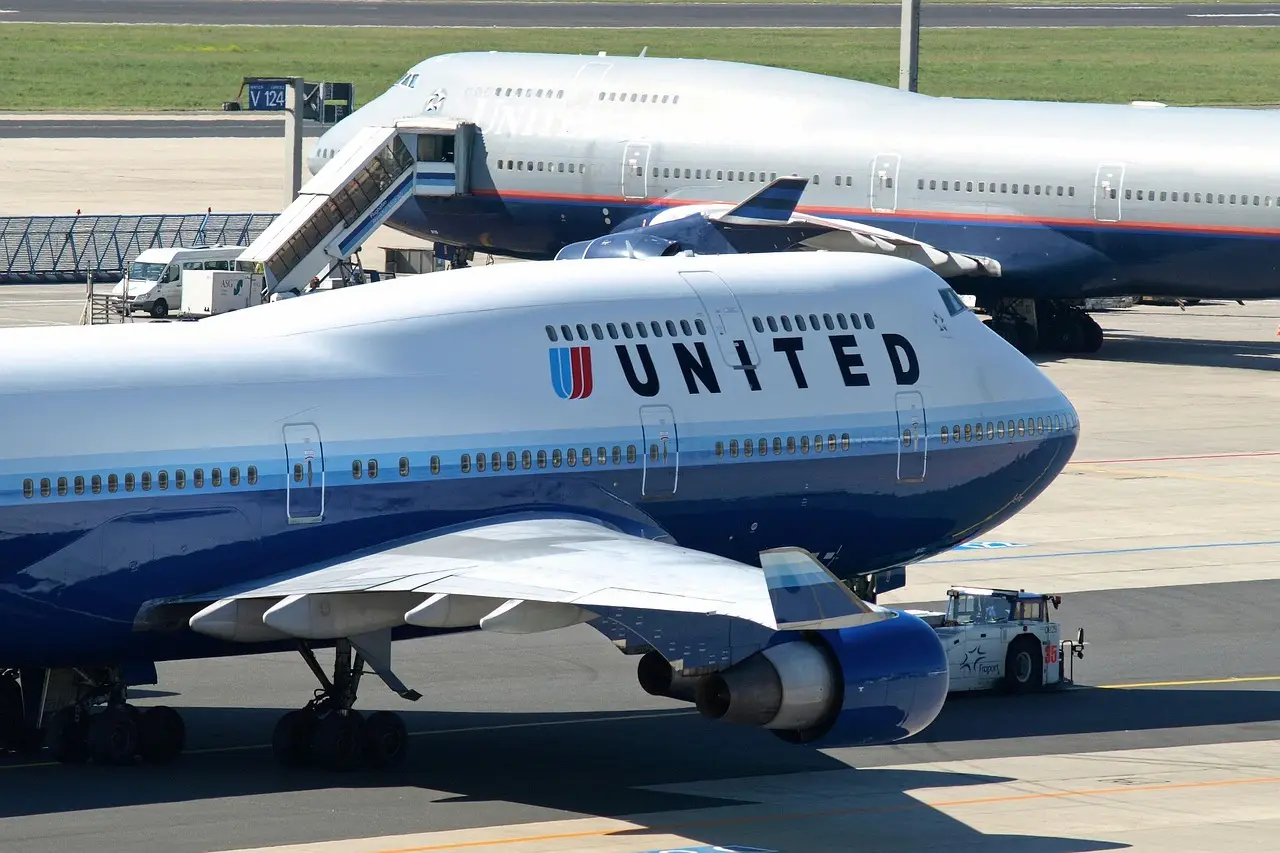
Boeing will not raise its 737 MAX output again this year: the current rate is 42 aircraft a month, with 47 planned. CEO Kelly Ortberg said the “stabilization period,” the interval needed to steady output after a rate increase, will last into early next year.
In a Tuesday CNBC interview, Ortberg said: “Everybody wants us to go faster, but we're going to do it right.” The pause limits immediate fleet additions, even as two MAX variants have secured certification.
The Federal Aviation Administration (FAA) certified the long-delayed 737 MAX 7 and MAX 10, clearing Boeing to begin deliveries. Boeing also started its fourth MAX production line at North Line in Everett and rolled out the first fully assembled aircraft there Monday. A MAX 10 is slated for delivery to WestJet next year.
What does this change for airline fleets?
For airlines, certification removes a regulatory gate, but it does not remove the production bottleneck. WestJet’s planned MAX 10 delivery next year provides the only concrete customer timetable in the near term. In practical terms, the near-term change is permission to deliver, not a step-change in available capacity.
Boeing reported a third-quarter 2025 net loss of $116 million, sharply narrower than the more than $5.3 billion, or $7.14 per share, lost in the year-earlier quarter. This year’s loss amounted to $0.26 per share.
Revenue rose 4% to $24.2 billion, helped by higher defense production but constrained by what Boeing called “less favorable commercial delivery mix.” Commercial aircraft revenue fell 3% to $10.7 billion from about $11 billion.
Free cash flow (cash generated after operating spending and capital investment) rose to about $500 million from $200 million. The result reflected investment in Boeing’s St. Louis and Charleston factories.
About $700 million in payments to the Department of Justice also weighed on the figure. Those payments related to the two fatal 737 MAX crashes in 2018 and 2019. Boeing still expects about $2 billion in free cash flow for the year.
Ortberg described the quarter to employees as another meaningful one and wrote that expectations were rising and should be because Boeing had a stronger foundation than a year earlier. He also said the company had more work to do to deliver its backlog, strengthen its culture and improve daily work.
The CEO called for productivity and efficiency improvements in day-to-day operations while maintaining quality and safety. Separately, Ortberg said financial uncertainty was narrowing and Boeing was reducing risk, pointing to strong demand in its commercial-aircraft backlog.
Boeing delivered 161 commercial aircraft in the third quarter, nearly unchanged from 160 a year earlier. It expects higher costs from supply-chain constraints and future production-rate increases.
In the first nine months, Boeing delivered 475 aircraft, 8% more than a year earlier. It also set a record for the highest nine-month MAX delivery total for the second consecutive year, at 363 aircraft.
Boeing’s third-quarter 2025 results still included a $4.9 billion charge tied to its long-delayed 777X family, which the company remained focused on one year later. The family comprises two passenger variants and one freighter.
Ortberg said in September that certification could drag into 2027 while the company worked through an engine issue. Until certification, those passenger and freighter aircraft remain outside operator delivery plans, postponing fleet and network decisions.
Boeing’s defense results strengthened the quarter. In September, it won a contract to produce the Navy’s next fighter, the F/A-XX, following last year’s Air Force award for the stealth F-47.
Defense and space revenue rose 15%, from $6.9 billion to $7.9 billion. That segment included a $252 million gain from Boeing’s July sale of HRL Laboratories, the quantum-computing research company it jointly owned with General Motors.
Global services revenue rose 4%, from $5.4 billion to nearly $5.6 billion. Those businesses offset some of the pressure in commercial aircraft, although Boeing’s overall free-cash-flow target still depended on production and legal spending.
Boeing also reached contract agreements with members of the Society of Professional Engineering Employees in Aerospace (SPEEA), a union representing 17,000 engineers, technicians, planners, analysts and other white-collar workers in Boeing’s factories. Members rejected Boeing’s first offer and authorized a strike in August, then accepted a second deal before the contract expired in October.
The agreement avoided a work stoppage that would have delayed 777X certification further and slowed monthly MAX production. That matters because certification and factory output remain the two constraints most directly tied to airline capacity and Boeing’s ability to convert backlog into deliveries and cash.
Analysts initially welcomed the results. Matthew Akers of BNP Paribas Equity Research wrote in a Tuesday investor note that the quarter “importantly had no new surprises.”
Ortberg’s risk-reduction claim has support in the smaller loss and stronger cash generation, but backlog demand does not prove delivery execution. The next checkpoints are whether the 47-per-month MAX rate can stabilize early next year, whether MAX 7 and MAX 10 deliveries begin, whether the 777X certification timeline stays within 2027, and whether Boeing can absorb the higher supply-chain and production-rate costs it expects.
via seattletimes.com (Original)
More from Sophie Lindqvist
Show full bio
Senior reporter covering people, launches and day-to-day practice in Commercial aviation industry coverage at Flightdeck Report.
599 articles
Same bay
- FDR734FAA certifies Boeing 737 MAX 10, unlocking 1,555-order backlog · October 21, 2026
- FDR766Boeing's Fleet Renewal Test Hinges on Production, Certification · October 10, 2026
- FDR443Boeing holds 737 MAX at 47/month as wing output lags plan · October 9, 2026
- FDR768FAA Certifies Boeing 737 MAX 10, the Longest MAX Variant · October 20, 2026
- FDR476Alaska Airlines expects FAA certification of 737 MAX 10 within days · September 30, 2026