Clearance CLR-2341 · AIR636
AIRCAL
AirportsClearance sheet
California Airport Begins Demolition of 59-Year-Old Air Traffic Control Tower
A 59-year-old air traffic control tower at a California airport is being demolished, per SFGATE. The airport's identity, demolition timeline and any replacement plans have not yet been publicly disclosed.
Read-back
- A 59-year-old air traffic control tower at a California airport is being demolished, per SFGATE.
- The specific airport, demolition contractor, project cost and replacement timeline have not been disclosed.
- Air traffic control towers in California face seismic-zone structural pressures that typically shorten operational lifespans.
- California airports subject to FAA Part 139 oversight have completed several tower replacements or major renovations over the past decade.
- Tower replacement projects in seismic zones commonly add base-isolation systems, redundant power feeds and reinforced elevator shafts, extending cost and duration.
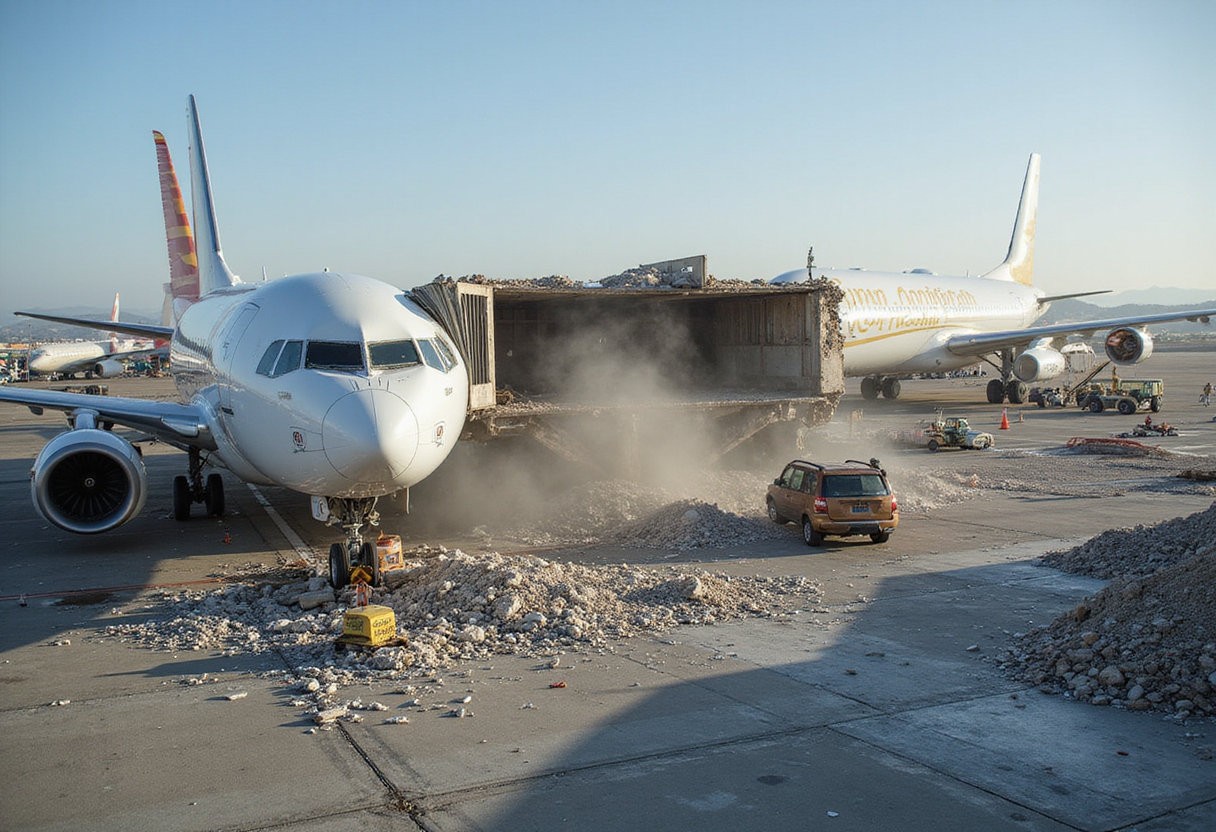
A 59-year-old air traffic control tower at a California airport is being demolished, according to a report by SFGATE. The specific airport, the demolition start date and any replacement schedule have not been disclosed in the limited information available.
The tower's age places it among the older staffed air traffic control facilities in the state. California hosts several air traffic control towers built in the 1960s that have now exceeded the 50-year mark, with structural, seismic and equipment-obsolescence pressures typically driving replacement cycles.
What is being torn down?
Public details are sparse. SFGATE's headline identifies a 59-year-old air traffic control tower at a California airport as the demolition target, without naming the airport, the tower height or its current operating hours. No demolition contractor, cost figure, environmental review document or FAA filing has surfaced in the initial reporting.
Air traffic control towers typically house FAA-certified controllers, runway and taxiway lighting controls, communications equipment and weather observation gear. Demolition during active airport operations usually requires either a temporary tower facility or radar-only procedures, depending on traffic volume and Part 139 status.
Why does tower age matter?
A 59-year operational life exceeds the median for U.S. air traffic control towers. Aging facilities typically face two pressure points: structural concerns, particularly in seismic zones such as California, and obsolescence of internal systems designed for line-of-sight visual operations rather than modern surveillance-based control.
California sits in one of the most demanding seismic environments in the continental United States. Tower replacement projects in such zones generally require base-isolation systems, redundant power feeds and reinforced elevator shafts, all of which add to project cost and duration.
What is not yet known?
Several data points would typically accompany a tower demolition announcement:
- The airport name and FAA location identifier
- Tower height and current operating hours
- Replacement schedule, if any
- Whether traffic will shift to a temporary tower
- Project funding source — FAA Airport Improvement Program grants often cover a portion of qualified tower work
Without these details, the operational impact on airline schedules, general aviation traffic and the airport's instrument approach procedures cannot be assessed. The lack of a named airport in the initial reporting also limits verification against FAA Form 5010 data and tower-by-tower staffing records.
How does this fit the broader pattern?
California has a substantial number of commercial-service airports subject to FAA Part 139 oversight, several of which have completed tower replacements or major renovations in the last decade. Each project follows a familiar pattern: environmental review, design, temporary tower construction, demolition of the old structure and commissioning of a new facility — a cycle that can run five to seven years from initial study to operational handover.
The 59-year-old tower now facing demolition sits within that established replacement cycle. Whether the site follows the standard order — temporary tower first, demolition second — or proceeds with demolition in advance of a replacement facility remains unclear from the available reporting.
What happens next?
SFGATE identified the structure as a 59-year-old air traffic control tower at a California airport. Further details on the airport's identity, project scope and demolition timeline are expected as the story develops.
via Google News: Air traffic control and airspace (Source)
More from Priya Raman
Same bay
- FDR183California airport demolishing 59-year-old air traffic control tower · October 10, 2026
- FDR775Aging ATC Infrastructure Blamed for Stranding, Delaying California Travelers · September 26, 2026
- FDR372LAX Air Traffic Control Systems Upgraded Under FAA Modernization Program · September 28, 2026
- FDR244Road Closures Begin as Burbank Airport Terminal Work Advances · September 30, 2026
- FDR249Tyler airport moves forward with new air traffic control tower · October 10, 2026