Clearance CLR-5578 · AIR717
AIRCAT
Air CargoClearance sheet
Cathay Cargo puts AI-assisted screening into service
Cathay Cargo has put AI-assisted screening into service at its Hong Kong hub operation, moving to machine-supported security checks as e-commerce volumes strain manual X-ray throughput.
Read-back
- Cathay Cargo has introduced AI-assisted screening into its freight operation
- The deployment was reported by Air Cargo Week
- No performance or throughput figures have been published for the AI-assisted process
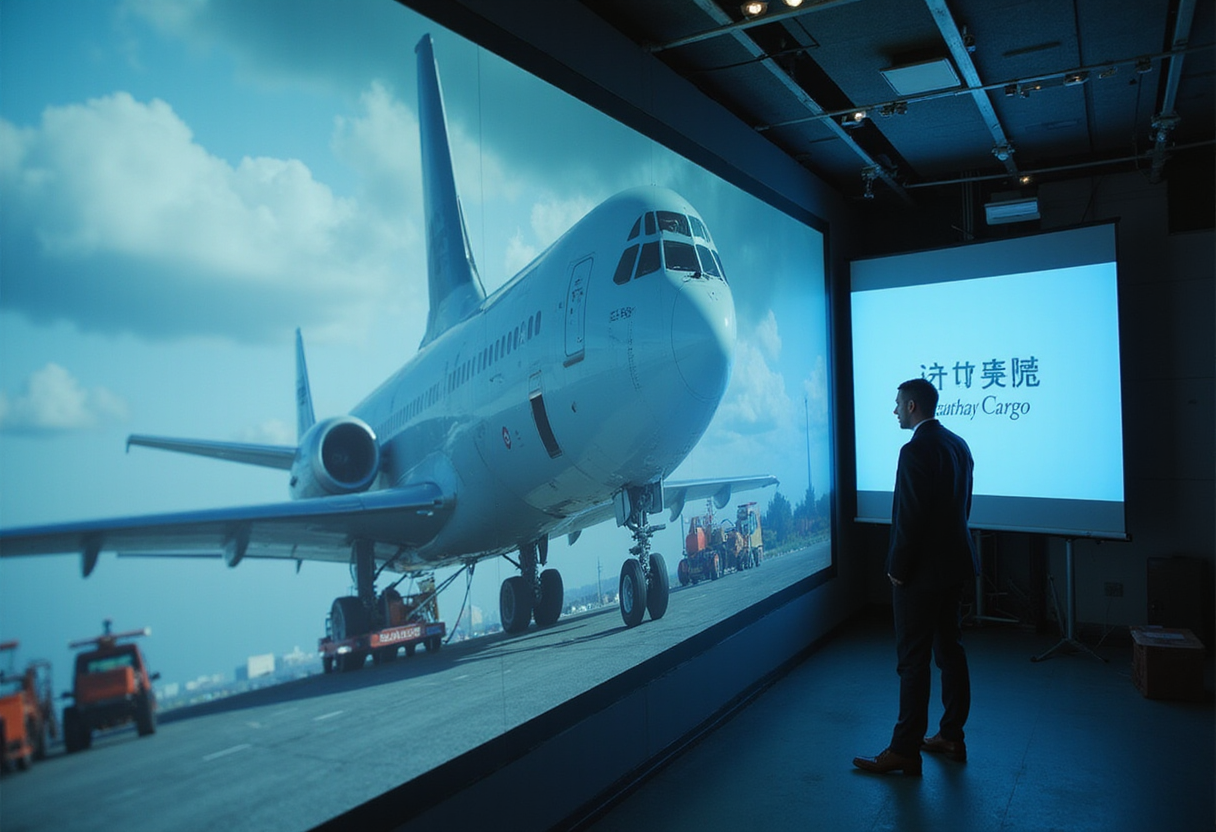
Cathay Cargo has introduced AI-assisted screening into its freight operation, marking the Hong Kong carrier's move from conventional manual inspection toward machine-supported security processing for air freight.
The deployment, reported by Air Cargo Week, places Cathay Cargo among the carriers adapting screening workflows to handle sustained volume pressure at one of the world's busiest air cargo hubs. Hong Kong International Airport has long anchored global transshipment flows between mainland Chinese manufacturing output and long-haul freighter and belly capacity, and screening throughput at the hub directly conditions how quickly pallets and loose cargo can be released onto aircraft.
AI-assisted screening in the air cargo context generally means image-analysis algorithms trained to flag anomalies in X-ray imagery of shipments, working alongside certified screeners rather than replacing them. The regulatory frame remains unchanged: cargo must still satisfy the security requirements set by the relevant authority — in Hong Kong's case under the territory's aviation security regime aligned with ICAO Annex 17 — and any automated decision-support tool must operate within an approved screening methodology. Carriers cannot substitute uncertified technology for mandated screening outcomes.
For an operator like Cathay Cargo, the commercial logic of automation sits in throughput and consistency. Manual X-ray interpretation is a constraint on turn time, and it depends on screener fatigue, training depth and retention — a chronic industry problem, given the global shortage of certified cargo screeners. Machine assistance aims to reduce that dependency, keep alarm resolution times predictable, and allow the terminal to absorb peak flows — e-commerce surges in particular — without adding screener headcount at the same rate as volume.
Cathay Cargo manages its freight through the carrier's Cathay Cargo Terminal operation at Hong Kong International Airport and a network that pairs dedicated freighters with belly-hold capacity across the group's passenger fleet. The carrier has positioned itself as a primary transshipment gateway, which makes security-processing speed a network variable: a bottleneck in screening at the hub propagates into connection windows and, ultimately, into schedule reliability for time-definite products.
The introduction also reflects a wider pattern across the air cargo industry. Regulators and screening-equipment suppliers have spent the past several years qualifying computed-tomography and algorithm-supported detection platforms for cargo applications, chasing both detection performance and operator productivity. Carriers and ground handlers that adopt these tools early are effectively betting that screening capacity — not lift, and not warehouse space — becomes the binding constraint on growth as e-commerce volumes compress piece sizes and increase piece counts per shipment.
What remains to be established is performance in service. Industry practice measures such systems on detection rates, false-alarm rates and their net effect on dwell time, and carriers typically validate vendor claims against operational data before expanding deployment across a terminal or network. Cathay Cargo has not, in the reported announcement, published benchmark figures for the AI-assisted process, so the deployment should be read at this stage as an operational trial-turned-production-step rather than a proven, network-wide re-engineering of its security chain.
The next milestones to watch are whether Cathay Cargo extends the technology across additional screening lanes and freight flows at the Hong Kong hub, whether it publishes throughput or reliability data, and whether the territory's regulator formalizes the AI-assisted method within approved screening procedures. Those outcomes will determine whether this is an incremental tooling change or the first stage of a structural shift in how one of the world's largest cargo carriers processes its freight.
via Google News: Air cargo (Source)
More from James Calloway
Show full bio
Staff writer covering industry trends and analytics at Flightdeck Report.
182 articles
Same bay
- FDR960Cathay Cargo deploys AI-assisted screening for export permit checks · September 28, 2026
- FDR368Air Canada Cargo doubles down on digital groundwork with Lödige · September 30, 2026
- FDR146SATS deploys autonomous cargo vehicles at Changi Airfreight Centre · September 28, 2026
- FDR50980% of Dangerous Goods Incidents Involve Undeclared Cargo, IATA Finds · September 30, 2026
- FDR547Hacis extends Hong Kong road feeder network into Vietnam · September 30, 2026