Clearance CLR-6723 · AIR372
AIRCAT
Air CargoClearance sheet
Cathay Cargo rolls out AI-assisted trade-compliance screening
Cathay Cargo has introduced AI-assisted screening that evaluates shipment context against trade-control lists, with director cargo Dominic Perret saying shippers need certainty about obligations before cargo moves through the network.
Read-back
- Cathay Cargo launched an AI-assisted screening system for trade-control compliance
- Tool uses contextual language analysis rather than keyword matching against export-control lists
- Director cargo Dominic Perret said shippers need certainty before cargo moves
- Tool joins existing Cathay Cargo AI uses including lithium-battery screening, predictive safety analysis and AI-enhanced CCTV
- Human oversight remains in the screening process and shippers retain responsibility for declarations
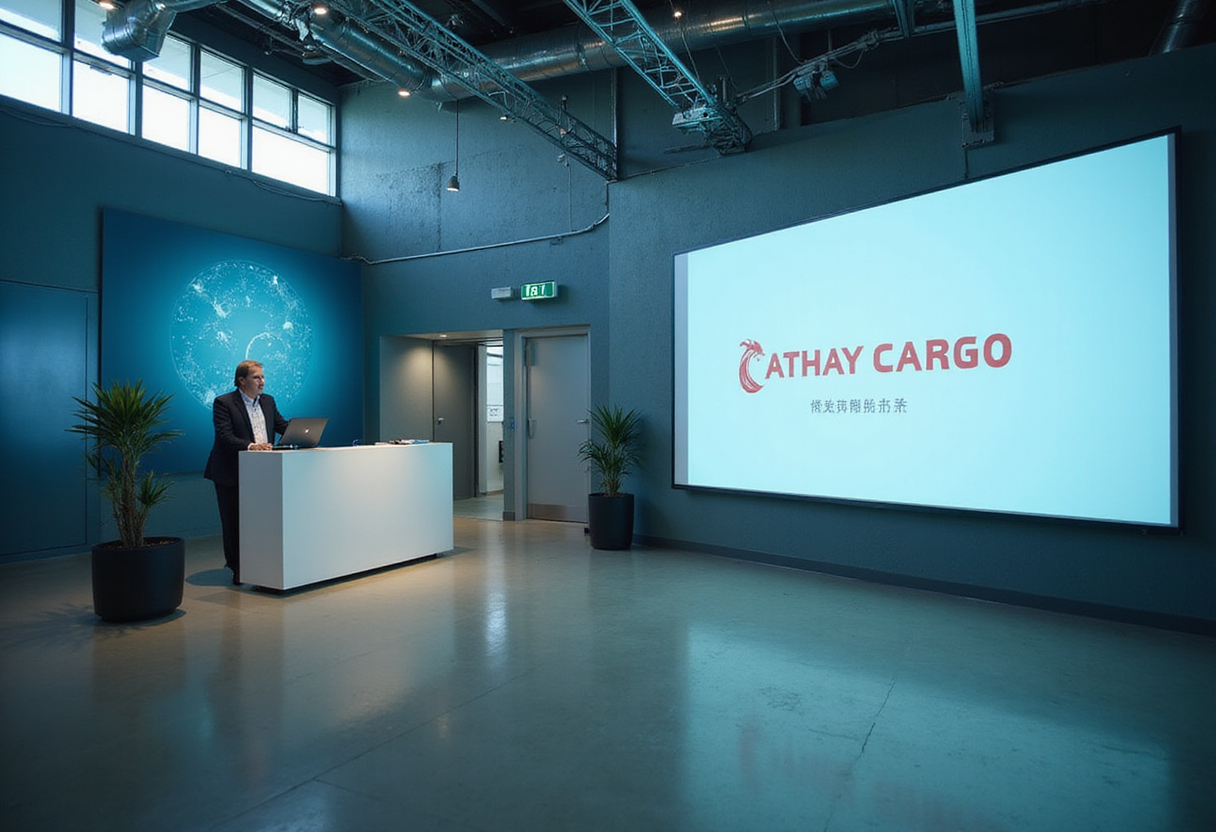
Cathay Cargo has introduced an AI-assisted screening system that evaluates the context of shipment descriptions against export-control and trade-compliance requirements before cargo enters its network, with the operator framing the deployment as a response to rising regulatory complexity for cross-border freight.
The new capability, launched by the cargo division of Hong Kong-based Cathay Pacific, uses contextual language analysis rather than simple keyword matching to compare goods descriptions with applicable control-list requirements. Cathay Cargo said the intent is to flag potential permit obligations earlier in the booking chain, where screening has historically been reactive.
"As global trade requirements continue to evolve, what customers value most is certainty, knowing that obligations are identified before a shipment moves, not after," said Dominic Perret, director cargo at Cathay Cargo.
The carrier has also rebuilt the dashboard presented to frontline operations staff. The revised interface displays, in a single view, why a shipment was flagged and what follow-up action may be required, allowing teams to triage alerts before cargo is tendered.
What does the tool actually do?
The system reads around goods descriptions rather than scanning for prohibited terms alone. That distinction matters in air cargo, where control-list screening routinely surfaces false positives on commodities that share terminology with controlled items, generating rework for shippers and acceptance teams.
Cathay Cargo said early operational results show more timely handling of alerts and improved ability among frontline staff to prioritize follow-up. The carrier did not publish specific metrics on alert turnaround times or false-positive rates, and did not name the underlying AI vendor or model architecture.
"The value of this enhancement is in how dense regulatory requirements are made clearer and more actionable for our people," Perret said. "Pairing digital intelligence with operational expertise creates better outcomes for customers, regulators and the wider air cargo community."
How it fits Cathay Cargo's broader AI portfolio
The trade-control tool joins a wider set of AI applications already in operation at the carrier's cargo business:
- AI-assisted lithium battery screening
- Predictive safety analysis
- AI-enhanced CCTV systems at Cathay Cargo terminal facilities
Each addresses a distinct regulatory or operational exposure. Lithium-battery screening targets mis-declared dangerous goods, a recurring problem that IATA and major operators have flagged for years. Predictive safety analysis and CCTV analytics focus on terminal throughput and security, separate from the customs and trade-control function that the new tool covers.
The compliance system is the most directly shipper-facing of the group, sitting at the interface between freight declarations and Cathay's acceptance process.
Where the responsibility boundary sits
Cathay was explicit that the technology does not transfer responsibility for accurate declarations away from shippers. Human review remains part of the workflow, and the system functions as a triage and explanation layer rather than an automated adjudicator. Shippers continue to be accountable for what they file.
That positioning has commercial implications. By surfacing flags earlier and explaining them more clearly, Cathay is targeting compliance-sensitive freight — pharmaceuticals, semiconductors, dual-use industrial equipment — where predictability of acceptance can weigh as heavily as price in carrier selection.
What comes next
Cathay Cargo said it will continue refining the capability using operational feedback and compliance reviews, but did not indicate whether the system will be marketed to other carriers, ground handlers, or freight forwarders. The deployment's durability will hinge on whether early handling-time gains hold through a full peak-season cycle, and whether contextual screening materially reduces false-positive rework for shippers of controlled dual-use goods on routes where Cathay Cargo's network depth matters most.
via Aviation Pros (Source)
More from Nathan Brooks
Show full bio
Correspondent covering media and advertising at Flightdeck Report.
299 articles
Same bay
- FDR585Cathay Cargo deploys AI-assisted permit screening across network · October 10, 2026
- FDR960Cathay Cargo deploys AI-assisted screening for export permit checks · September 28, 2026
- FDR717Cathay Cargo puts AI-assisted screening into service · October 2, 2026
- FDR730IATA: Screening 'Important Layer' but Not Silver Bullet for Air Cargo Security · October 9, 2026
- FDR50980% of Dangerous Goods Incidents Involve Undeclared Cargo, IATA Finds · September 30, 2026