Clearance CLR-9703 · AIR320
AIRCHE
AirportsClearance sheet
Cheap Airport Buildings Cost More: The Case for Lifecycle Asset Management
Cutting protective covers from outdoor HVAC units pushed replacement from year 15 to year 10. Airport operators are rethinking how value engineering decisions play out over decades.
Read-back
- Removing protective covers from outdoor HVAC units put equipment on track for replacement at year 10 instead of the anticipated 15.
- Reno-Tahoe International Airport's new ground transportation center specifies concrete for moisture and road salt exposure across its operating life.
- The author, Scott Anderson, is Managing Director of Conrac Solutions Operators with over a decade in airport infrastructure.
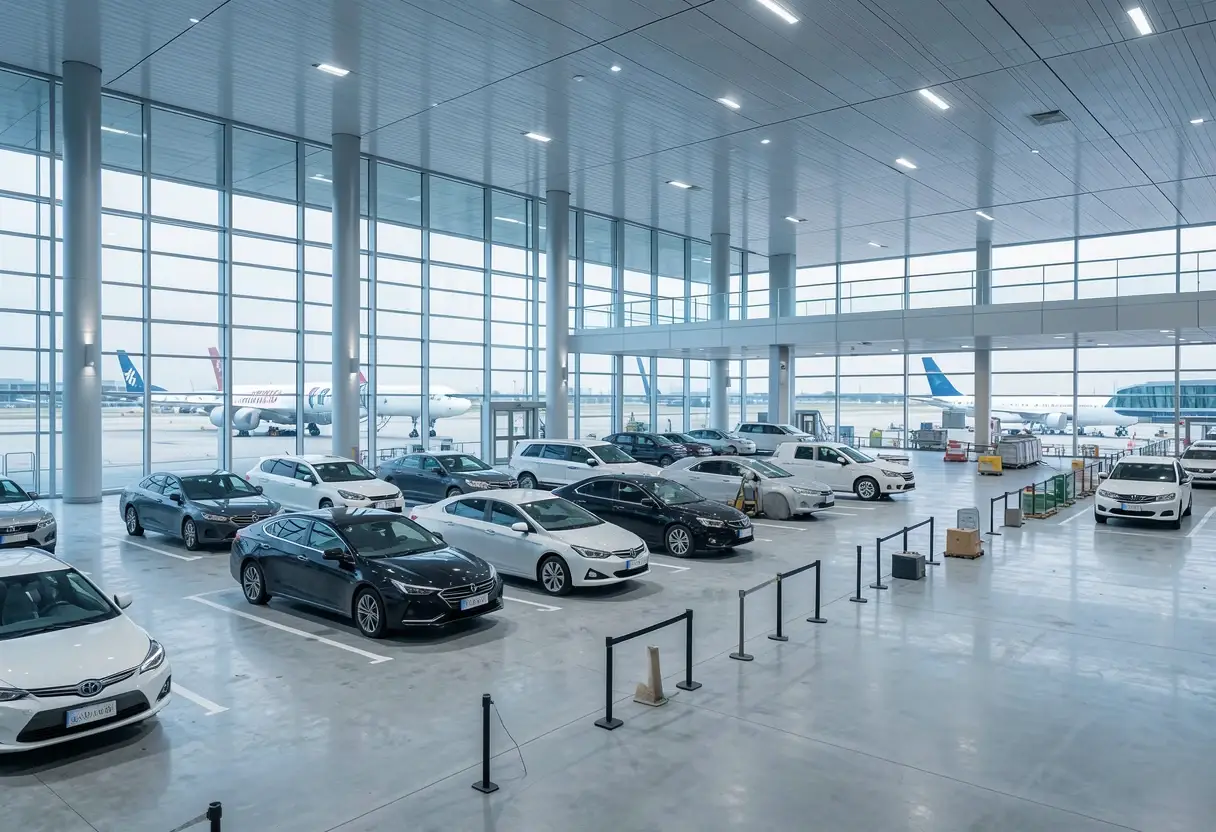
Removing protective covers from outdoor HVAC units put one facility's equipment on track for replacement around year 10 instead of the anticipated 15. That single cost-saving decision during construction traded a modest upfront saving for roughly a third of the equipment's service life. It is the argument Scott Anderson, Managing Director of Conrac Solutions Operators, makes for judging airport infrastructure by lifecycle cost rather than purchase price.
Anderson oversees Conrac Solutions' nationwide facility operations and brings more than a decade of experience in airport infrastructure and operational strategy, including facility activation and long-term asset preservation. His thesis is blunt: a decision that saves money during construction can cost far more later through increased maintenance, accelerated replacement and a substandard passenger experience.
What does lifecycle management actually change?
Maintenance keeps a system functioning today. Lifecycle asset management asks a harder question: how will today's decision affect reliability, operating costs and replacement needs five, 10 or 20 years from now? The answer is shaped at every stage — planning, design, construction, warranty optimization (using warranty terms to recover repair costs from contractors), preventive maintenance, and major repairs.
For airport owners, the core issue is where long-term responsibility sits. Delivery methods can shift responsibility among the airport and its partners, but the fundamental question stays the same: who ultimately bears the cost and risk of maintenance, premature failure and replacement? Aligning that responsibility with long-term performance, Anderson argues, creates accountability across the asset's life.
The implications reach beyond the facilities department. Reliable assets keep operations running and passengers moving. Disciplined repair and replacement planning makes budgets predictable, reduces unplanned capital demands and lowers the risk of unexpected failures.
Where the costly decisions hide
Some of the costliest lifecycle choices look minor at the design stage. Anderson gives three concrete examples:
- Mechanical systems. Properly sized piping, soft starts and variable frequency drives (devices that control motor speed to reduce strain) extend equipment life. Removing them cuts construction cost, but the savings disappear if piping or equipment needs premature replacement.
- Material specifications. At Reno-Tahoe International Airport's new ground transportation center and consolidated rental car facility, concrete specifications account for conditions the facility will face throughout its operating life, including moisture saturation and road salt carried in on vehicles during winter.
- Weather exposure. The HVAC cover example above — and retrofitting protection later cannot recover the service life already lost.
Designing around the people who will use the facility matters just as much. Early input from tenants and operators, such as rental car companies in a consolidated rental car facility (ConRAC), helps avoid costly modifications later. Column spacing is one example. Rental car operators need flexibility to adjust how vehicles are stacked and staged as demand shifts between ready and return areas. Without it, a new facility may struggle to keep pace with market conditions and require significant future investment.
Value engineering, applied well, improves value without sacrificing performance. The lifecycle lens changes the question from "Can this cost be removed?" to "What will removing this cost today mean over the life of the asset?" When the organizations responsible for long-term operations and lifecycle costs — along with users — help shape design and construction decisions, initial savings can be weighed against downstream consequences.
The handback problem
For long-term operating, lease or concession agreements, airports must define the condition in which an asset is ultimately returned. Contractual handback requirements, set at the outset, create a legal mechanism for holding the responsible party accountable over decades.
Crucially, "operational" and "in good condition" are not synonymous. A facility can still function while carrying substantial deferred maintenance or approaching a major cycle of equipment replacements. Asset management indicators — facility condition, remaining useful life, equipment availability, deferred maintenance and forecasted capital requirements — give a more complete picture of what the airport is getting back.
Many airports, Anderson notes, have received an asset from a tenant or operator that required significant rehabilitation before it could be returned to service or leased again. The goal should be a handback of an operational asset that was responsibly maintained, designed to adapt to changing requirements, and does not immediately demand significant airport investment.
The questions leaders should ask
No single maintenance approach fits every project; assets, funding environments and institutional priorities differ. But the underlying question does not change: are today's decisions creating the greatest value over the life of the infrastructure? Anderson's checklist for airport leaders:
- What do the people who will operate and use the facility need from it?
- How will repair and replacement be funded?
- Who bears the consequences of premature failure?
- What disruption will replacement create?
- How can the facility adapt as needs evolve?
- What condition should the asset be in decades from now?
The true measure of an infrastructure investment, he concludes, is not how it performs at the ribbon-cutting, but how well it serves the airport decades later.
via Aviation Pros (Source)
More from Sophie Lindqvist
Show full bio
Senior reporter covering people, launches and day-to-day practice in Commercial aviation industry coverage at Flightdeck Report.
624 articles
Same bay
- FDR761Gillette airport regains maintenance as airline traffic rebounds · October 17, 2026
- FDR922Fleet expansion drives sustained aircraft modification demand · October 9, 2026
- FDR712UK Airport Maintenance Firm Enters Liquidation After 11 Years · October 13, 2026
- FDR945Duffy Asks Congress for $30 Billion Air Traffic Control Overhaul · September 28, 2026
- FDR535Sri Lanka hosts regional workshop on maintenance programme lifecycle · October 12, 2026