Clearance CLR-9586 · AIR199
AIRDHL
Air CargoClearance sheet
DHL Express adds heavyweight air cargo product to portfolio
DHL Express has rolled out a new heavyweight air cargo service, expanding its portfolio beyond standard international express parcels. Yahoo Finance carried the headline without accompanying detail.
Read-back
- DHL Express has rolled out a heavyweight air cargo service, per a Yahoo Finance report.
- The source carried the headline only, with no body text disclosing weight limits, routes, or aircraft.
- DHL Express operates as part of Deutsche Post DHL Group alongside FedEx and UPS in the global integrator tier.
- Heavyweight express typically requires main-deck loading on widebody freighters such as the 777F or 767-300F.
- No DHL executive was quoted and no technical thresholds were published in the available reporting.
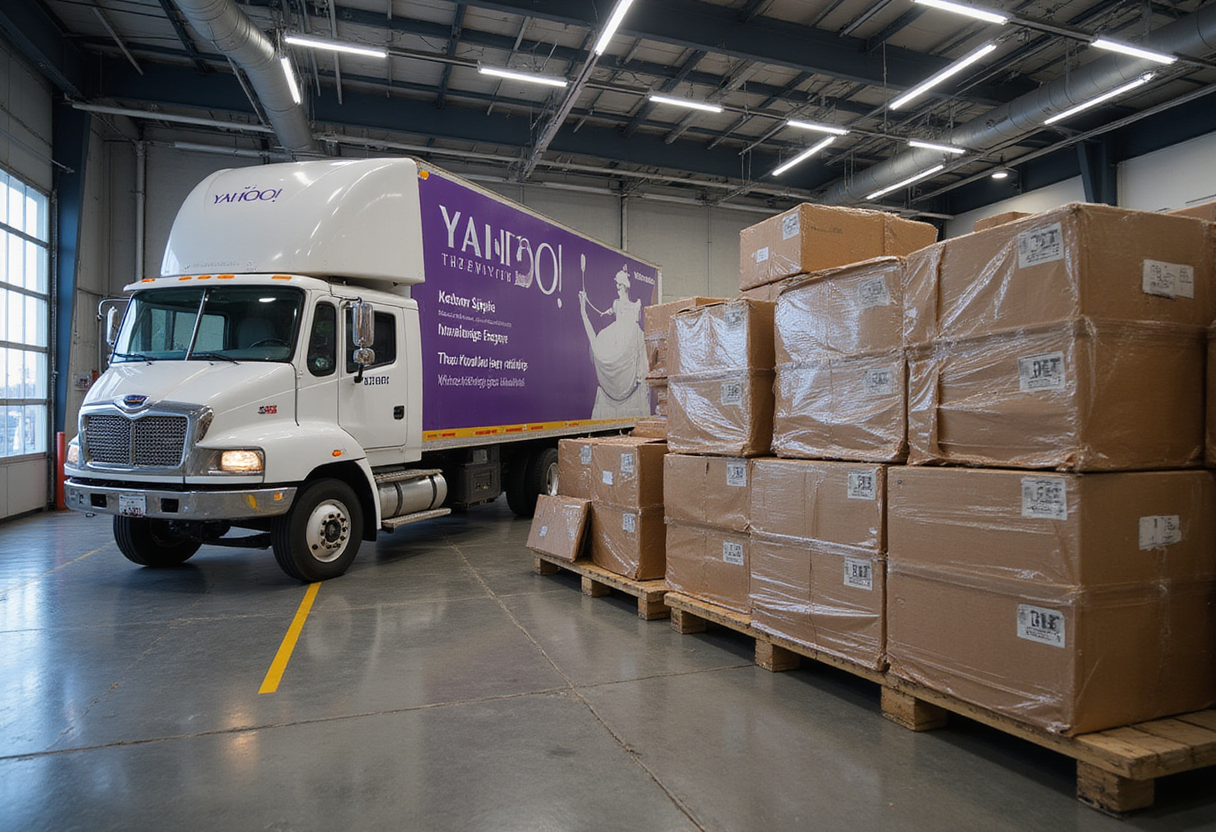
DHL Express has rolled out a new heavyweight air cargo service, according to a Yahoo Finance report. The product extends the integrator's offering beyond its conventional international express envelope into shipments that exceed standard parcel weight thresholds.
Yahoo Finance carried the headline without accompanying body text in the source material available, so specific weight limits, launch routes, fleet assignments, and pricing structures have not been publicly disclosed in this report.
What does the headline signal?
DHL Express, the air and international express arm of Deutsche Post DHL Group, ranks among the three global integrators that compete with FedEx and UPS. A "heavyweight" express product, by industry convention, targets shipments that exceed standard per-piece weight limits and therefore require manual build-up, dedicated loading equipment, and main-deck aircraft positions rather than automated sortation. The launch indicates DHL is moving to formalize a capability that integrators have historically addressed through ad-hoc charter or oversize-piece handling.
Why this category now?
Outsized freight commands less transparent pricing than commoditized express parcels and tends to yield higher revenue per kilogram. The category also insulates the integrator from the most direct competitive pressure of returning long-haul passenger belly capacity, which has added supply to general cargo markets since 2023. A dedicated heavyweight product lets DHL offer single-waybill pickup, customs clearance, and delivery for shipments that previously moved with general freighter operators or via freight forwarders bundling separate legs.
The launch follows a period in which integrators have reorganized product tiers to defend yield. Same-day, time-definite next-flight-out, deferred, and ecommerce returns each carry different unit economics. Heavyweight slots into that matrix as the highest-weight, highest-touch category, requiring more handling labor and slower sortation but offering margins less exposed to spot-rate compression on standard express parcels.
How does the network absorb the change?
Integrators operate hub-and-spoke networks centered on a small number of sorting facilities. Adding a heavyweight product does not require new hubs but does change how inbound and outbound aircraft are loaded. Main-deck freighters with large side doors and reinforced floors — typically widebody types such as the Boeing 777F and 767-300F — suit outsized loads. Narrowbody feeders can carry heavyweight pieces only in limited numbers and with weight restrictions that protect structural limits. The source does not state whether DHL reallocates existing aircraft or adds capacity for the new product.
The economics depend on aircraft utilization at the integrator's gateway hubs, on the density of the route network connecting those gateways to industrial origins and destinations, and on turnaround times for build-up and breakdown. Heavyweight handling typically reduces daily aircraft cycles because loading takes longer. Operators accept the trade-off when revenue per kilogram runs several times the network average.
What remains unverified
The source does not state which aircraft types will carry the heavyweight traffic, whether additional capacity is being added or simply re-marketed, or which trade lanes will open first. The report does not quote any DHL executive, and DHL has not reproduced its own communications. Weight thresholds, dimensional limits, and service guarantees tied to the launch likewise do not appear in the available reporting.
What to watch
The competitive test for DHL will be whether the new offering captures share from specialist heavy-freight operators or primarily repackages freight that the integrator already moved under bespoke arrangements. The answer will shape how the long-haul fleet is tasked, how the time-definite network's dispatch-reliability figures are protected, and how DHL negotiates with industrial customers that have historically split heavy shipments across multiple carriers. Forwarders and shippers should expect further product detail in DHL's next formal communication, alongside any updates to existing same-day and deferred service tiers.
via Google News: Air cargo (Source)
More from Sophie Lindqvist
Show full bio
Senior reporter covering industry trends and analytics at Flightdeck Report.
394 articles
Same bay
- FDR966IATA reports strong air cargo demand in August · October 10, 2026
- FDR572DHL Express lifts UK rates 5.9% from January 2027 · September 30, 2026
- FDR857DHL Globalisation Tracker Maps AI Demand to Air Cargo Shifts · October 10, 2026
- FDR944Amazon Global Logistics Adds Air SMP and Economy Air on China-US · October 9, 2026
- FDR719Freight Giant Shifts Widebody Orders From Boeing to Airbus · September 29, 2026