Clearance CLR-7416 · AIR169
AIRDHS
Airspace & RegulationClearance sheet
DHS Chief Watches Drone-Kill Demonstrations at Choctaw Nation Test Range
DHS Secretary Markwayne Mullin watched kinetic interceptors and entanglement systems demonstrated in Oklahoma on November 12 as counter-drone standards discussions advance.
Read-back
- DHS Secretary Markwayne Mullin attended the Kinetic IV CUAS test event in Stringtown, Oklahoma, on November 12.
- Live demonstrations featured kinetic interceptor and entanglement technologies for downing illicit drones.
- It was the first Kinetic event hosted at the Choctaw Nation's Emerging Aviation Technology Center, a facility Mullin championed in the Senate.
- Attendees included officials from DHS, the FAA, the Coast Guard, the Choctaw Nation and Bahrain's ambassador to the U.S.
- Mullin also joined a White House Task Force drone security forum in Maryland earlier that week.
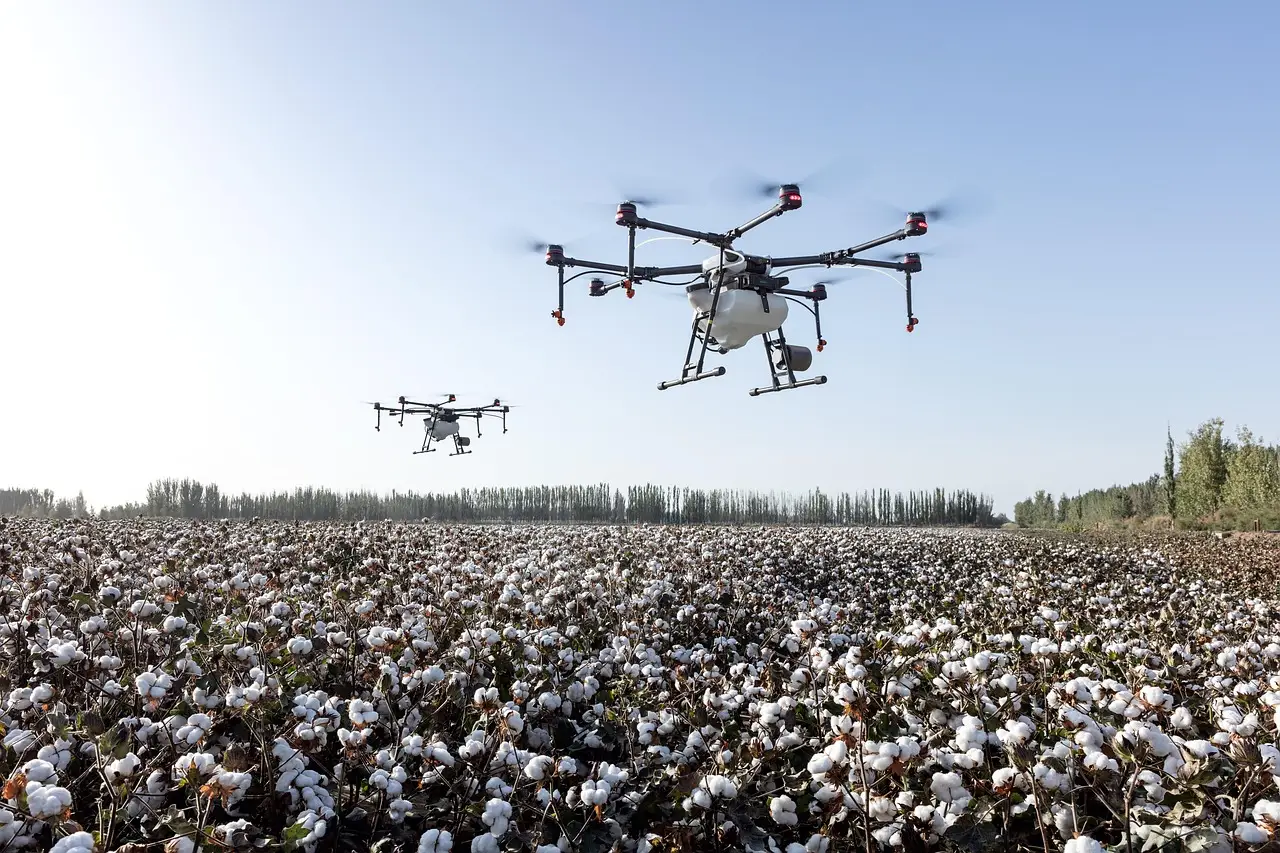
Homeland Security Secretary Markwayne Mullin watched live demonstrations of kinetic interceptors and entanglement systems on Thursday, November 12, at the Kinetic IV Counter Unmanned Aircraft Systems test event in Stringtown, Oklahoma. The two technology families — one destroys hostile drones, the other disables them — represent the Department of Homeland Security's working answer to what it calls illicit unmanned aircraft.
The event carried a clear institutional message. DHS gathered federal, state, local, tribal and territorial partners, plus industry and at least one international representative, to discuss counter-drone requirements and standards before watching selected systems perform. In Washington's vocabulary, that combination of talking and shooting at drones in the same afternoon signals a program moving from white papers toward procurement.
What did the demonstrations involve?
Participants observed live demonstrations of kinetic interceptor technologies and entanglement technologies, according to DHS. Interceptors physically strike or destroy a target drone; entanglement systems ensnare rotors or airframes, typically with nets. The department did not disclose which specific systems performed, how many engagements were attempted, or what success rates were achieved — an omission worth noting for anyone tracking the maturity of these tools.
The demonstrations followed a discussion between Mullin and senior government officials on CUAS technology requirements and standards. Establishing common standards is the bureaucratic prerequisite for any eventual multi-agency acquisition, and the presence of the FAA and the U.S. Coast Guard at the event suggests cross-department coordination rather than a single-agency effort.
Who attended, and why does the guest list matter?
The roster read like a homeland security committee meeting with a runway attached:
- Pedro Allende, DHS Under Secretary for Science and Technology
- Erin Hoffman, DHS Deputy Under Secretary for Management
- Anthony Antognoli, Assistant Commandant and Program Executive Officer for Robotics and Autonomous Systems at the U.S. Coast Guard
- Lynsey Scott, FAA Principal Advisor
- Gary Batton, Chief of the Choctaw Nation of Oklahoma, with members of the Choctaw Tribal Council
- Shaikh Abdulla bin Rashid Al Khalifa, Bahrain's ambassador to the United States
The Bahraini presence hints at allied interest in counter-drone capability, though DHS offered no detail on any formal cooperation. The FAA's attendance is logical; anything that downs aircraft, hostile or not, falls within the regulator's airspace concerns.
What did officials actually say?
Mullin framed the effort as a partnership enterprise. "Protecting the homeland requires strong partnerships and a shared commitment to innovation. DHS is working with state, local, tribal, and territorial partners, industry, and international allies to evaluate technologies that can address the evolving threat posed by unmanned systems," he said. He added that he was "especially proud" the Choctaw Nation's Emerging Aviation Technology Center was hosting the work.
Allende supplied the threat rationale. "The rapid proliferation and technological evolution of unmanned systems demand that we continuously adapt our defensive capabilities," he said. He credited the Science and Technology directorate with providing "a rigorous environment for evaluating promising technologies against DHS operational needs."
Why the Choctaw Nation venue matters
This was the first Kinetic event held at the Choctaw Nation of Oklahoma's Emerging Aviation Technology Center, a facility Mullin championed during his time in the U.S. Senate. The secretary returning to a site he promoted as a senator is a tidy piece of legislative follow-through, whatever one thinks of the technology on display.
The event was not Mullin's only drone engagement of the month. Earlier last week he joined the White House Task Force at a drone security forum in Maryland, indicating that counter-UAS policy attention at the cabinet level is currently running at a high tempo.
Neither DHS nor the participating agencies announced procurement decisions, contracts, or a timeline at Stringtown. Until standards solidify and performance data emerges from events like Kinetic IV, the department's counter-drone arsenal remains a demonstration program with ambitions.
via thestkittsnevisobserver.com (Source)
More from Grace Kim
Show full bio
News editor covering companies, deals and strategy in Commercial aviation industry coverage at Flightdeck Report.
640 articles
Same bay
- FDR785DHS Commits $500 Million Counter-Drone Push Ahead of 2028 Olympics · November 11, 2026
- FDR602AIDC Runs Counter-Drone Drill to Extend Infrastructure Airspace Cover · September 30, 2026
- FDR583DOT, DoW and DHS Coordinate on Southern Border Airspace · October 16, 2026
- FDR957Tactien Group launches independent C-UAS evaluation tool · October 10, 2026
- FDR649House Passes Alert Act Mandating ADS-B In After DCA Midair Collision · September 30, 2026