Clearance CLR-1493 · AIR786
AIRFAA
Airspace & RegulationClearance sheet
FAA Ground Stop Turns ATC Funding Fight Into $50 Billion Question
A fiber-optic cable contractor triggered a four-hour nationwide FAA ground stop. Now the White House wants $50 billion — while $9 billion sits unspent.
Read-back
- Friday's nationwide ground stop lasted over four hours after contractor fiber work disrupted FAA comms and radar.
- Duffy's funding request grew from $30 billion to $50 billion after the outage; $10 billion targeted at ATC modernization.
- Congress has already appropriated $14.5 billion; Democrats say about $9 billion remains unspent.
- A September GAO report warned that accelerated telecom modernization raised outage risk.
- FAA Administrator Bryan Bedford testifies before Congress next month; House Democrats plan upgrade investigations in January.
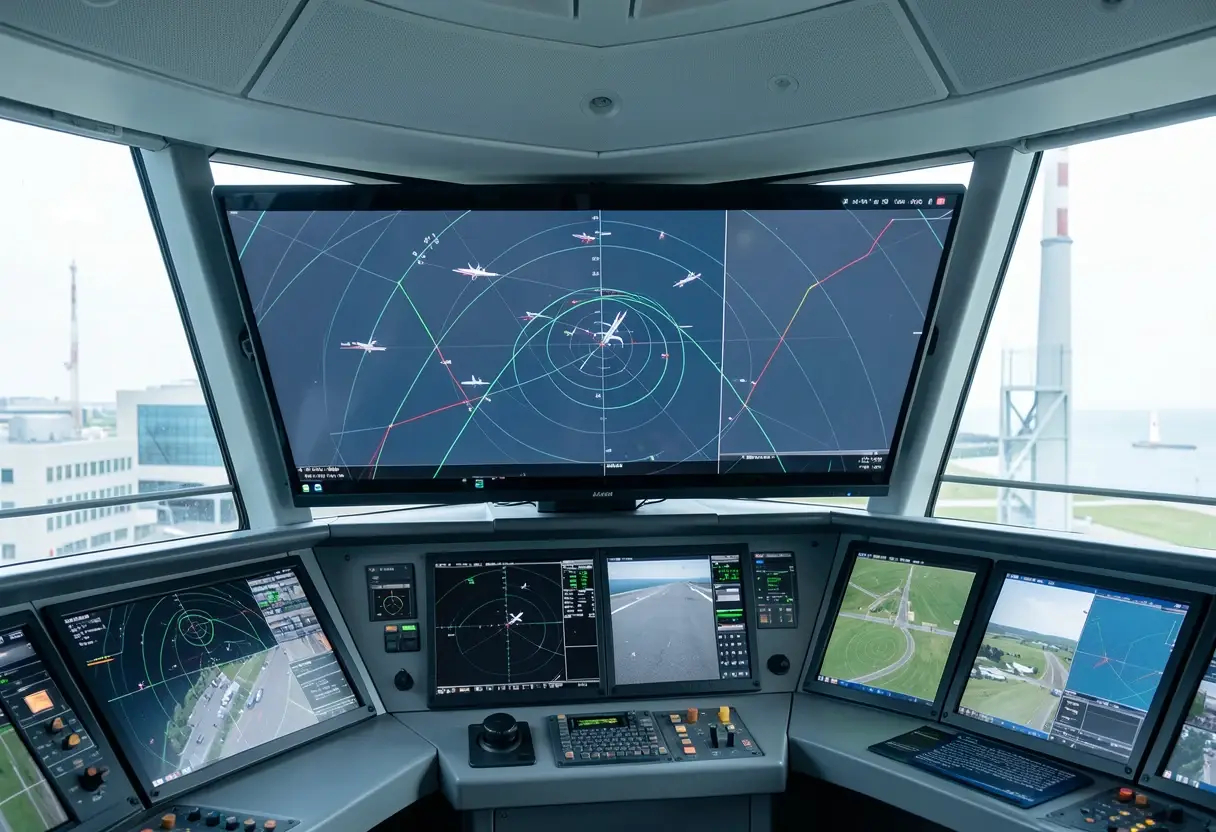
A contractor replacing copper wiring with fiber optic cable disrupted FAA communications and radar equipment across a large part of the United States on Friday, forcing a nationwide ground stop that lasted more than four hours. Three days later, cancellations were down to the low hundreds — against thousands on Friday and Saturday — but the political fight over air traffic control funding had escalated to a $50 billion request.
Transportation Secretary Sean Duffy wrote to Congress the day before the incident, re-upping a request for an additional $30 billion, including $10 billion for air traffic control modernization. After the ground stop, the ask grew to $50 billion. House Speaker Mike Johnson said he wants the money approved in the lame-duck session.
What caused the outage?
The FAA says the failure originated with a longtime contractor working on the telecom network. The exact details remain under investigation. What is already documented: the Government Accountability Office warned in September that the administration was accelerating modernization work on this very network.
Kevin Walsh, director of the GAO's Information Technology and Cybersecurity team and lead author of that report, said: "They are basically buying speed at the risk of cost uncertainty and the potential for disruptions in the national airspace. It increases the risk of outages, especially when dealing with these older systems which are prone to failure."
Walsh says there is widespread agreement the work is necessary — the systems are old and need replacement. The GAO's concern is narrower: an accelerated timeline raises the risk of operational disruption and of major cost overruns if planning and budgeting slip.
Is money actually the barrier?
President Trump told reporters the ground stop would change the congressional calculus: "We've been working with Congress to try and get the money. I think the one good thing that comes out of it, I'm sure Congress now will give us the money to fix it."
What does this change for taxpayers and airlines? Democrats argue: nothing yet, because the funds already exist. Congress has appropriated $14.5 billion for FAA system modernization through the annual bipartisan transportation budget and the One Big Beautiful Bill Act passed last year. Democrats say roughly $9 billion of that remains unspent.
"If money is the barrier, I'll support more money to modernize the air traffic control system," said Representative James Walkinshaw of Virginia. "They haven't presented a plan or demonstrated that money is the barrier here, and money or lack of money was not the cause of Friday's incident."
Congresswoman Rosa DeLauro, the top Democrat on the House Appropriations Committee, said in a statement that Cabinet heads need to take responsibility for mismanagement of funds. A handful of lawmakers have also suggested the administration divert part of the billions allocated to ICE last year with few strings attached.
The safety backdrop
The funding fight plays out against a broader safety push that followed the 2025 midair collision between a passenger jet and a U.S. Army Black Hawk helicopter in Washington, D.C., which killed 67 people. That accident, combined with communication problems last year at Newark and other Eastern airports, galvanized the administration's push for upgrade money.
The National Transportation Safety Board recommended wider use of a safety system that investigators say could have prevented the crash. The Senate unanimously approved a bill requiring it in all aircraft, but the bill stalled in the House, falling a few votes short after the Pentagon withdrew support at the last minute. Victims' families are pushing for a compromise bill during the lame-duck session and will hold an event in Washington on Tuesday.
Oversight is coming
FAA Administrator Bryan Bedford is scheduled to testify before Congress next month. Democrats on the House Transportation and Infrastructure Committee plan to rebuild an investigation staff when they take the majority in January, and probing the rollout of the ATC upgrades will be a top priority. With Thanksgiving travel approaching and a lame-duck appropriations window closing, the next few weeks will show whether the outage converted into appropriations — or into hearings.
via feeds.npr.org (Source)
More from Sophie Lindqvist
Show full bio
Senior reporter covering people, launches and day-to-day practice in Commercial aviation industry coverage at Flightdeck Report.
673 articles
Same bay
- FDR408FAA Grounded All US Flights for 4½ Hours After Contractor Upgrade Failed · November 15, 2026
- FDR221FAA Ground Stop Traced to Fiber Upgrade Error at Remote Facility · November 15, 2026
- FDR610US Reopens Airspace After Rare Nationwide Ground Stop · November 14, 2026
- FDR987Four-Hour FAA Ground Stop Grounds Thousands of Flights Nationwide · November 14, 2026
- FDR942Aging FAA Telecom Circuit Triggers 1,000-Plus Cancellations · October 1, 2026