Clearance CLR-3094 · AIR987
AIRFOU
Airspace & RegulationClearance sheet
Four-Hour FAA Ground Stop Grounds Thousands of Flights Nationwide
The FAA's four-hour nationwide ground stop delayed 8,000-plus flights and canceled 7,000 more. Officials blame 1980s-era hardware that 'got overloaded' — and rule out a cyberattack.
Read-back
- Four-hour nationwide ground stop on Friday grounded flights at all U.S. airports — only the second such stop since 9/11.
- More than 8,000 flights delayed and 7,000 canceled by 9 p.m. ET Friday, per FlightAware.
- Transportation Secretary Duffy blamed 1980s-era copper lines, switches and routers that 'got overloaded.'
- Homeland Security Secretary Mullin said there was 'zero evidence' of a cyberattack.
- The 2023 precedent: a NOTAM system outage shut U.S. airports after contract workers deleted critical files.
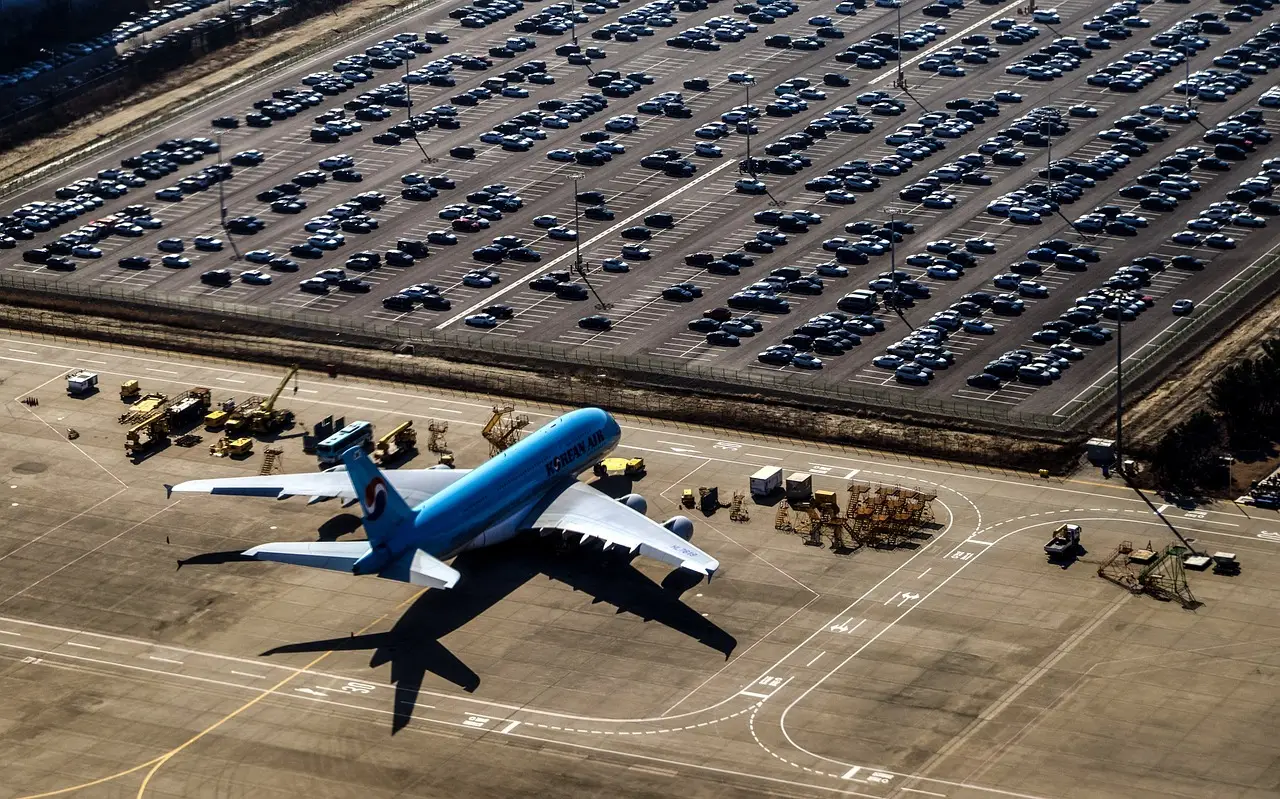
A four-hour nationwide ground stop grounded thousands of flights at every U.S. airport on Friday, producing one of the largest air travel disruptions in the United States since the September 11 attacks. By 9 p.m. ET, FlightAware counted more than 8,000 delayed flights and 7,000 cancellations across the country, on top of nearly 7,000 delays recorded on Thursday.
The Federal Aviation Administration lifted the stop on Friday evening. It said the failures affected Air Route Traffic Control Centers — the regional facilities that manage high-altitude traffic between airports.
Transportation Secretary Sean Duffy told a Friday night news conference that controllers had faced "intermittent" outages of radar and communications systems from early afternoon. He blamed the hardware itself. "We have old switches, old routers. We use 1980s little copper lines. It's an old system that went down and went down everywhere. It got overloaded," Duffy said.
Pressed by reporters on why those systems would fail on an otherwise normal travel day, Duffy had no ready answer. FAA leaders did not brief the media at the White House press conference and offered no further detail on the communication outages that triggered the stop.
Was it a cyberattack?
Homeland Security Secretary Markwayne Mullin, who joined Duffy in the briefing room, ruled out an attack. "We have seen zero evidence this is a cyber attack," he said.
That question matters because the precedent points both ways. This was only the second nationwide ground stop since September 11, 2001. The first, in 2023, shut all U.S. airports after an outage in the NOTAM system (Notice to Air Missions, which alerts pilots and airports to real-time hazards). That incident initially raised fears of a cyberattack; the FAA later determined contract workers had inadvertently deleted critical files.
The timing also intersects with the FAA's current modernization program. The agency has begun deploying an AI-enhanced tool called the SMART system as part of its overhaul of air traffic control. Air Space Intelligence, the tool's maker, moved quickly to distance its product from the disruption. "The current ground stop is not based on or a result of the SMART system, any product of ASI or our integration with FAA and ATC," the company said on social media.
What does this change for travelers and airlines?
In the short term, the network takes days to rebalance. Duffy said flights would resume but that the backlog would take time to clear, stranding passengers during the busy holiday travel period. Crew and aircraft ended Friday out of position, and airlines will absorb the cost of rebooking and cancellations layered on Thursday's weather-related delays.
The longer-term question is infrastructure. A system that fails everywhere at once because of 1980s-era copper lines and aging routers is a single point of failure for the entire national airspace. Senator Richard Blumenthal (D-CT) called for a "prompt, penetrating investigation" into the causes. "A widespread communication outage of this scale is highly alarming — a clear danger to national security, as well as safe, convenient travel close to the holidays. The Department of Transportation owes Americans credible, accurate action and factual disclosure," his statement read.
Airport scenes
At Dallas Fort Worth International Airport, Regina Harling waited hours past her scheduled departure before learning of the grounding from news on her phone. "There's still a sign right in front of me that says we're boarding in 16 minutes," she said Friday afternoon. She needed last-minute travel to San Diego for a family emergency. "I was just thinking to myself that it always feels like it's getting harder to travel than it used to be," she said.
At Chicago O'Hare, Giliann Karon was already on board an aircraft when the order came, after a weather delay the day before on her New York-bound route. "It's just kind of like, 'Oh, of course this is happening,'" she said.
The FAA has not yet explained what specifically overloaded the system on Friday. Until it does, the SMART rollout and the wider air traffic control overhaul will face sharper scrutiny about whether replacement can come fast enough for hardware already past its design life.
via feeds.npr.org (Source)
More from Sophie Lindqvist
Show full bio
Senior reporter covering people, launches and day-to-day practice in Commercial aviation industry coverage at Flightdeck Report.
633 articles
Same bay
- FDR166FAA lifts nationwide ground stop after 6,000-flight cancellation surge · November 14, 2026
- FDR572FAA orders nationwide ground stop after all en route centers lose comms · November 14, 2026
- FDR218FAA Halts All US Departures After Telecom Outage Hits ATC Centers · November 14, 2026
- FDR574ATC Failure Grounds Hundreds of U.S. Flights, Exposing Aging Infrastructure · October 14, 2026
- FDR923FAA Grounds Midwest Flights After Minnesota ATC Outage · September 28, 2026