Clearance CLR-5085 · AIR610
AIRUSR
Airspace & RegulationClearance sheet
US Reopens Airspace After Rare Nationwide Ground Stop
US airspace reopened at 8:15 p.m. ET on November 13 after aging switches and routers overloaded, grounding flights nationwide. Officials ruled out cyberattack and any Microsoft link.
Read-back
- US airspace reopened at 8:15 p.m. ET on November 13 after a nationwide ground stop lasting roughly five hours
- Transportation Secretary Sean Duffy blamed overloaded switches and routers — old hardware, not a cyberattack
- The outage came one day after the White House asked Congress for $30 billion to modernize US air traffic control
- Homeland Security Secretary Markwayne Mullin ruled out any link to the global Microsoft outage and said there was 'no cyber attack'
- Duffy warned recovery would be slow and that not every flight would depart immediately
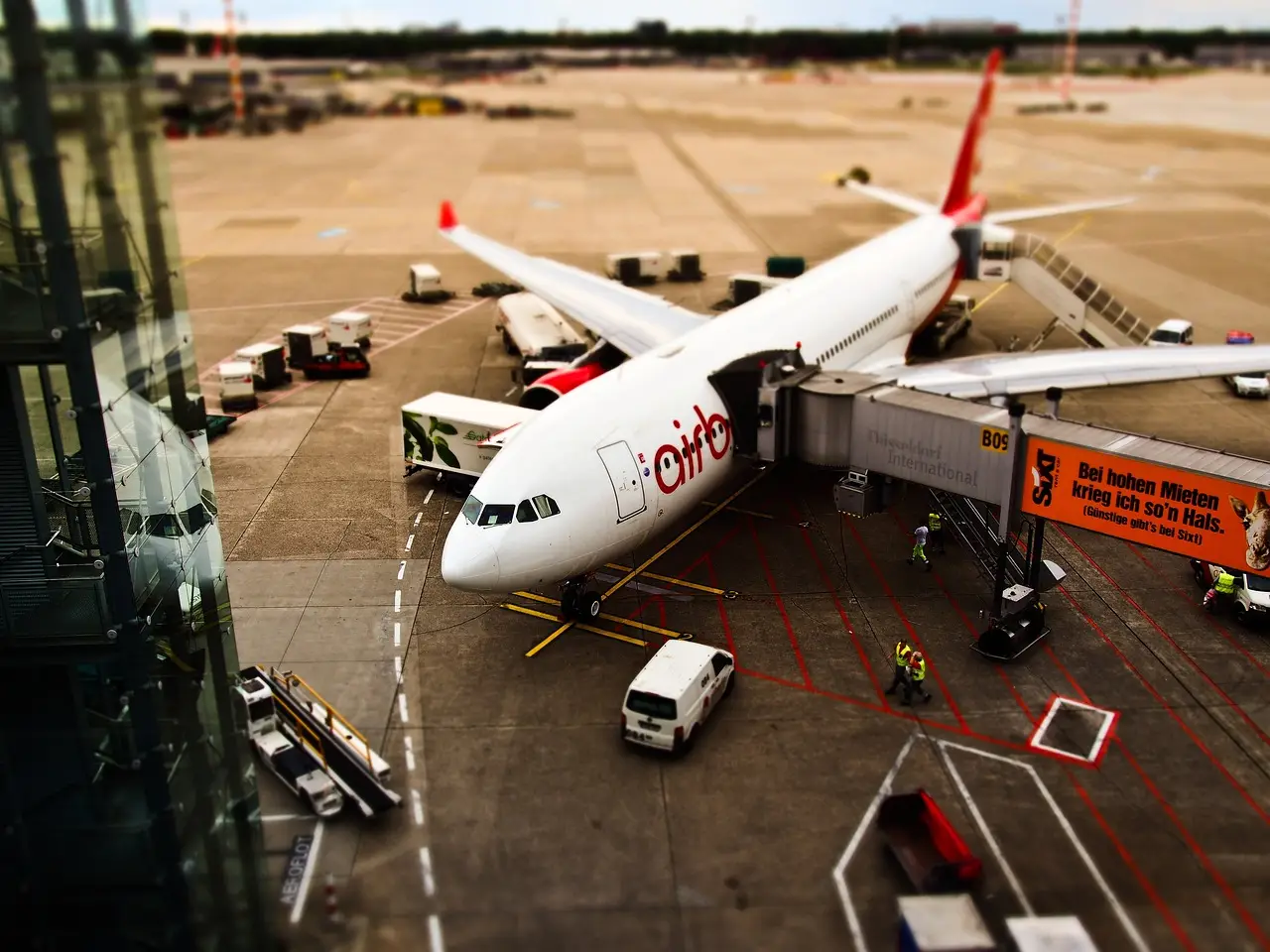
The United States lifted an extremely rare nationwide ground stop at 8:15 p.m. Eastern Time on November 13, roughly five hours after a major communications outage halted flights at airports across the country.
Transportation Secretary Sean Duffy announced the reopening at a late-night briefing at the White House, but warned that recovery would be gradual. "At 8:15 tonight Eastern Time, we've opened up the airspace," Duffy said. "Now does that mean every flight is going to fly right now? It's going to be slow."
The timing could hardly have been worse — or, depending on your vantage point, more pointed. The breakdown came just one day after Duffy and the White House formally asked Congress for $30 billion to upgrade and modernize the US air traffic control system. Duffy did not shy away from connecting the two.
What caused the outage?
According to Duffy, the failure traced back to legacy network equipment, not malicious actors and not a software catastrophe. "Our switches, our routers actually got overloaded with data, and they went down," he said. "It's the old hardware that went down, and I think the question for the American people is: Do you want your Congress to fund this?"
The hardware in question sits inside the communications backbone that air traffic controllers rely on to coordinate traffic nationwide. When the switches and routers buckled under a data overload, regulators had little choice but to stop departures across the entire national airspace — a measure so unusual that airport terminals from Los Angeles to Chicago to Washington filled with stranded passengers within hours.
Duffy insisted throughout the briefing that the system remained safe for Americans to fly. The ground stop, in his framing, was a symptom of aging infrastructure, not of compromised safety oversight.
Was it a cyberattack or the Microsoft outage?
Homeland Security Secretary Markwayne Mullin spent much of the briefing knocking down two theories that spread quickly while flights sat on the ground: a coordinated cyber assault, and a link to the Microsoft outage then affecting services worldwide.
"Welcome to Friday the 13th, right? You know, I want to make sure everybody understands that there is no connection between this and Microsoft. I know a lot of people are making that jump," Mullin said.
He was blunter on the security question. "There was actually no cyber attack," Mullin said, pointing to the absence of the usual signals intelligence agencies watch for. "When we start looking at cyber threats, cyber attacks, typically some people are going to raise their hand up and say, 'Hey, we did that.' There's no chatter. We haven't seen any footprints."
That verdict came with a caveat. Mullin said US security and law enforcement agencies were still checking and had ruled nothing out — the kind of hedge that keeps an investigation alive even as officials steer the public away from panic.
Where was the President?
Both officials also found themselves defending President Donald Trump, who had not publicly commented on the stoppage some five hours after it began. Mullin rejected any suggestion of disengagement. "President Trump immediately had people in his office," he said. "We were communicating."
The political subtext was hard to miss. A $30 billion modernization request to Congress, followed within a day by a hardware failure that grounded the entire country, hands the administration a concrete argument — and hands its critics a concrete data point about how far the system has decayed.
For airlines, the cost arithmetic is straightforward: a nationwide ground stop of several hours cascades into cancellations, crew repositioning and baggage backlogs at hubs including Chicago O'Hare, Los Angeles International and Ronald Reagan Washington National, where passengers lined up at carousels and check-in desks well into the night. Duffy's warning that recovery would be slow signals that the operational cleanup, and the political fight over funding, are only beginning.
Whether Friday's outage becomes the leverage that finally moves $30 billion through Congress will define the next chapter of US air traffic control modernization.
via channelstv.com (Source)
More from Nathan Brooks
Show full bio
Correspondent covering technology and product news in Commercial aviation industry coverage at Flightdeck Report.
646 articles
Same bay
- FDR419US Grounds All Flights for Four Hours as Legacy ATC Comms Fail · November 14, 2026
- FDR987Four-Hour FAA Ground Stop Grounds Thousands of Flights Nationwide · November 14, 2026
- FDR332FAA lifts second nationwide ground stop since September 11 · November 14, 2026
- FDR203FAA Lifts Nationwide Ground Stop After Four-Hour Communications Failure · November 14, 2026
- FDR945Duffy Asks Congress for $30 Billion Air Traffic Control Overhaul · September 28, 2026