Clearance CLR-1855 · SAF332
SAFFAA
Safety & OperationsClearance sheet
FAA lifts second nationwide ground stop since September 11
The FAA lifted a Friday nationwide ground stop after hours, leaving thousands of flights canceled and millions stranded as investigators examine a communications failure and air traffic equipment.
Read-back
- The Friday ground stop was the second nationwide action since September 11, 2001, and appears to have been the longest.
- The previous nationwide ground stop occurred in 2023 and lasted less than two hours.
- Thousands of aircraft were grounded, flights canceled and passengers stranded as the system scrambled.
- Duffy's preliminary explanation cited intermittent communications, radar and outdated, overloaded ATC equipment.
- DHS said there was no indication of a cyberattack but could not rule one out.
By Priya Raman
The Federal Aviation Administration's Friday nationwide ground stop (a halt to departures at every airport) was only the second in the United States since September 11, 2001, and appears to have been the longest. It grounded thousands of aircraft at airports across the country, stranding millions of passengers.
The order came Friday afternoon. The FAA lifted it after an hours-long disruption, citing a telecommunications failure. Airspace reopened, but the cancellation and delay backlog remained, along with questions about the underlying cause.
What caused the ground stop?
Transportation Secretary Sean Duffy said investigators were still trying to determine what happened. He cited intermittent communications, intermittent radar and outdated air traffic control (ATC) equipment overloaded with data.
At the press conference, Duffy said: "We have old switches, old routers." He added that the system was old, had gone down and was overloaded.
Reporters pressed for a specific technical account, but Duffy offered few details. He repeatedly returned to his push for more funding to rebuild the national ATC system, an administration priority. His account therefore remained unconfirmed; the briefing did not identify the specific switch or router involved, the location affected or a complete failure sequence.
Was a cyberattack involved?
Homeland Security Secretary Markwayne Mullin said there was no indication of a cyberattack, but he could not rule one out entirely. He also said the outage was unrelated to the Microsoft disruption that knocked out Outlook and some other services the previous day.
Those statements left a cyberattack unexcluded, rather than established as the cause. Duffy's working explanation remained an equipment and communications failure, but investigators had not confirmed a root cause.
What happened to flights and passengers?
Airlines canceled thousands of flights and delayed thousands more. The freeze also left aircraft and crews out of position across the country. Restoring airspace did not immediately restore the operating schedule because aircraft and crews were no longer at their planned locations.
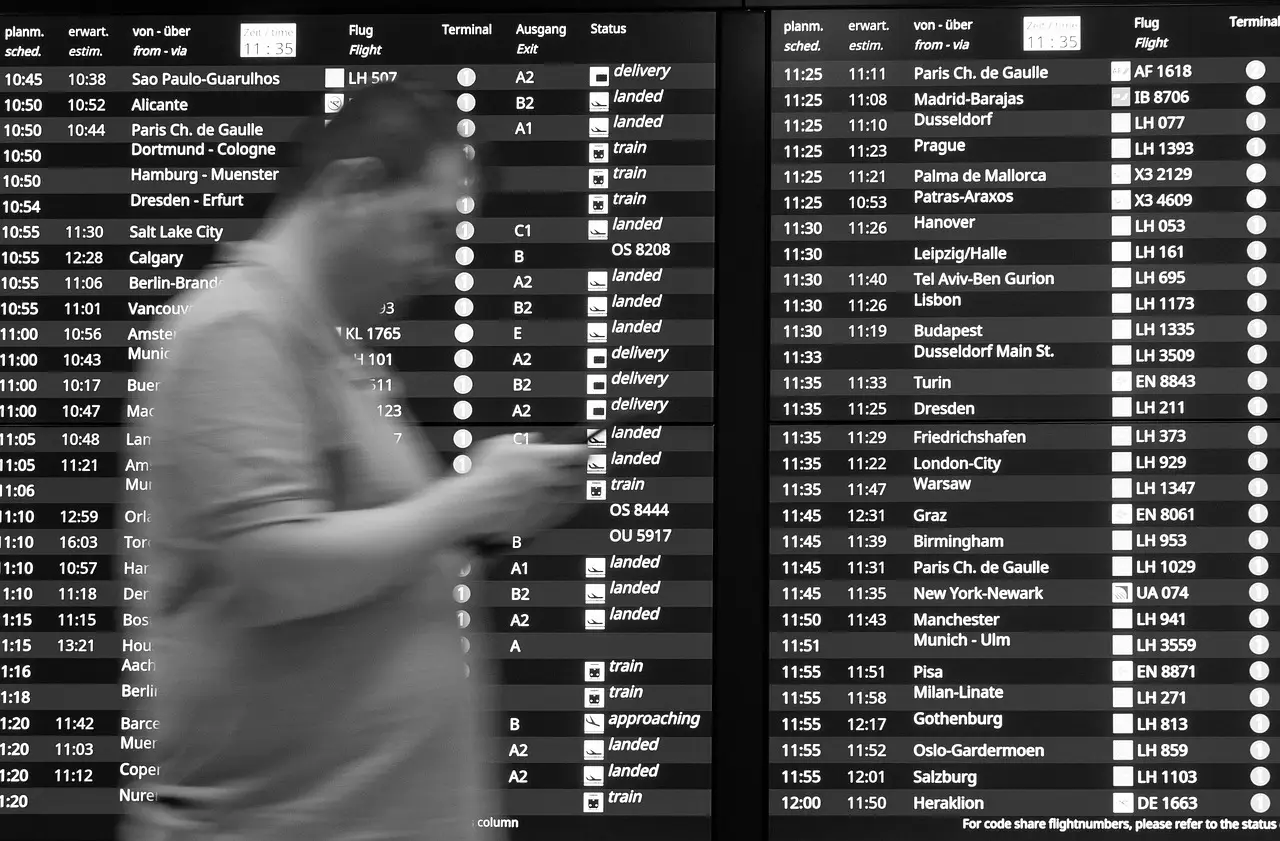
At Washington National Airport, NPR reporter Ava Berger said announcements confirmed that the air traffic holds had been lifted while urging passengers to remain patient. About half of the flight board was red for canceled flights. Travelers began returning slowly to their gates to determine whether their planes would depart.
During the broadcast, an archived clip included an unidentified pilot saying information remained scarce while 15-minute updates were helpful and reassuring. NPR host Scott Detrow then said the broadcast had used the wrong tape, so the clip did not establish facts about the outage.
NPR transportation correspondent Joel Rose said the "whole system is scrambled" and compared the disruption to a blizzard affecting every airport simultaneously. He expected recovery to take days even optimistically. His central operational point was that clearing the airspace did not reset the network.
How rare was the shutdown?
The previous nationwide ground stop came in 2023 and lasted less than two hours. The Friday action therefore appears to have been the longest nationwide ground stop since September 11, 2001, and materially longer than the last comparable restriction.
The briefing offered no estimate of the financial loss. For airlines, the immediate exposure was thousands of canceled and delayed flights, plus aircraft and crews displaced from their planned positions during a recovery measured in days. Airport capacity returned unevenly because those resources still had to move through the same network.
What does this change for air travelers?
Travelers did not face a simple restart. A reopened airspace did not guarantee a departure because crews and aircraft had to return to positions from which the network could operate. The practical change was an extended recovery queue, not immediate service restoration.
The next test is whether investigators identify the failed equipment and whether Duffy's call for more funding produces a specific rebuilding plan. Until both become clear, the cause of the freeze and the risk of another remain unresolved.
via feeds.npr.org (Source)
More from Priya Raman
Show full bio
Market editor covering money, funding and market shifts around Commercial aviation industry coverage at Flightdeck Report.
627 articles
Same bay
- FDR987Four-Hour FAA Ground Stop Grounds Thousands of Flights Nationwide · November 14, 2026
- FDR712FAA lifts nationwide ground stop after telecom failure strands US flights · November 14, 2026
- FDR408FAA Grounded All US Flights for 4½ Hours After Contractor Upgrade Failed · November 15, 2026
- FDR858Telecom Outage Halts All U.S. Departures as FAA Radar and Radio Links Fail · November 14, 2026
- FDR203FAA Lifts Nationwide Ground Stop After Four-Hour Communications Failure · November 14, 2026