Clearance CLR-9728 · AIR353
AIRDUB
AirportsClearance sheet
Dubai's Al Maktoum Airport: $35bn Expansion Targets World's Biggest Hub
Dubai Airports is heading a $35 billion expansion of Al Maktoum International Airport aimed at overtaking Atlanta and DXB as the world's largest passenger hub, per Construction Review reporting.
Read-back
- $35 billion expansion programme announced for Al Maktoum International Airport
- Goal stated as overtaking the world's busiest passenger hub, currently Hartsfield-Jackson Atlanta at 104.7 million passengers in 2023
- Project supersedes Dubai Airports' earlier $32 billion masterplan first outlined in 2014
- Al Maktoum opened for cargo in 2010 and limited passenger flights in 2013
- Emirates and flydubai, both anchored at DXB today, would need phased relocation to the new facility
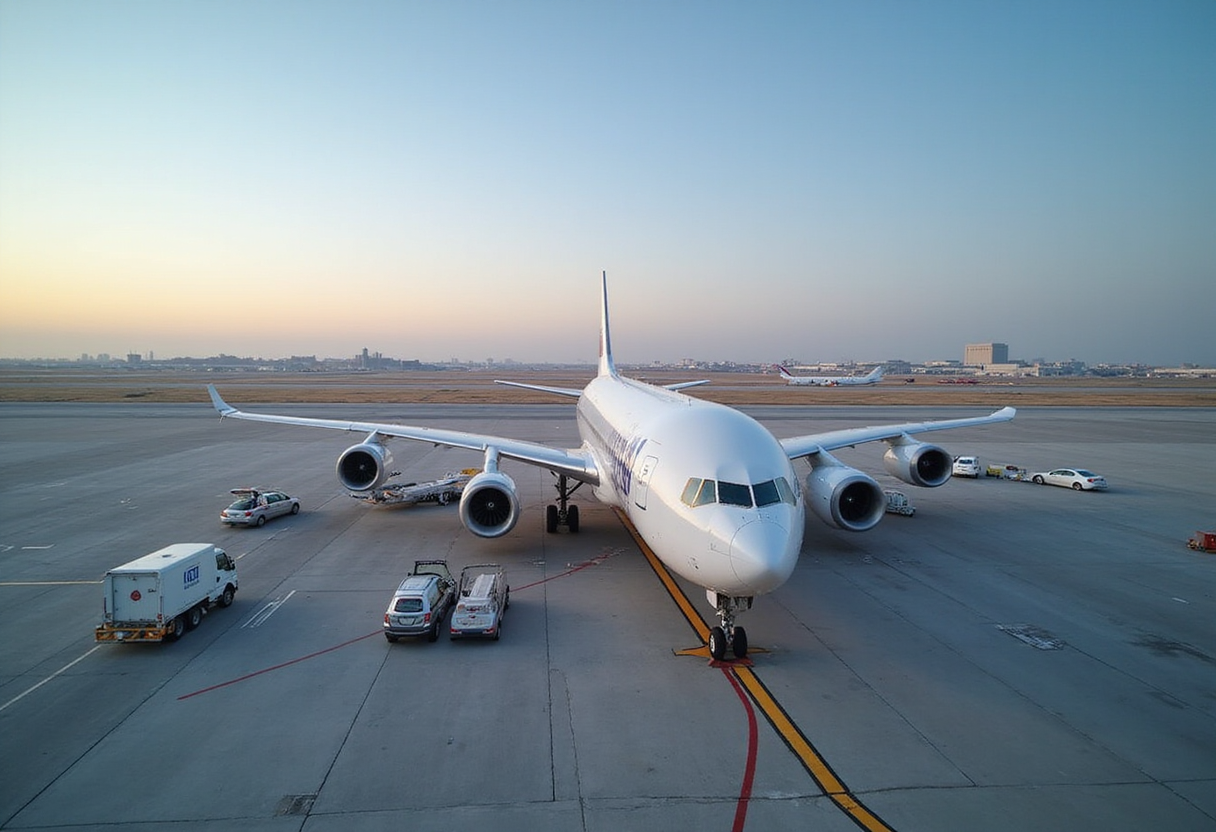
Dubai's Al Maktoum International Airport is heading a $35 billion expansion programme designed to make it the world's largest passenger hub, according to Construction Review reporting on the announcement.
The figure places the project among the largest single-airport capital commitments ever announced, exceeding the original $32 billion masterplan that Dubai Airports first set out for the same site more than a decade ago. The operator has restated the ambition repeatedly since 2014 without executing it at the original scale, and the new headline number should be read against that record.
What does "world's biggest" actually mean?
The title now held by Hartsfield-Jackson Atlanta International Airport depends on the metric. Atlanta led 2023 with 104.7 million passengers and roughly the same level in 2024, according to ACI World rankings. By international passengers, Dubai International (DXB) has held the top ranking for several consecutive years. By cargo tonnage, Hong Kong and Memphis compete at the top. Al Maktoum's claim to "biggest" will turn on which measure Dubai Airports chooses, and on whether the facility reaches the throughput the $35bn implies.
How does this connect to DXB?
Al Maktoum opened for cargo operations in 2010 and for limited passenger flights in 2013. It sits inside the Dubai South urban masterplan, 40 kilometres from the existing hub at DXB. DXB remains capacity-constrained: two closely spaced runways, a curfew regime, and a city-side footprint that limits new pier construction. A purpose-built replacement at Al Maktoum removes those constraints but requires the relocation of an entire hub operation.
That relocation is the project's defining risk. Emirates, the world's largest international carrier by revenue passenger kilometres, and its low-cost sister flydubai, both operate primarily from DXB and structure their banks around short minimum-connect times. Any move that lengthens connection windows would erode the carrier's competitive position against Istanbul, Doha and Singapore Changi.
What scale of capacity is implied?
Construction Review did not publish a passenger-capacity figure in the headline announcement. The $35bn envelope, however, sits in the same band as Istanbul Airport's phased masterplan, which targets 200 million annual passengers once complete. A comparable target would more than double DXB's current throughput and would require runway, terminal and landside infrastructure not yet visible at Al Maktoum today. Until phased milestones and contractor packages are confirmed, the figure should be treated as an indicative ceiling rather than a funded baseline.
Who is paying, and who is building?
Dubai Airports sits at the centre of the programme as operator of both DXB and Al Maktoum. Government of Dubai vehicles, including Dubai Holding, have historically financed large aviation infrastructure in the emirate. The funding structure, the contractor selection and the phasing sequence were not detailed in the Construction Review headline. Those details will determine whether the $35bn number reflects committed capital or aspirational scope.
What verification does the announcement need?
Three checkpoints will convert the headline into a delivery programme. First, a published phased capacity roadmap with named contractors and confirmed milestones. Second, an Emirates and flydubai relocation timetable that protects minimum-connect times during transition. Third, ground-transport and airspace capacity sufficient to feed six-runway operations, including any required expansion of Dubai's air traffic management.
Until those three pieces land, the $35bn figure is a strategic statement of intent rather than a delivery schedule, and Dubai's aviation rivals retain the throughput lead they currently hold.
via Google News: Airport expansion (Source)
More from Grace Kim
Show full bio
News editor covering consumer brands and retail at Flightdeck Report.
298 articles
Same bay
- FDR112Emirates NBD Bankrolls TIM Aerospace MRO Hub at Al Maktoum · September 30, 2026
- FDR484El Salvador Claims World's Largest Aircraft Maintenance Center · September 30, 2026
- FDR908Ethiopian Airlines Prepares 100-Plus Aircraft Order · September 28, 2026
- FDR233flynas confirms 25-aircraft Airbus order ahead of Saudi mega-events · September 28, 2026
- FDR770Airbus needs 108 deliveries a month to hit 870-aircraft 2026 target · October 9, 2026