Clearance CLR-4926 · AIR233
AIRFLY
Airlines & NetworksClearance sheet
flynas confirms 25-aircraft Airbus order ahead of Saudi mega-events
flynas has confirmed a 25-aircraft Airbus order as it builds capacity toward Expo 2030 in Riyadh and Saudi Arabia's hosting of the FIFA World Cup 2034.
Read-back
- flynas has confirmed an order for 25 Airbus aircraft
- The fleet expansion targets demand from Expo 2030 in Riyadh and the FIFA World Cup 2034 in Saudi Arabia
- Model mix, engine selection and delivery dates have not been disclosed
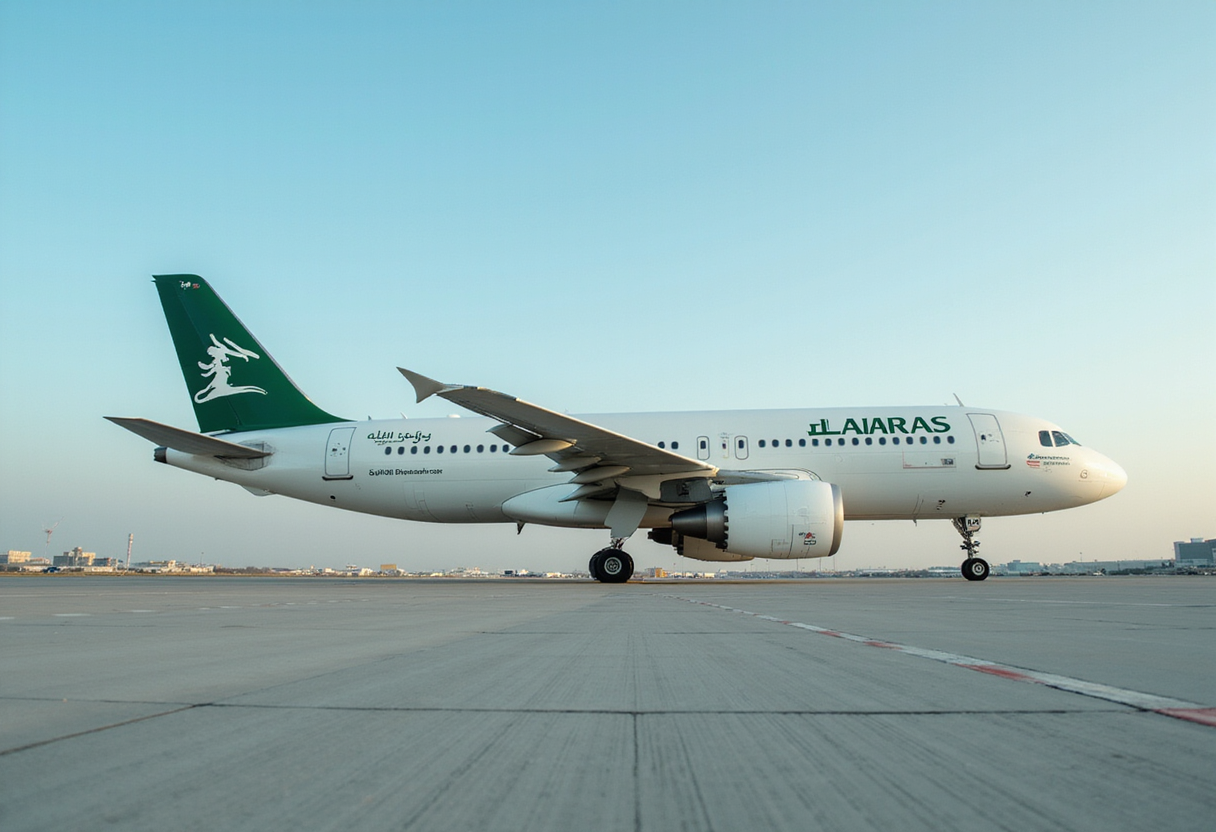
Saudi Arabia's flynas has confirmed an order for 25 Airbus aircraft, anchoring a fleet expansion the low-cost carrier is timing to two of the kingdom's largest scheduled demand events: Expo 2030 in Riyadh and the FIFA World Cup 2034, which Saudi Arabia is set to host.
The confirmation, reported by Arabian Business, puts a firm number on what had been part of flynas's broader growth ambition. The airline has positioned itself as a principal vehicle for Saudi capacity growth in the run-up to the two events, both of which will require sharp, concentrated increases in seat supply into Riyadh and other Saudi gateways.
The order matters for three reasons.
First, it adds volume to an Airbus single-aisle backlog that already stretches well into the 2030s. Every incremental 25-aircraft commitment from a Gulf operator competes for production slots against demand from carriers worldwide, and delivery timing will determine whether the aircraft arrive before or after the events they are meant to serve. Airbus has not disclosed the delivery schedule for this tranche; that schedule, more than the order itself, will define its operational value to flynas.
Second, the order signals flynas's intent to defend and grow market share against two formidable domestic competitors: Saudia, the full-service national carrier undergoing its own wide expansion, and Riyadh Air, the startup launched by the Public Investment Fund that has yet to begin flying but has signaled large fleet plans. A low-cost operator adding 25 Airbus jets secures capacity economics — seat cost, fleet commonality, pilot and maintenance pools — that will matter in a market where three carriers will compete for the same event-driven traffic surges.
Third, the timing ties flynas to Saudi Arabia's Vision 2030 tourism targets. The kingdom aims to attract 150 million annual visitors, and aviation capacity is the binding constraint. Airlines that lock in aircraft and slots now will be positioned to capture inbound traffic for Expo 2030, expected to draw tens of millions of visitors over its six-month run, and the World Cup four years later.
For Airbus, the confirmation from a established Gulf low-cost operator reinforces its dominance in the Middle East short-haul segment, where the A320neo family holds a substantial share of orders from carriers including flynas, flydubai and Air Arabia. flynas already operates an all-Airbus fleet, so the order extends an existing relationship rather than opening a new one.
What remains unverified is the composition of the 25 aircraft. Arabian Business's report did not specify the models, the split between current and new engine option variants, or the delivery dates. flynas's existing fleet is built around the A320neo family, and any follow-on order would logically continue that line, but the airline has not publicly detailed the configuration.
The gap between order and delivery is the operative question. A confirmed order secures production slots; it does not guarantee aircraft on the ramp before 2030. Airbus's delivery performance across the A320neo family has improved from the pandemic-era trough, but supply chain constraints continue to shape slot allocation, and late deliveries would compress flynas's ability to scale ahead of the Expo.
For now, flynas has locked in the aircraft. The next milestones to watch are the definitive agreement signature with delivery dates attached, the model breakdown, and any engine selection — each of which will show whether the carrier is building toward a punctual ramp-up or accepting slots that arrive after the demand peaks they were ordered to serve.
via Google News: Aircraft orders and fleets (Source)
More from Sophie Lindqvist
Show full bio
Senior reporter covering industry trends and analytics at Flightdeck Report.
161 articles
Same bay
- FDR428Saudia weighs Boeing and Airbus bids for next aircraft order · September 30, 2026
- FDR147Riyadh Air Adds Heathrow Frequencies as 787 Deliveries Accelerate · October 1, 2026
- FDR146Riyadh Air Adds 28 Boeing 787s to Widebody Orderbook · September 30, 2026
- FDR637Airbus Books Four-Aircraft Order From Tajikistan's Shohin Airlines · September 29, 2026
- FDR269Alaska Airlines Places Largest-Ever Aircraft Order · September 30, 2026