Clearance CLR-2750 · AIR973
AIREDM
Air CargoClearance sheet
Edmonton flags EU cargo surge as Canada diversifies away from US
Edmonton International Airport reported a 2025 redirection of air cargo to Europe as Canadian trade pivots away from the US, with record transatlantic tonnage forecast ahead.
Read-back
- Edmonton International Airport reported EU-bound cargo increased in 2025 while US-destined tonnage fell
- The airport expects record European flows in the year ahead
- Alex Lowe, Edmonton's director of ecommerce, cargo and aviation real estate, characterized the shift as a structural rerouting toward Europe
- Forwarders warned the existing freighter network is not sized to absorb a step-change in transatlantic demand
- Seasonal cuts to passenger frequencies compress bellyhold capacity on key city pairs through autumn and winter
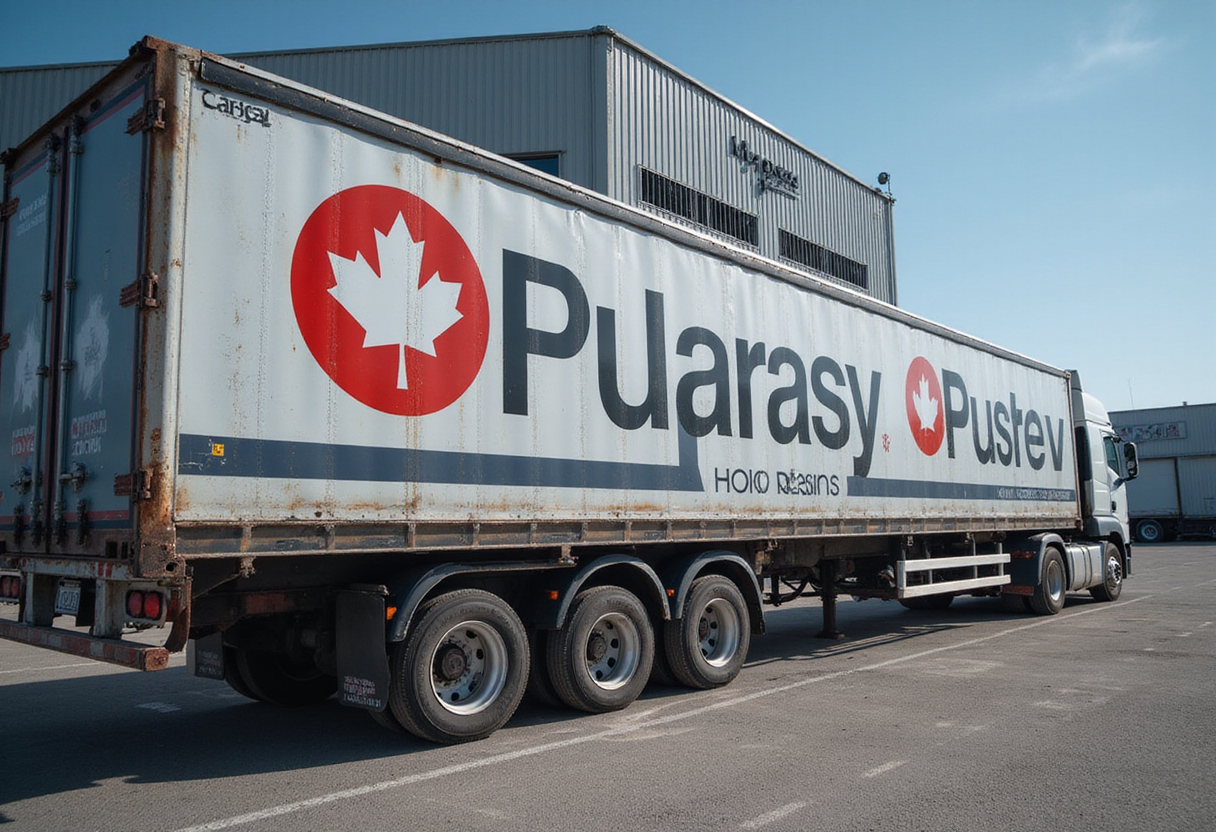
Edmonton International Airport reported a measurable redirection of air cargo in 2025: outbound flows to the European Union climbed while shipments to the United States fell, and the airport now expects record transatlantic tonnage in the year ahead.
The shift sits inside Ottawa's wider push to loosen Canadian trade dependence on its southern neighbour, a policy reorientation that is now surfacing in bellyhold and freighter routings through Alberta. Alex Lowe, Edmonton's director of ecommerce, cargo and aviation real estate, said preliminary data points to a structural rerouting of Canadian freight toward Europe. "So far the data trend suggests" a sustained move by shippers into European gateways, he said.
What capacity is available?
The pivot exposes a thin transatlantic freighter base. Most Edmonton-Europe lift today rides in the bellies of passenger aircraft, a capacity pool that expands and contracts with airline scheduling. Forwarders consulted for the original reporting warned that the current freighter network is not sized to absorb a step-change in demand, particularly when carriers trim transatlantic frequencies in the shoulder seasons.
That seasonality matters. As carriers pare summer passenger frequencies into autumn and winter, the bellyhold capacity that exporters relied on during peak season contracts on key city pairs. Forwarders said shippers should expect rate volatility and transit-time variability until dedicated freighter capacity is committed to the lane.
What does Edmonton see in the data?
The airport's own numbers frame the upside. EU-bound cargo increased in 2025 while US-destined tonnage fell, a pattern Edmonton attributes to shippers responding to the broader policy effort to diversify trade. Management has guided to record European flows for the year ahead, a forecast that assumes the incentives to diversify remain in place.
Edmonton's position as a North American e-commerce air gateway adds a specific dimension to the shift. A growing share of the transatlantic uplift now carries time-sensitive e-commerce parcels rather than traditional general cargo, a mix that changes the cost equation. E-commerce customers tolerate premium pricing for speed, but they also churn quickly when transit times slip, putting pressure on carriers to deliver schedule reliability as well as lift.
What are the trade-offs?
For cargo customers, the calculus is straightforward. Diversification reduces exposure to US trade-policy risk, but it does so by pushing volume into a lane with fewer aircraft, fewer frequencies, and less mature routing options than the well-established US corridors. Shippers gain demand-side optionality while absorbing higher unit costs and longer transit times on the supply side.
For airports outside Edmonton, the picture is more mixed. Montreal and Toronto handle the majority of Canada's existing transatlantic air cargo, and they will capture much of any incremental demand. But Edmonton has carved out a niche in e-commerce and energy-sector exports, and the redirection of flows away from the US could entrench that position.
What happens next?
The next 12 months will test whether airlines and integrators are willing to commit metal to the transatlantic. Edmonton and its forwarding partners will be looking for new scheduled freighter rotations or additional widebody passenger frequencies into European hubs. If the airport's guidance holds and EU-bound tonnage continues to climb, the case for dedicated capacity should become harder for carriers to ignore.
Edmonton's bet is that the demand is durable enough to justify new scheduled lift. The airport's next round of cargo data will be the first hard checkpoint for an industry deciding whether to match capacity to a policy-driven shift in trade flows.
via The Loadstar (Source)
More from Sophie Lindqvist
Show full bio
Senior reporter covering industry trends and analytics at Flightdeck Report.
392 articles
Same bay
- FDR531Canadian Cargo Pivot to Europe Exposes Capacity Gaps · October 9, 2026
- FDR159Air Canada Unveils Seven New Routes in Record Network Expansion · September 30, 2026
- FDR315Air Canada Unveils Seven New Routes in Largest Network Expansion · September 28, 2026
- FDR896Transpacific Rates Stay Elevated as Peak Season Nears · September 27, 2026
- FDR869Transpacific air cargo demand outpaces available lift · October 9, 2026