Clearance CLR-7766 · AIR557
AIREUR
Airspace & RegulationClearance sheet
Europe Short 700-800 Controllers as CBTA Training Rule Looms
Europe lacks 700-800 controllers and lost airlines EUR 800 million to delays in 2022. CBTA regulation 2025/2143 takes effect in 2029. The window is tight.
Read-back
- Europe is short 700-800 air traffic controllers, driving roughly 7% network under-capacity (EUROCONTROL).
- Airline losses from European network delays reached an estimated EUR 800 million in 2022 (IFATCA).
- Implementing Regulation (EU) 2025/2143, adopted 23 October 2025, makes CBTA mandatory from 1 January 2029.
- EASA's CBTA guidance material is due for publication in Q1 2026.
- EUROCONTROL estimates closing the staffing gap requires EUR 70-200 million in ANSP investment.
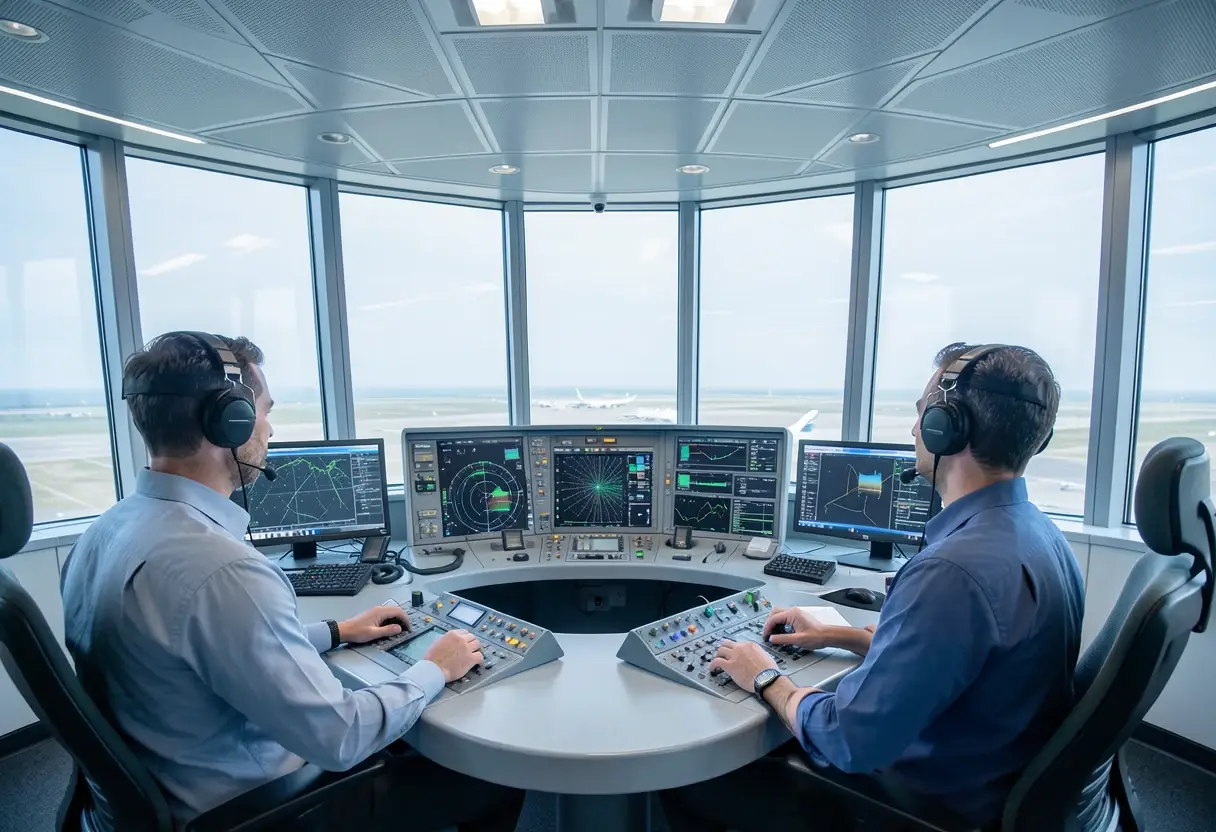
Europe's air traffic control network is short between 700 and 800 controllers, and the regulation designed to fix how they are trained does not become mandatory until 1 January 2029. That is the arithmetic confronting EUROCONTROL, EASA and the continent's air navigation service providers as they attempt to convert a new competency-based training regime into usable sector capacity.
The shortfall, quantified by EUROCONTROL, drives an estimated 7% under-capacity across the European network. The cost is measurable. IFATCA puts airline losses from European network delays at roughly EUR 800 million in 2022 alone. The strain is concentrated: of nearly 570 network sectors, around 70 generated the bulk of that delay. This is a bottleneck problem, not a systemic collapse. Fixing it still requires controllers, and controllers require training.
Closing the staffing gap carries a price. EUROCONTROL estimates ANSPs would need a single targeted investment of between EUR 70 million and EUR 200 million. The width of that range matters. It reflects genuine uncertainty over how fast training pipelines can scale and what share of candidates reaches operational status.
What does the regulation actually change?
The European Commission adopted Implementing Regulation (EU) No 2025/2143 on 23 October 2025. It amends Regulation (EU) 2015/340, which governs ATCO licences and certificates, and derives from EASA Opinion 06/2024 under rulemaking task RMT.0668. Two changes stand out: competency-based training and assessment, and formal acceptance of virtual training as a methodology.
CBTA replaces time-served hours with demonstrated competency at defined gates. In principle, a fast learner progresses faster. The same candidate pool, trained more efficiently, yields more licensed controllers sooner. That is the promise. Whether it delivers measurable acceleration before 2029 is the question nobody can yet answer, and the regulation itself mandates no speed.
EASA's acceptable means of compliance and guidance material are due in Q1 2026. The compliance date of 1 January 2029 covers initial training, operational ATS units and ATCO training organisations. Three years between guidance and deadline is a workable window. It is only workable if organisations act early rather than in the final months.
A separate measure, Commission Delegated Regulation (EU) No 2025/1044, published in May 2025, addresses acceptance of third-country ATCO licences. It may add capacity faster than CBTA can. Caveat: its contribution depends entirely on how individual member states apply it.
Are the regulators ready to implement?
On 27 and 28 October 2026, EASA and EUROCONTROL convened a CBTA workshop for National Competent Authorities at EUROCONTROL's Aviation Learning Centre. Attendees included CANSO, GATE Training Organisation, EUROCONTROL MUAC, the Belgian Supervisory Authority and the Irish Aviation Authority. EASA and EUROCONTROL declared their readiness to support NCAs in implementing the changes.
The format signals awareness of where reform usually fails. NCAs certify training organisations and validate CBTA programmes. If they are unprepared, no approval flows, and the 2029 deadline becomes decorative. Early, repeated engagement with those authorities is the one practical lever available before the guidance material is even published.
IFATCA, for its part, has urged the European Commission to ringfence staff recruitment from future performance target-setting frameworks. Its argument: without a carve-out, ANSPs face conflicting obligations, hitting network performance targets while absorbing the cost and disruption of pushing new controllers through training. That tension sits outside the training regulation's scope. It remains unresolved.
What still has to go right?
Three conditions must align before CBTA can dent the shortage:
- EASA publishes guidance on schedule in Q1 2026.
- Training organisations and NCAs redesign programmes before the deadline forces them to.
- ANSPs commit the EUR 70-200 million EUROCONTROL estimates, in an already stretched funding environment.
Each step is necessary. None is sufficient alone. The regulation supplies the legal basis; the workshop programme builds the approval knowledge; the guidance will define compliance. The gap between those instruments and a larger controller workforce is where the outcome will be decided.
The EUR 800 million single-year cost to airlines sets the price of delay. Roughly three years separate EASA's guidance from the compliance date, across dozens of member states, each with its own authority and training organisations. That timeline is tight but not impossible, and the harder work, changing how controllers are actually trained, begins now that the text is written.
via theaviationhub.co.uk (Source)
More from James Calloway
Show full bio
Staff writer covering people, launches and day-to-day practice in Commercial aviation industry coverage at Flightdeck Report.
650 articles
Same bay
- FDR114EU261 Reform Is Law: 30-Day Claims Clock, €15 Billion Bill · November 12, 2026
- FDR922Europe's Traffic Growth Slides to 1.7% as South and East Take Over · November 2, 2026
- FDR459EU SAF Mandate Tests Whether Green Jet Fuel Can Scale Fast Enough · October 9, 2026
- FDR685Technical Fault Cuts Swiss Air Traffic Control to Half Capacity · October 20, 2026
- FDR663FAA and DOT Seek $30 Billion to Rebuild ATC Infrastructure · September 28, 2026