Clearance CLR-1175 · AIR322
AIROVE
Airspace & RegulationClearance sheet
Over 6,400 US Flights Cancelled Saturday After FAA Ground Stop
Airlines cancelled over 6,400 US flights on Saturday after an FAA communications failure triggered a four-hour nationwide ground stop; recovery is expected by end of Sunday.
Read-back
- More than 6,400 US flights were cancelled on Saturday, 14 November 2026, after more than 9,000 on Friday.
- The FAA lifted the nationwide ground stop at approximately 8:15 p.m. Eastern on 13 November after more than four hours.
- Transportation Secretary Sean Duffy said a copper-to-fibre upgrade caused a network device to overload systems; L3Harris Technologies was identified as the contractor.
- FAA Administrator Bryan Bedford expects the national schedule to recover by the end of Sunday, 15 November.
- More than 800 Sunday flights were already cancelled by Saturday night.
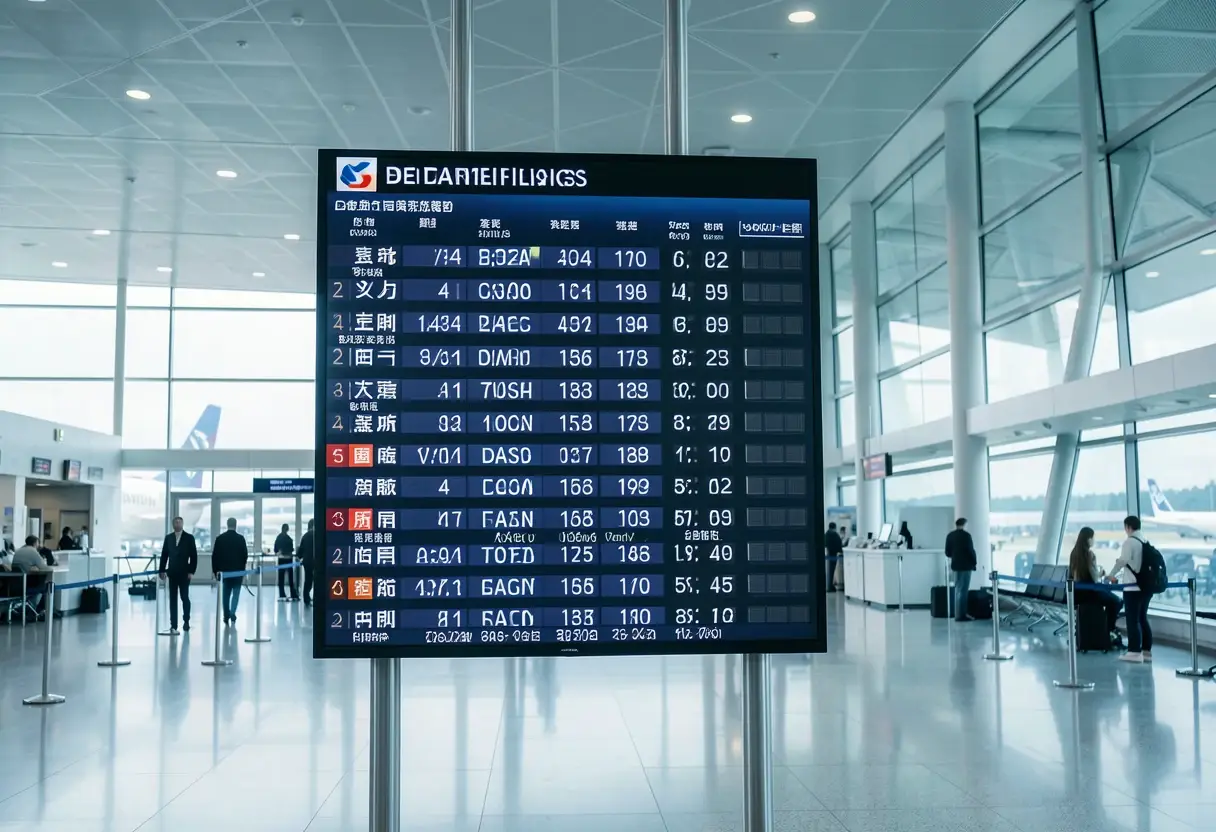
US carriers cancelled more than 6,400 flights on Saturday, 14 November 2026, as they worked to recover from a nationwide FAA ground stop that shut down departures across the United States for more than four hours the previous day.
The Federal Aviation Administration lifted its emergency restriction at approximately 8:15 p.m. Eastern Time on 13 November. The disruption continued long after that decision. By Saturday night, US media reported more than 800 Sunday flights had already been cancelled.
The outage affected passengers travelling within the United States and those connecting through major American airports on international journeys, including Brazil–US routes.
What caused the nationwide ground stop?
Friday's shutdown began shortly before 4 p.m. Eastern Time. The emergency order prevented departing aircraft from taking off while the FAA investigated serious problems affecting its air traffic control communications network.
US Transportation Secretary Sean Duffy linked the disruption to work on ageing air traffic control communications infrastructure. According to the administration, maintenance work transitioning the network from copper wiring to fibre-based technology caused a device to generate excessive traffic and overload connected systems.
The resulting failure affected communications and radar-related information used by air traffic controllers. Officials identified L3Harris Technologies as the contractor involved in the upgrade work, although the investigation must still establish the precise cause and responsibility. Duffy also stated that artificial intelligence was not responsible for the outage.
The Professional Aviation Safety Specialists union, which represents FAA technical staff, said its technicians had not been involved in the particular upgrade that preceded the shutdown.
How large was the disruption?
FlightAware, the flight-tracking service, recorded more than 9,000 cancellations on Friday, followed by more than 6,400 on Saturday. Those figures count flights affected on separate dates and do not represent the number of aircraft simultaneously grounded.
Once the FAA lifted the restriction, airlines faced the difficult task of restoring thousands of disrupted aircraft rotations (the scheduled sequences of flights each airframe flies in a day). Even where airports resumed normal traffic management, individual carriers kept cancelling services because aircraft and crews were no longer in their scheduled positions.
When will schedules recover?
FAA Administrator Bryan Bedford said the national flight schedule was expected to recover by the end of Sunday, 15 November.
That forecast does not mean every delayed passenger will reach their destination by Sunday evening. Airlines must still reposition aircraft, arrange replacement crews and accommodate travellers whose original flights were cancelled.
Passengers with international connections face additional complications, because long-haul services operate less frequently than many domestic routes. A cancelled widebody departure can strand connecting passengers for a full day or more.
What does this change for passengers?
Travellers should check flight status directly with their airline rather than rely solely on airport departure boards, which may lag behind carriers' operational decisions during recovery.
Passengers whose flights were cancelled and who decline alternative transportation may be entitled to a refund under US Department of Transportation rules.
The ground stop itself has ended, but the investigation into the L3Harris-managed upgrade and the mechanical question of how one overloaded network device cascaded into a national shutdown will shape how the FAA sequences its remaining copper-to-fibre transitions.
via rustourismnews.com (Source)
More from Sophie Lindqvist
Show full bio
Senior reporter covering people, launches and day-to-day practice in Commercial aviation industry coverage at Flightdeck Report.
645 articles
Same bay
- FDR728US Airlines Cancel Over 1,300 Sunday Flights After FAA Ground Stop · November 16, 2026
- FDR490FAA Chief Says US Flights Back to Normal Sunday After Outage · November 15, 2026
- FDR408FAA Grounded All US Flights for 4½ Hours After Contractor Upgrade Failed · November 15, 2026
- FDR987Four-Hour FAA Ground Stop Grounds Thousands of Flights Nationwide · November 14, 2026
- FDR572Over 2,500 US Flights Cancelled After FAA Ground Stop Ends · November 14, 2026