Clearance CLR-1216 · AIR937
AIRFAA
Aircraft & EnginesClearance sheet
FAA Clears Boeing to Deliver 35 More 777Fs Past 2028 Emissions Deadline
The FAA will let Boeing deliver up to 35 777Fs through 2031 under an emissions exemption that covers nearly every deliverable freighter left in its backlog.
Read-back
- FAA exemption published 16 September 2026 permits first airworthiness certificates for up to 35 777Fs between 1 January 2028 and 1 January 2031
- Boeing had 38 unfilled 777F orders at end-August 2026; six belong to sanctioned Volga-Dnepr, leaving an effective backlog near 32
- Boeing delivered 35 777Fs in 2025 and 18 through the first eight months of 2026
- Boeing estimates it would forfeit more than $15 billion in export sales without the exemption
- 777-8F service entry is targeted around 2029 after slipping from the original 2027 date
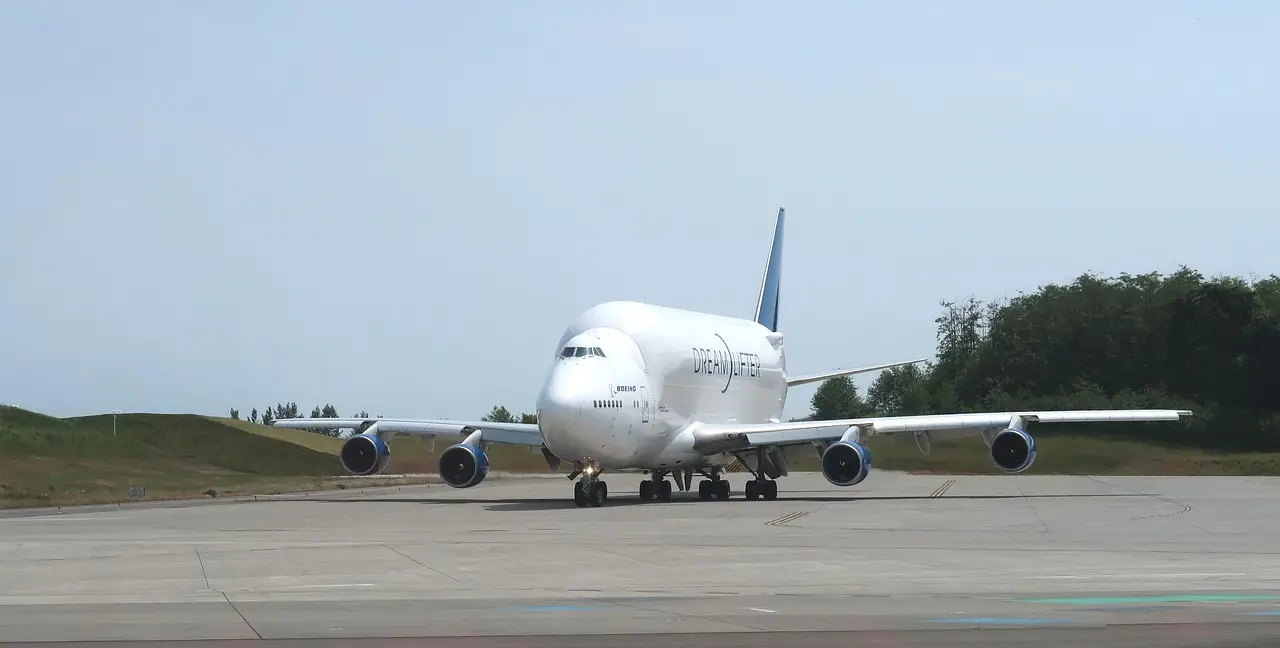
Thirty-five aircraft. That number, published by the FAA on 16 September 2026, now defines the outer limit of Boeing's 777F production line: 35 freighters exempt from emissions rules that would otherwise have halted every US delivery of the type from 1 January 2028 onward.
The FAA's decision document spells out the scope in a single sentence: "This exemption goes into effect on January 1, 2028, and applies to issuance of the first certificates of airworthiness for up to thirty-five 777F airplanes through January 1, 2031, unless sooner superseded or rescinded."
What does the ruling actually change?
The rules at issue stem from an ICAO-based emissions framework that blocks newly certificated large aircraft missing prescribed fuel-efficiency and CO2 thresholds from receiving first airworthiness certificates after 1 January 2028. The current 777F falls short of those thresholds. Without the exemption, every post-deadline delivery would have been grounded in paperwork.
Boeing filed its request in December 2025, giving the FAA roughly nine months to decide before the rules took effect. The application drew a broad industrial coalition: FreightWaves reports that GE Aerospace, the Aerospace Industries Association, the California Manufacturers and Technology Association, the National Association of Manufacturers and the US Chamber of Commerce all filed in support. FreightWaves also reports that EASA did not object — a meaningful signal, given that European carriers number among the 777F's customers.
How does the 35-unit cap fit the backlog?
The ceiling closely tracks what Boeing can actually deliver. Air Data News puts unfilled 777F orders at 38 at the end of August 2026, with 312 delivered to that point. Six of the 38, however, belong to Russia's Volga-Dnepr and remain on Boeing's books despite sanctions — aircraft that cannot realistically be handed over. Strip those out and the effective backlog sits near 32, comfortably inside the 35-unit cap with a small margin.
The backlog has since held steady. Stat Times reports that it stood at 38 on 30 September 2026, unchanged despite two deliveries that month, because Ethiopian Airlines Cargo ordered exactly two aircraft to offset them. The September deliveries went to Air China Cargo and FedEx, one each. On 30 September, Ethiopian signed for two 777Fs and eight 777-8Fs, with options on eight more — a single agreement spanning both the current freighter and its successor. China Airlines and China Southern each ordered two classic freighters, while Saudia took four, according to FreightWaves.
Can Boeing produce fast enough to outrun the window?
Recent output suggests the three-year window is tight rather than generous. Boeing handed over 35 777Fs across 2025 — enough to exhaust the entire exemption in a single year at that tempo — and 18 more through the first eight months of 2026. Spread evenly, the slower 2026 pace stretches the allocation further, but the runway only stays comfortable if throughput stays below last year's level.
The commercial stakes are enormous. FreightWaves reports Boeing's own estimate puts the export sales it would forfeit without the exemption at more than $15 billion. What the ruling buys is regulatory clearance on the supply side, nothing more; demand still has to materialize within the cap.
Is this a bridge to the 777-8F?
The arithmetic frames the question sharply. Boeing originally targeted a 2027 entry into service for the 777-8F, then announced in October 2024 that the date had slipped to 2028 or beyond. The current target places 777-8F service entry at around 2029, roughly two years after the first 777-9 delivery — meaning both freighters could be in delivery simultaneously for about two years within the exemption window.
That overlap removes the cliff. An operator could take an exempted 777F as an interim aircraft while its 777-8F slot matures, exactly the logic embedded in the Ethiopian deal. But "around 2029" is not a firm commitment, and the 35-unit ceiling does not flex. If 777-8F certification slips again and the allocation burns faster than expected, a gap opens that no regulator has sized for.
The exemption keeps Boeing's deliverable backlog intact, shields a revenue stream valued at more than $15 billion in export sales and builds a legal runway to 2031. Whether that runway carries the programme across to the 777-8F depends entirely on Boeing holding its 2029 target. The exemption purchases time; the 777-8F programme now has to spend it.
via theaviationhub.co.uk (Source)
More from Nathan Brooks
Show full bio
Correspondent covering technology and product news in Commercial aviation industry coverage at Flightdeck Report.
621 articles
Same bay
- FDR812FAA Lets Boeing Build 35 More 777 Freighters Through 2031 · October 9, 2026
- FDR380FAA Order 8130.2M updates aircraft certification guidance · October 30, 2026
- FDR223India proposes 1% SAF blend for international flights from 2027 · November 6, 2026
- FDR457Duffy Presses FAA to Cut Certification Times, Citing China · September 30, 2026
- FDR914FAA certification reform meets Boeing, Airbus production bottlenecks · October 9, 2026