Clearance CLR-5857 · AIR346
AIRFAM
Airspace & RegulationClearance sheet
Families of D.C. Midair Crash Victims Press Congress on Safety Bills
Victims' families, NTSB Chair Homendy and senators push Congress to pass aviation safety reforms 595 days after the D.C. midair collision killed 67.
Read-back
- NTSB considers the FAA's response to 11 of its 33 post-crash safety recommendations inadequate.
- The Senate bill failed in the House by one vote after the military withdrew support at the last minute.
- ADS-B In systems, which Homendy says would have prevented the collision, face cost objections from some airlines and private aircraft owners.
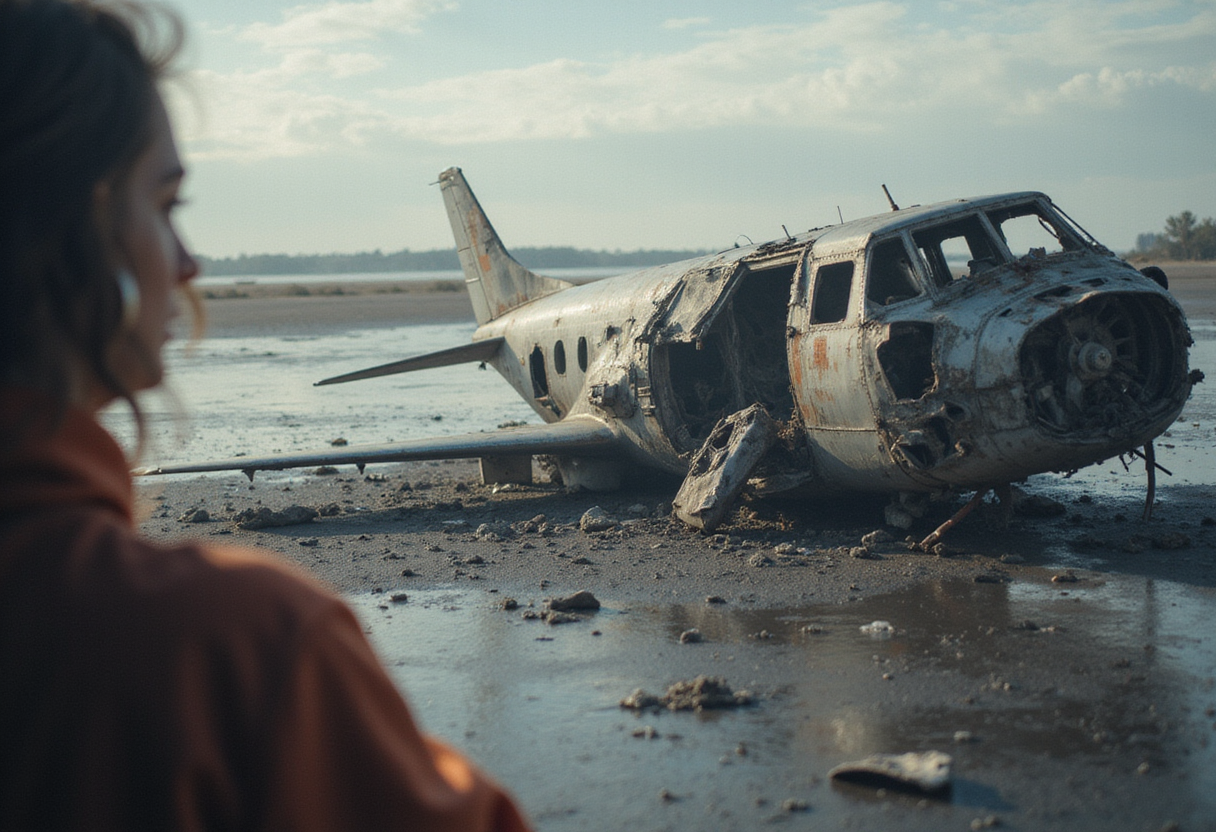
Families of the 67 people killed in the January 2025 midair collision over Washington, D.C., pressed Congress and regulators on Sept. 15 to pass safety reforms — 595 days after American Airlines Flight 5342 and an Army Black Hawk helicopter collided on approach to Reagan National Airport, in the deadliest U.S. aviation disaster since 2001.
The families appeared outside the Capitol alongside Sens. Ted Cruz (R-Texas) and Maria Cantwell (D-Wash.) and NTSB Chairwoman Jennifer Homendy. Their central demand: mandate cockpit technology that shows pilots the position of other aircraft before the second anniversary of the crash on Jan. 29, 2025's calendar date passes without congressional action.
The regulatory ledger
The FAA moved quickly after the crash to restrict helicopter traffic around Reagan National, after it became clear a helicopter route crossing the approach path of the airport's secondary runway did not guarantee adequate separation between helicopters and airliners. Controllers are now prohibited from relying on pilots alone to see and avoid other aircraft.
But the NTSB remains unsatisfied with the FAA's response to a third of the 33 safety recommendations it issued — 11 recommendations the agency considers inadequately addressed. FAA Administrator Brian Bedford testified on Capitol Hill the same day that his staff will work through those concerns, while arguing he also needs direction from Congress.
Implementation gaps persist in practice. Last month, an airline jet was cleared for takeoff just as President Donald Trump's helicopter lifted off from the White House — the kind of converging-operation incident the post-crash restrictions were meant to eliminate.
The technology fight
The fault line in the legislative effort is ADS-B In — equipment that would give pilots the location of all nearby aircraft. Homendy has said those systems would have prevented the Flight 5342 collision. Some airlines have endorsed the mandate, but cost objections from other carriers and private aircraft owners have blocked agreement on requiring the equipment across crowded airspace.
Rachel Feres, who lost her cousin, his wife and two young daughters, framed the cost argument against consumer automotive practice: modern cars carry sensor arrays that check blind spots and apply the brakes automatically, while Congress still debates whether pilots transporting hundreds of passengers should have the best available collision-avoidance technology.
"This is not about whether you can afford to act. ... You have the leverage, you have the voice. The question is why safety so rarely gets the same urgency as the next quarterly earnings report," Feres said.
A stalled bill
The legislative path is congested. The narrower Senate bill came up one vote short in the House earlier this year after the military reversed course and opposed it at the last minute. Lawmakers are still drafting a compromise between that version and the more comprehensive House bill, which takes a different approach on several key points. Passage before the November midterm elections appears unlikely; Cruz said he hopes Congress can move a bill in the lame-duck session that follows.
Doug Lane, who lost his wife Christine and son Spencer in the crash — Spencer had earned a U.S. figure skating jacket; Christine's laptop fragments were recovered from the Potomac wreckage — warned against the pattern that stranded post-Sept. 11 measures such as secondary cockpit barriers, which airline pilots still lack when the cockpit door opens.
"That is what fading urgency looks like. Something everyone agrees will make people safer gets caught in process, objections, exceptions and delay until you look up and an entire generation has passed. Flight 5342 cannot follow that path," Lane said.
The crash killed 28 members of the figure skating community among the 67 aboard both aircraft. The victims' families have returned to Washington repeatedly across the 595 days since.
"We can tell them stories, we can ask questions. We can push for answers. We can take action. That's the work that belongs to us. But we cannot do anybody else's work for them," Lane said. "We need the people with the power to turn this tragedy into change to do theirs and to finish it."
Homendy put the NTSB's position plainly: "We can't spend another moment looking them in the eye and doing nothing. We have to. We have an obligation. We owe it to these families. We owe it to passengers. We owe it to the traveling public. We owe it to cargo pilots and so much more to improve safety now."
Whether the ADS-B In mandate survives conference negotiations between the House and Senate — and whether the lame-duck session delivers a bill at all — will determine if the Jan. 29, 2027, anniversary arrives with the reforms enacted or still pending.
via ttnews.com (Original)
More from Nathan Brooks
Show full bio
Correspondent covering media and advertising at Flightdeck Report.
149 articles
Same bay
- FDR214Families Push for Aviation Safety One Year After D.C. Plane Crash · September 30, 2026
- FDR330House-Senate Talks Begin on Rival Aviation Safety Bills · September 30, 2026
- FDR334House Passes Alert Act 396-10, Sending Aviation Safety Bill to Senate · September 30, 2026
- FDR649House Passes Alert Act Mandating ADS-B In After DCA Midair Collision · September 30, 2026
- FDR316Post-Wichita–DC Crash Safety Reforms Stall in Washington · September 30, 2026