Clearance CLR-8278 · SAF205
SAFFAM
Safety & OperationsClearance sheet
Families of 67 DCA Crash Victims Press Congress on Safety Reform
Relatives of the 67 people killed in the January 29 Potomac midair collision near Reagan National are pressing Congress to legislate new helicopter routes, FAA oversight reforms, and controller staffing changes at DCA.
Read-back
- 67 people died in the January 29 midair collision between PSA Airlines Flight 5342 (Bombardier CRJ-700) and a U.S. Army UH-60L Black Hawk near Ronald Reagan Washington National Airport
- All 64 occupants of the regional jet and three soldiers in the helicopter were killed
- The FAA has barred most non-essential helicopter traffic near DCA and tightened military helicopter routing restrictions since the crash
- The NTSB is conducting a multi-track investigation; final probable-cause determinations on complex midair cases typically take 12 to 24 months
- Senate Commerce Committee chair Ted Cruz (R-Texas) has held hearings on the collision
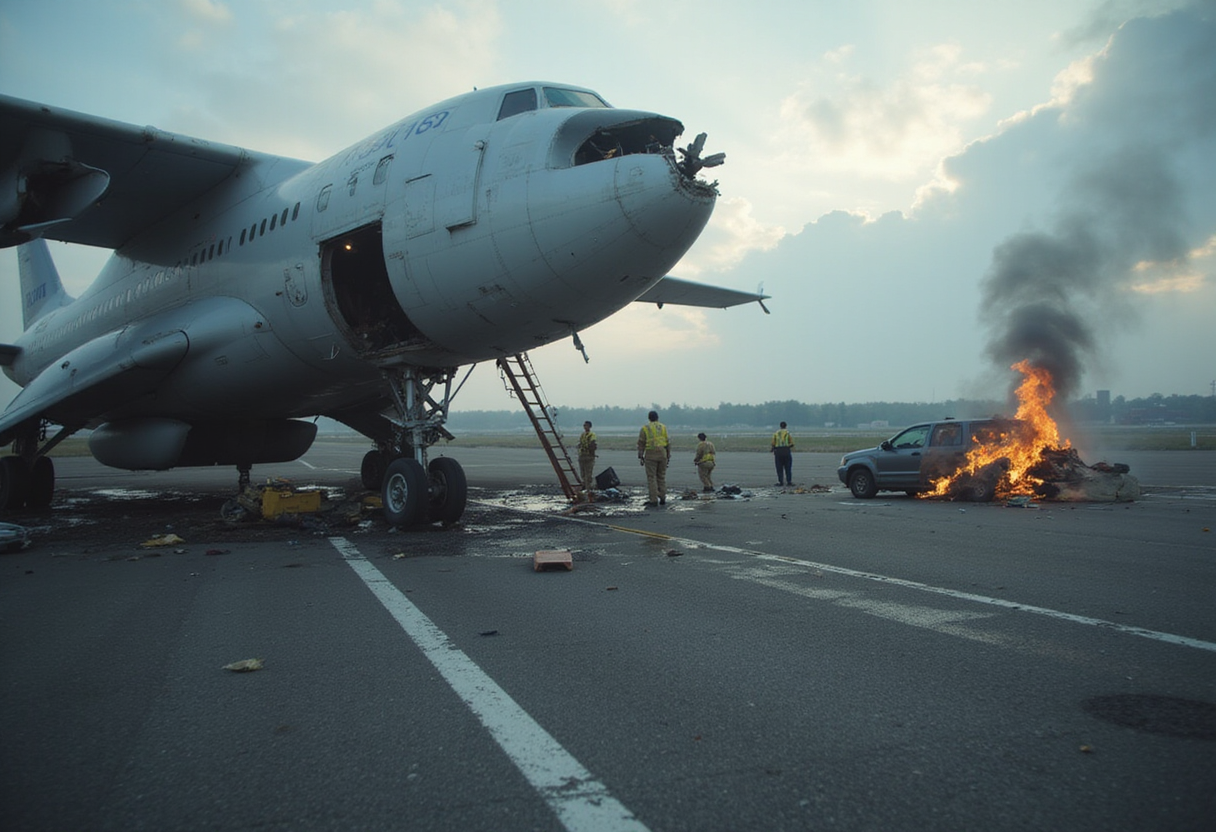
Sixty-seven families of the victims killed in the January 29 midair collision near Ronald Reagan Washington National Airport are pressing Congress to legislate new aviation safety requirements, Bloomberg Government News reported.
The crash involved PSA Airlines Flight 5342, a Bombardier CRJ-700 operating as American Eagle, on approach to Runway 33, and a U.S. Army UH-60L Black Hawk helicopter on a training sortie from Davison Army Airfield. All 64 occupants of the regional jet and three soldiers aboard the helicopter died.
What are families asking Congress to do?
Family members have organized into a single advocacy bloc and directed their lobbying at three areas: helicopter routes around DCA, FAA oversight of military and civil operations in shared airspace, and controller staffing at the Potomac TRACON. Family representatives have also asked Congress to examine whether the FAA's exemption process for military night-vision training flights adequately accounts for modern commercial traffic volumes at Reagan National.
The helicopter corridor along the Potomac's Virginia shoreline has hosted military training flights for decades. The corridor's 200-foot altitude ceiling predates changes to commercial traffic patterns at DCA and remains a focus of the families' legislative agenda.
The helicopter's altitude at impact—roughly 80 to 100 feet above the river and above the corridor's published ceiling—has become the focal point. Investigators are examining whether the Black Hawk crew knew of the airliner's position and what altitude clearance the controller issued.
Where does the NTSB investigation stand?
The NTSB is running a multi-track inquiry covering the CRJ-700's approach profile, helicopter flight data, air traffic control communications, and military training protocols. Board members have signaled that preliminary findings could arrive within months, though a final probable-cause determination on a complex midair case typically takes 12 to 24 months.
The probe has already produced operational changes. The FAA barred most non-essential helicopter traffic near DCA and tightened restrictions on military helicopter routings through the area. Whether those measures become permanent depends on NTSB recommendations and any legislation Congress enacts.
What has Congress signaled?
The Senate Commerce Committee, chaired by Ted Cruz (R-Texas), has held hearings on the collision. House Transportation Committee members have said they will examine whether statutory changes are needed to separate military helicopter training from commercial approach paths into DCA.
Lawmakers have shown unusual willingness to legislate rather than rely on FAA rulemaking alone. Families have pointed to an unimplemented 2019 safety recommendation from a prior near-miss at the same airport as evidence that voluntary measures have failed.
What questions remain open?
The central unresolved issue is whether the military crew held an active waiver allowing them to fly above the corridor's altitude cap. The Black Hawk was on a training mission and carried night-vision equipment, but investigators have not determined what altitude the crew received clearance for from the controller that night.
A second question concerns staffing at the DCA TRACON facility. Controllers have reported that the sector handling Runway 33 arrivals was working at reduced complement during the evening, and the NTSB is reviewing scheduling records to determine whether fatigue or understaffing played a role.
The families' lobbying comes as NTSB investigators continue to retrieve flight data and cockpit voice recordings from the wreckage, and as Bloomberg Government News reports that lawmakers expect a substantive safety package to reach committee markup before the end of the current congressional session.
via Google News: Aviation safety (Source)
More from Priya Raman
Same bay
- FDR346Families of D.C. Midair Crash Victims Press Congress on Safety Bills · September 30, 2026
- FDR214Families Push for Aviation Safety One Year After D.C. Plane Crash · September 30, 2026
- FDR942Army report traces DCA midair to systemic failures, not a single error · October 9, 2026
- FDR366Army report finds systemic failures behind DC midair collision that killed 67 · October 9, 2026
- FDR466House Passes Aviation Safety Bill After D.C. Midair Collision · October 10, 2026