Airspace & RegulationClearance sheet
FAA and Army failed to identify DCA collision risks, report finds
National Academies review of the January 2025 DCA midair crash finds FAA and Army missed recurring risks, and makes 25 recommendations on traffic, training and collision-avoidance certification.
Read-back
- National Academies review released November 18, 2026 makes 25 recommendations on the January 29, 2025 midair collision that killed 67 people
- FAA cut DCA's hourly arrival limit from 36 to 26 after the collision and raised it to 30 in January 2026
- FAA suspended visual separation between helicopters and airplanes near busy airports in a May 19, 2026 statement
- Committee recommended Congress require a public safety and capacity assessment before authorizing additional flights at DCA
- A second National Academies report will examine military aircraft close calls and civilian-military coordination
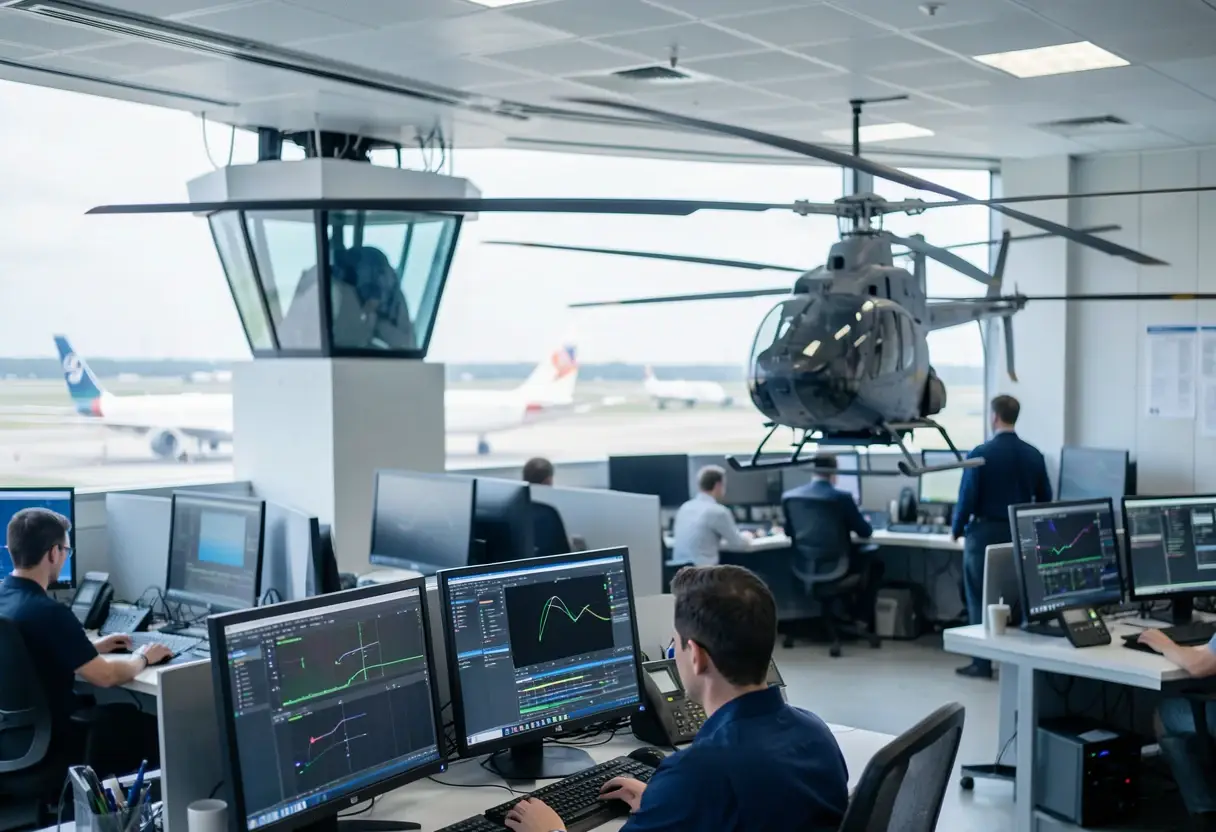
On November 18, 2026, the National Academies of Sciences, Engineering, and Medicine released a congressionally requested review of the January 29, 2025 midair collision near Washington, DC, which killed all 67 people aboard an American Airlines regional jet and a US Army helicopter. The study makes 25 recommendations covering airport operations, military flying and protection against midair collisions.
The committee found that both the Federal Aviation Administration (FAA) and the Army had failed to adequately recognize and address recurring collision risks before the accident. It called for stronger safety oversight of the two, and recommended that Congress require a public assessment of safety and capacity before authorizing additional flights at Ronald Reagan Washington National Airport (DCA).
The recommendation moves the airport's growth question into Congress. Any proposal for more flights at DCA now has to clear a public safety-and-capacity assessment first, with the burden of proof on the two agencies that had the aircraft in front of them.
Where the committee says the risk sat
The review builds on the National Transportation Safety Board's (NTSB) investigation, and its findings concentrate on the two systems that fed traffic into the same piece of airspace. The committee urged the FAA to spread flights more evenly throughout the hour, to avoid bursts of traffic that strain controllers. It also called for a closer look at how airliners and helicopters shared the airport's busy airspace.
For military operations, the committee recommended standardized Washington-area airspace training and recurring proficiency checks. Assessments of routine training flights should also consider whether their objectives could be accomplished at another time, along another route, elsewhere or through simulation. That is a scheduling mechanism as much as a training rule. A helicopter mission that can shift hours or routes removes the overlap with commercial arrivals that the review found inadequately managed.
Certification first, mandate second
On equipment, the report asks the FAA to move faster on standards and certification requirements for helicopter collision-avoidance systems, then follow with an equipment mandate once certified systems become available, prioritizing helicopters operating near fixed-wing traffic in busy terminal airspace. None of that is a rule today. The sequence the committee set puts certification ahead of obligation, so the effective deadline depends on approval work the report does not date.
The review also recommends prioritizing Automatic Dependent Surveillance-Broadcast In (ADS-B In — reception of a broadcast position signal from nearby aircraft) traffic displays and alerts for aircraft lacking collision-avoidance guidance, or operating where that guidance is unavailable. Related equipment requirements should be coordinated so operators can install systems together during planned maintenance or avionics upgrades. For airlines and helicopter operators, that coordination is the difference between one wiring change and several.
What the FAA and Army have changed since
The FAA and Army have implemented or proposed changes since the collision, and the committee said those actions must be monitored to establish whether they reduce the risks they were intended to address.
The FAA restricted helicopter traffic around the airport and cut its hourly arrival limit from 36 to 26. In January 2026, the agency said it had subsequently raised the limit to 30 after determining the increase could be handled safely, and had bolstered staffing at the airport's control tower.
In a May 19, 2026 statement responding to the NTSB's recommendations, the FAA said it had suspended visual separation (judging separation between aircraft by sight) between helicopters and airplanes near busy airports, requiring controllers to maintain specified lateral or vertical separation using radar.
What does this change for operators and passengers?
Capacity at DCA remains below its pre-collision level, with the arrival ceiling at 30 an hour against 36 before January 2025, and military helicopter traffic more tightly constrained around the field. Airlines planning additional seats at the airport now wait on Congress and a public assessment rather than on the regulator alone.
Operators can also expect the certification of helicopter collision-avoidance systems, not a purchase order, to set the timetable for the next equipment cycle, and to read closely how the FAA sequence display and alert requirements with the collision-avoidance rule.
A second National Academies report will examine additional issues, including military aircraft close calls, coordination between civilian and military authorities, and wider safety oversight. The committee's test for every measure now in force is whether it measurably lowers the risk it was written to address, and that second study will show whether the remaining gaps are narrower than the recommendations assume.
via AeroTime (Source)
More from Sophie Lindqvist
Show full bio
Senior reporter covering people, launches and day-to-day practice in Commercial aviation industry coverage at Flightdeck Report.
707 articles
Same bay
- House Passes Aviation Safety Bill After D.C. Midair Collision · October 10, 2026
- Families of D.C. Midair Crash Victims Press Congress on Safety Bills · September 30, 2026
- Army Review Finds Systemic Failures Behind DC Midair Collision · October 11, 2026
- Army Report Identifies Failures Behind DCA Midair Collision · October 10, 2026
- Army Probe Issues Sweeping Recommendations After Washington Air Disaster · October 12, 2026