Clearance CLR-3344 · AIR961
AIRHEA
AirportsClearance sheet
Heathrow at 80: 63,000 Passengers Then, 80.1 Million Now
Heathrow marks eighty years since a converted Lancaster lifted off for Buenos Aires in 1946. From 63,000 passengers to a record 80.1 million, its wartime footprint still constrains growth.
Read-back
- Heathrow's first departure came on 1 January 1946, a converted Lancaster bomber named Starlight bound for Buenos Aires on a flight lasting more than 35 hours.
- The airport handled 63,000 passengers in 1946, 796,000 in 1951, and five million annually by the time Terminal 1 opened in 1969; its record year reached 80.1 million.
- Richard Fairey bought the 150-acre site for £15,000 in 1930; the government requisitioned it in the Second World War and demolished the village of Heath Row from 1944.
- Terminal 2, The Queen's Terminal, opened on 4 June 2014 with United Airlines as first operator; Terminal 5 opened in March 2008 under Queen Elizabeth II.
- The RAF never used the unfinished airfield operationally; its two-runway layout remains bounded by the 1944 wartime requisition.
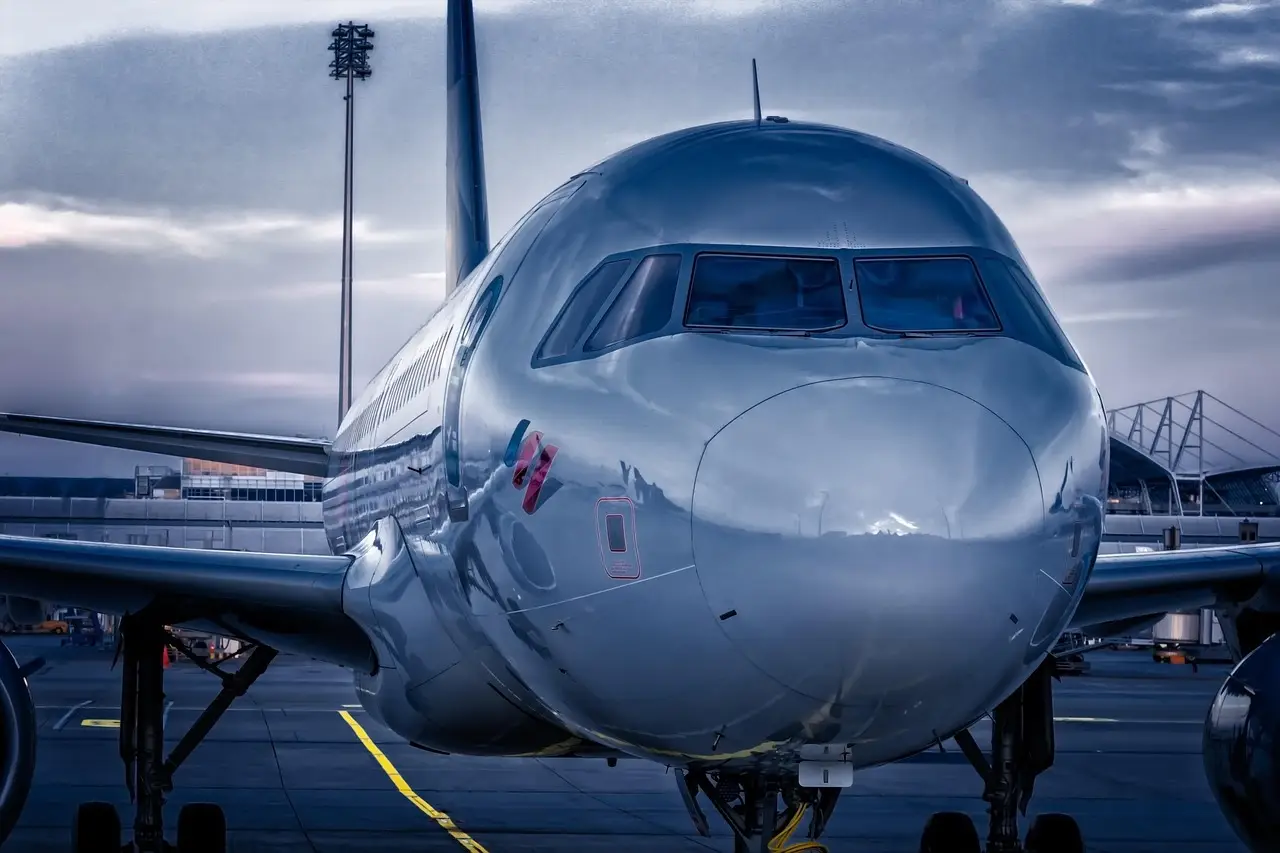
On 1 January 1946, a converted Lancaster bomber named Starlight lifted off from a half-finished airfield west of London and set course for Buenos Aires — the first departure in what would become Heathrow Airport's eight-decade history. The London Museum puts the journey at more than 35 hours. Eighty years on, the same site handles a record 80.1 million passengers a year, according to Heathrow Airport's own records, placing it among the busiest international airports anywhere on earth.
That trajectory — from 63,000 passengers in the opening year of 1946 to 796,000 by 1951, and five million annually by the time Terminal 1 opened in 1969 — is the through-line of a hub whose growth has never been matched by an equivalent growth in land. The wartime requisition orders of 1944 fixed the boundaries that every expansion argument still fights inside.
Who owned the land first?
The site began as private property. Aviation entrepreneur Richard Fairey paid £15,000 in 1930 for a 150-acre plot and built the Great West Aerodrome, with a single grass runway, according to Heathrow Airport. The London Museum reports that the connection was almost accidental: test pilot Norman MacMillan made an emergency landing near the site in 1925 and recommended it to Fairey. Archaeological excavation later revealed an Iron Age fort beneath the land, known as Caesar's Camp.
The Second World War ended the aerodrome's private life. The government requisitioned Fairey's field and surrounding land for an RAF station, laying out runways in a "Star of David" pattern — the longest 3,000 yards by 100 yards, per Heathrow Airport's records. Making way required demolishing the village of Heath Row and evicting its residents from 1944. The RAF never flew operations from the base. When the war ended, the unfinished airfield became London's civilian airport almost by default.
What did the first passengers see?
Not terminals. Ex-military marquees along the Bath Road served as the original passenger buildings, with wooden duckboards laid out so travellers could walk to their aircraft, both Heathrow Airport and the London Museum note. Permanent infrastructure arrived in 1951, when architect Frederick Gibberd was appointed to design the first purpose-built buildings, including a 122-foot control tower. The airport was still officially London Airport; the Heathrow name came only in 1966.
The terminal record since maps each era:
- Terminal 1 — opened 1969, by which point annual traffic had already reached five million passengers
- Terminal 4 — opened 1986
- Terminal 5 — opened March 2008, officially opened by Queen Elizabeth II
- Terminal 2, The Queen's Terminal — opened 4 June 2014, with United Airlines as the first carrier to operate from it
At an earlier milestone, the opening of the Queen's Building, Elizabeth II said: "London Airport will I am sure continue to grow in importance as one of the world centres of air traffic." The London Museum records the remark, which reads today less like a prediction than an understatement.
Why does the origin story still matter?
Because the constraints are structural, not political fashion. The "Star of David" runway plan was never fully built. What emerged instead was a two-runway layout inside boundaries set by wartime requisition and the 1944 village demolitions — physical limits drawn before commercial aviation existed at anything like its modern scale, and ones that have shaped every expansion debate since.
The same requisitioned land that gave Heathrow its footprint gave it its location: close enough to central London to be commercially indispensable, surrounded by dense housing that grew up because the airport was there. The result is a site that is simultaneously the United Kingdom's most important piece of aviation infrastructure and one of its most contested planning cases.
Airports built later, with room to plan, tell the contrast. Toronto Pearson operates a five-runway estate offering operational flexibility that Heathrow, locked into its wartime footprint, has never had. Paris Charles de Gaulle, built outside the city with space to grow, reaches scales a constrained urban site cannot match in the same way.
What did eighty years actually produce?
A private grass strip became a wartime construction project. That project, abandoned by the RAF before completion, became London's main airport. Marquees and duckboards became terminals opened by monarchs. Sixty-three thousand first-year passengers became 80.1 million in a record year.
The same history that explains Heathrow's rise explains its limits. The boundaries set in 1944, when the priority was military runways rather than passenger growth, remain the frame for every argument about what the world's most internationally connected airport should do next — and its ninth decade will be decided inside them.
via theaviationhub.co.uk (Source)
More from Nathan Brooks
Show full bio
Correspondent covering technology and product news in Commercial aviation industry coverage at Flightdeck Report.
621 articles
Same bay
- FDR286Riyadh Air adds Manchester as second UK destination · September 30, 2026
- FDR861Burnham cools on Heathrow third runway, floats Manchester alternative · September 30, 2026
- FDR406Heathrow says more than 40 airlines queue for slots it cannot offer · October 12, 2026
- FDR931Heathrow Third Runway Plans Slip As Expansion Timeline Slides · September 27, 2026
- FDR536Burnham Refuses to Back Heathrow Expansion · September 28, 2026