Clearance CLR-7064 · AIR413
AIRHOU
Airspace & RegulationClearance sheet
Houthis strike second Saudi airport, urge airlines to avoid kingdom's airspace
Yemen's Houthis struck a second Saudi airport and warned commercial operators to avoid the kingdom's airspace, raising fresh concerns over Gulf and Red Sea flight routes and dispatch reliability.
Read-back
- Houthis targeted a second Saudi airport, per the Times of India report.
- The group explicitly warned airlines to avoid Saudi-controlled airspace.
- Saudi air defence has previously intercepted munitions aimed at civilian terminals, including a May 2024 incident.
- A Gulf-area diversion typically adds 45–90 minutes of block time per affected sector.
- No GACA NOTAM or EASA/FAA conflict-zone advisory has been issued for this episode as of publication.
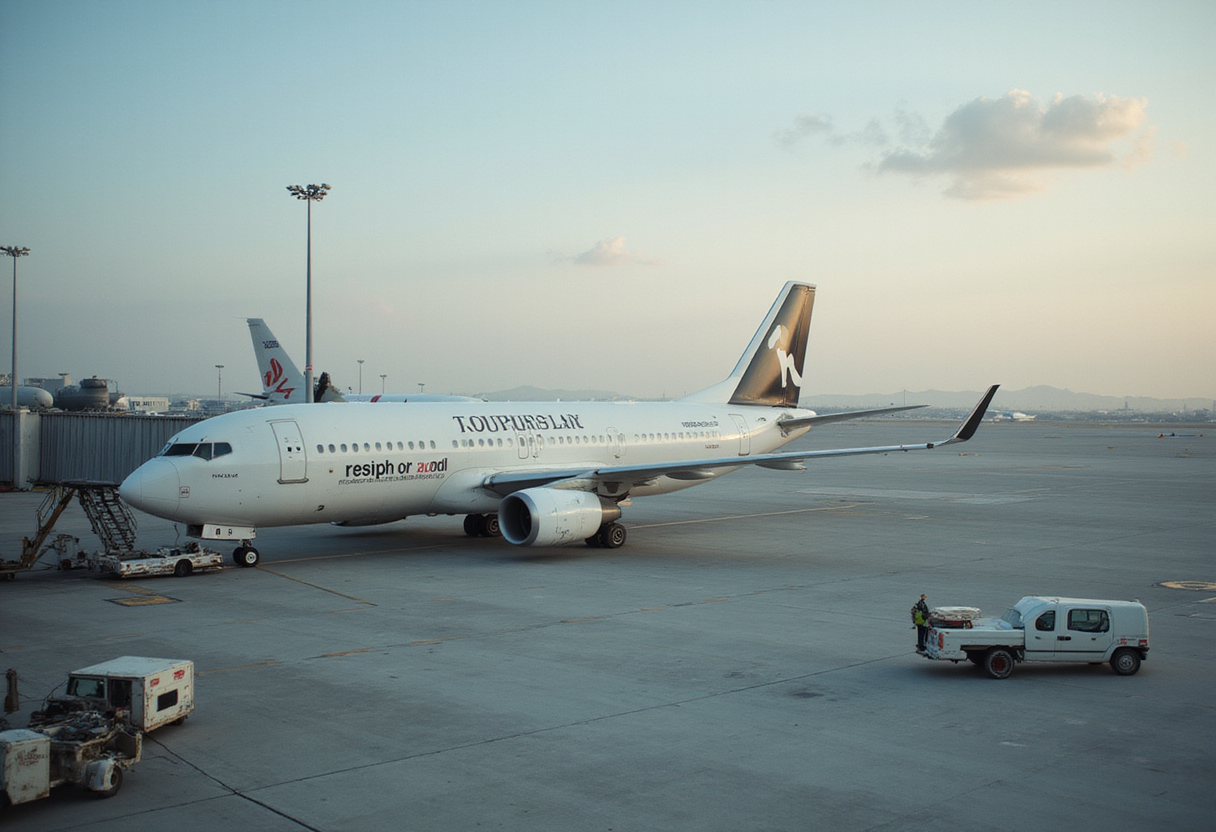
Yemen's Houthi movement has struck a second Saudi airport and issued a fresh warning to commercial operators to keep aircraft clear of Saudi-controlled airspace, according to a Times of India report, raising new questions over how airlines will reroute Middle East capacity in the coming days.
The strike marks the second Saudi airfield targeted since the campaign began, and comes with an explicit warning that airlines should avoid the kingdom's airspace altogether. The combined threat — kinetic action plus a guidance message to carriers — puts dispatchers and route planners on immediate watch.
What airlines know
Carriers operating east-west corridors through the Gulf have built familiarity with Houthi capability over the past three years, particularly after the emergence of long-range anti-ship and ballistic-missile strikes into the Red Sea and southern Arabian Peninsula. Saudi Arabia's air-defence network has previously intercepted munitions bound for civilian terminals, including the May 2024 interception attempt that placed one inbound commercial crew on heightened alert.
What the latest warning changes
A second successful strike on a Saudi civilian airport shifts the calculus for operators. Until now, Houthis have largely framed their threats around Israeli and Western-linked airports, with Saudi Arabia a more recent addition. The widening of the target set — and the accompanying advisory to airlines — narrows the difference between a geopolitical signal and an operational disruption.
Network and cost consequences
Any rerouting of Gulf traffic adds fuel burn and block time on services that already thread through congested upper-FIR airspace. Carriers flying India–Europe via Saudi Arabian or UAE airspace face the steepest impact: a diversion around the peninsula typically adds 45–90 minutes to flight time and several thousand kilogrammes of fuel per sector.
What regulators have not yet done
Saudi Arabia's General Authority of Civil Aviation (GACA) and the Saudi-led coalition's operational command have not, as of publication, issued a formal Notice to Airmen closing the kingdom's FIR to civilian traffic. Equally, EASA and the FAA have yet to publish updated conflict-zone advisories specific to this episode; both agencies maintain standing risk assessments for the region through their Conflict Zone Information Bulletins and Information for Operators respectively.
What to watch next
Saudi-led air defence activity around the targeted airfield, any GACA NOTAM restricting civilian operations, and reciprocal statements from IATA or ICAO will determine whether the latest strike remains an isolated action or forces a sustained rerouting of Gulf and Red Sea traffic.
via Google News: Air traffic control and airspace (Source)
More from Priya Raman
Same bay
- FDR310Houthis Hit Riyadh Airport Again and Threaten Wider Saudi Airspace Attacks · October 8, 2026
- FDR699Houthis warn airlines Saudi airspace unsafe as Yemen offensive intensifies · October 9, 2026
- FDR648Houthis warn airlines off Saudi airspace as Yemen conflict widens · October 9, 2026
- FDR714Houthi Strikes Disrupt Riyadh Airport Operations · October 9, 2026
- FDR779Houthis Warn Airlines Over Saudi Airspace as Yemen Strikes Intensify · October 9, 2026