Clearance CLR-7878 · AIR699
AIRHOU
Airspace & RegulationClearance sheet
Houthis warn airlines Saudi airspace unsafe as Yemen offensive intensifies
Houthi militants have warned airlines that Saudi Arabian airspace is unsafe to operate in as a renewed military offensive inside Yemen accelerates, according to India Today.
Read-back
- Houthis issued an airspace warning declaring Saudi Arabia unsafe for airline operations, per India Today
- The warning coincides with an intensifying Yemen offensive as reported by India Today
- The India Today report does not name any airline as a specific target of the advisory
- Saudi airspace sits beneath major Europe-Asia-Africa commercial overflight corridors
- No Saudi civil aviation NOTAM or IATA bulletin was referenced in the India Today report
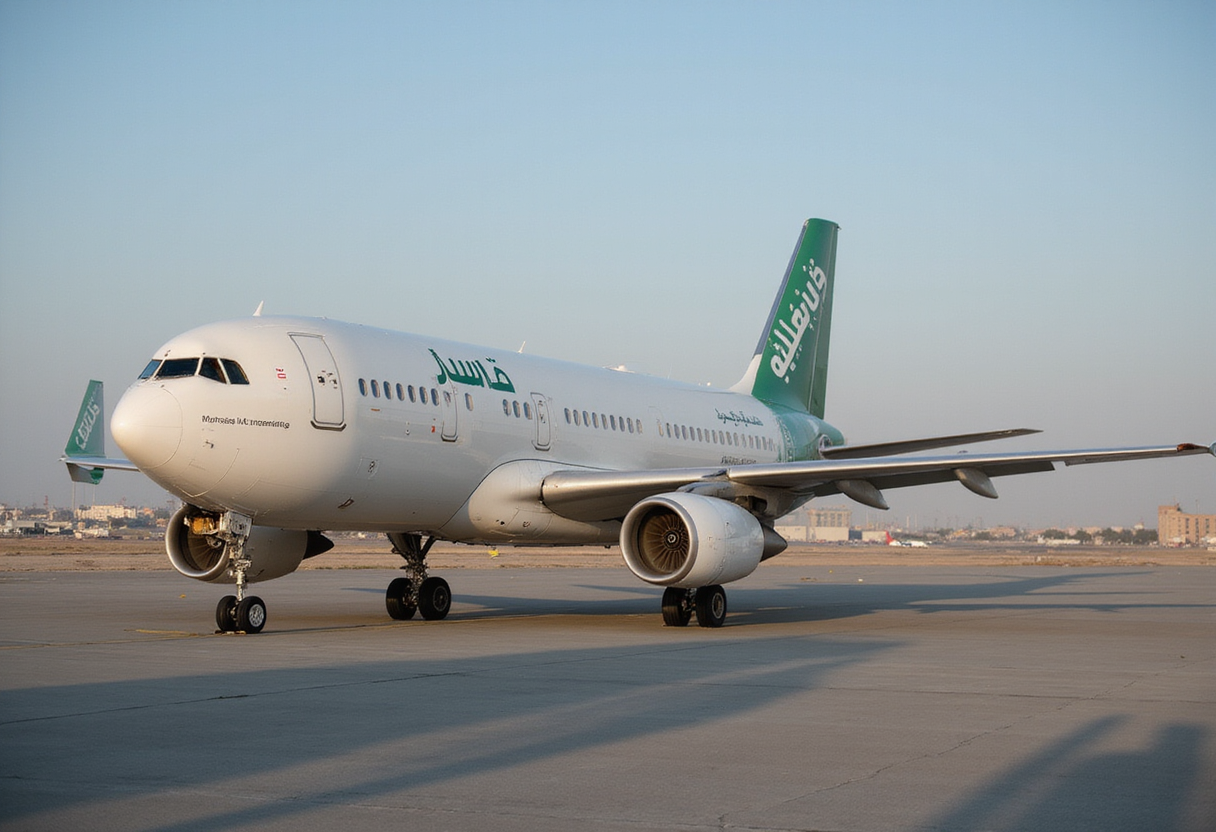
Houthi militants have warned airlines that Saudi Arabian airspace is unsafe to operate in as a renewed military offensive inside Yemen accelerates, according to a report from India Today.
The advisory singles out civilian overflights of the kingdom as a risk and arrives with what the Indian outlet described as an "intensifying" Yemen campaign, without naming affected airlines, identifying specific threat vectors, or stating how long the warning remains in force. Saudi Arabia's civil aviation authority, the General Authority of Civil Aviation, has not yet issued any notice to airmen restricting overflights.
Saudi Arabia's flight information region sits under some of the heaviest east-west commercial traffic in the world, with aircraft connecting Europe, Africa and Asia transiting the country on most published routings. A sustained advisory against Saudi airspace would primarily hit overflights rather than point-to-point operations at Saudi airports — a distinction that would expose carriers including Emirates, Qatar Airways, Etihad, Turkish Airlines and Saudia itself to longer sectors around the Arabian Peninsula.
The kingdom hosts Saudia, flynas and the recently launched Riyadh Air, alongside extensive foreign-flag services into Jeddah, Riyadh and Dammam.
How are operators likely to respond?
Commercial carriers typically act on state-issued airspace bulletins rather than militant group statements. India's civil aviation authorities, who oversee one of the most active Middle East overflight markets through carriers including Air India and IndiGo, would determine whether to instruct operators to avoid specific Saudi airspace categories. Foreign regulators, including those in the European Union Aviation Safety Agency network, have issued temporary routing restrictions during past Gulf security incidents.
The advisory arrives against a backdrop of repeated Houthi strikes at Saudi and Gulf targets. The September 2019 attacks on Saudi Aramco's Abqaiq and Khurais facilities temporarily knocked out a portion of global crude supply and followed earlier long-range strikes on Riyadh. More recently, Houthi forces have directed missile and drone activity at commercial shipping in the Red Sea and Bab el-Mandeb strait, diverting Asia-Europe container traffic around the Cape of Good Hope and adding roughly 10-14 days to eastbound voyages.
If a meaningful share of carriers divert around Saudi airspace, the impact would concentrate on the overflight market rather than terminating traffic at Saudi airports. Operators flying India-Europe, Europe-Southeast Asia and Asia-Africa city pairs would absorb additional fuel burn, blocked-seat exposure and crew scheduling disruption. Widebody long-haul aircraft with higher fuel reserves would face a proportionally smaller hit relative to network cost than narrowbody operators on medium-haul Gulf routings.
At the time of the India Today report, no airline had publicly suspended Saudi overflights and no IATA or ICAO bulletin had been referenced. The Houthi statement frames Saudi airspace as unsafe but offers no operational detail, leaving carriers and civil aviation regulators to weigh independently whether to pre-emptively reroute.
The advisory underscores the persistent overlap between Yemen's grinding conflict and commercial aviation, with carriers and national authorities likely to monitor Houthi channels for further escalatory language in the days ahead.
via Google News: Air traffic control and airspace (Source)
More from Nathan Brooks
Show full bio
Correspondent covering media and advertising at Flightdeck Report.
299 articles
Same bay
- FDR779Houthis Warn Airlines Over Saudi Airspace as Yemen Strikes Intensify · October 9, 2026
- FDR388Houthis declare Saudi airspace unsafe for civil aviation · October 9, 2026
- FDR820EU Aviation Agency Issues Saudi Airspace Advisory After Houthi Attacks · September 30, 2026
- FDR848EU Aviation Agency Issues Saudi Airspace Advisory After Houthi Attacks · October 1, 2026
- FDR792EASA Issues Saudi Airspace Advisory After Houthi Attacks · September 30, 2026