Clearance CLR-1232 · AIR967
AIRHOU
Airspace & RegulationClearance sheet
Houthis warn airlines against using Saudi airspace
Yemen's Houthis have warned commercial airlines against using Saudi Arabian airspace, signaling that the skies over the kingdom could become 'a theater of operations.'
Read-back
- Houthis issued warning to commercial airlines against transiting Saudi Arabian airspace
- Group framed Saudi skies as potential 'theater of operations'
- Saudi airspace handles Europe-Asia trunk traffic through national FIRs
- GACA coordinates Saudi civil airspace with military authorities and issues NOTAMs
- No specific airline was named in the reported warning
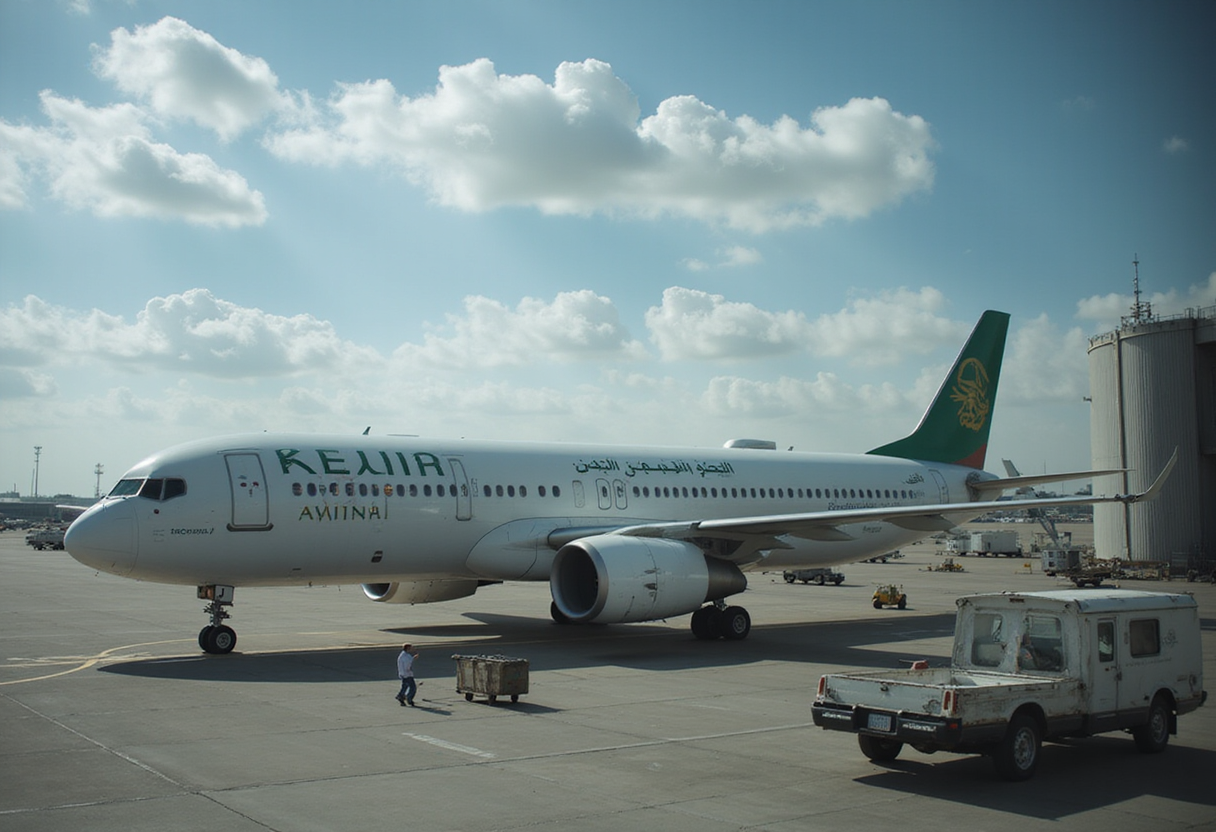
Yemen-based Houthis have warned commercial airlines against transiting Saudi Arabian airspace, putting major Europe-Asia trunk routes in the group's crosshairs.
The warning, framed in language suggesting Saudi skies could become "a theater of operations," stops short of a formal closure order. It nevertheless signals a more confrontational stance toward civil aviation overflying the kingdom.
Why Saudi airspace matters
Saudi territory sits astride a critical east-west trunk for commercial aviation. Aircraft routing between European hubs and Gulf cities, with onward sectors into the Indian subcontinent and East Asia, routinely file through Saudi flight information regions. Material restrictions would push carriers south into Indian Ocean corridors, or north through Iraqi and Turkish airspace, depending on routing.
Saudi Arabia's General Authority of Civil Aviation (GACA) coordinates civil airspace with military authorities and issues routine Notices to Airmen (NOTAMs) governing commercial overflights. Any change driven by the new threat would route through that channel first. Carriers planning fleet operations in the region typically carry reserve fuel uplifts sized to absorb reroutes of several hundred nautical miles.
How serious is the warning?
The "theater of operations" framing marks a rhetorical shift from prior admonitions. It suggests the group is treating commercial corridors as part of an active battlespace rather than as collateral to a separate campaign. Whether the group has the operational capacity to enforce that framing on airliners over Saudi territory is a separate question.
Operators will weigh it through safety intelligence feeds and aviation authority guidance. For now, the warning is a public admonition, not a closed-airspace directive. The bar for a formal closure would involve clear threat indicators triggering GACA action and Saudi-led airspace coordination.
What are the cost consequences?
Diversion adds block time, fuel burn, and crew-duty exposure — factors familiar to operators that absorbed rerouting during previous Middle East disruptions. Insurance premiums tied to conflict-zone operations tend to track assessed threat levels.
Underwriters can impose specific routing exclusions at short notice, leaving operators with little room to absorb the cost through buffer planning alone. Each minute of added flight time compounds across a fleet, hitting schedule integrity and dispatch reliability at carriers already running tight buffer planning.
What response do regulators typically mount?
The decisive signal will come from regulators and air navigation service providers. Carriers should expect updated routing guidance from GACA if Saudi authorities assess the threat as operationally credible. Independent rerouting by commercial operators typically follows such guidance within hours.
For commercial crews, the practical implications translate into revised flight plans before departure, possible mid-route reroutes when NOTAMs change en route, and updated crew briefings on threat reporting. Dispatch desks must reconcile routing changes with reserve fuel and crew positioning, often within the same duty period.
Who is most exposed?
Carriers with diversified networks and modern fuel reserves can absorb modest rerouting. Tight-turn Gulf-Asia schedules face a sterner test, particularly where block-hour targets already compress buffers. Cargo operators running time-sensitive networks face the steepest exposure because reroutes directly erode payload and on-time performance guarantees to shippers.
What comes next?
The next several days will determine whether the warning hardens into formal airspace restrictions or remains a public posture. For airlines already routing with caution, the calculus is becoming harder by the week.
via Google News: Air traffic control and airspace (Source)
More from Priya Raman
Same bay
- FDR699Houthis warn airlines Saudi airspace unsafe as Yemen offensive intensifies · October 9, 2026
- FDR779Houthis Warn Airlines Over Saudi Airspace as Yemen Strikes Intensify · October 9, 2026
- FDR448Yemen's Houthis warn airlines away from Saudi airspace · October 10, 2026
- FDR845Houthis warn airlines Saudi airspace 'not safe' for civil operations · October 9, 2026
- FDR628EASA Warns Airlines to Avoid Parts of Saudi Airspace · October 1, 2026