Clearance CLR-8807 · AIR674
AIRHOU
Airspace & RegulationClearance sheet
Houthis warn Saudi airspace unsafe while Yemen campaign continues
A Houthi warning that Saudi airspace "won't be safe as long as Riyadh's 'aggression' continues" puts the kingdom's overflight corridors back on aviation risk assessments, reframing a long-running regional conflict as a commercial aviation variable.
Read-back
- Houthi warning ties Saudi airspace safety to the end of Riyadh's military operations in Yemen
- Saudi territory sits on the principal Europe-to-Asia overflight corridor used by widebody operators
- No formal closure or regulator restriction has been announced in response to the statement
- Conflict-zone risk is typically priced through war-risk insurance rather than regulator action
- Carriers continue to file normal flight plans through Saudi FIR pending further developments
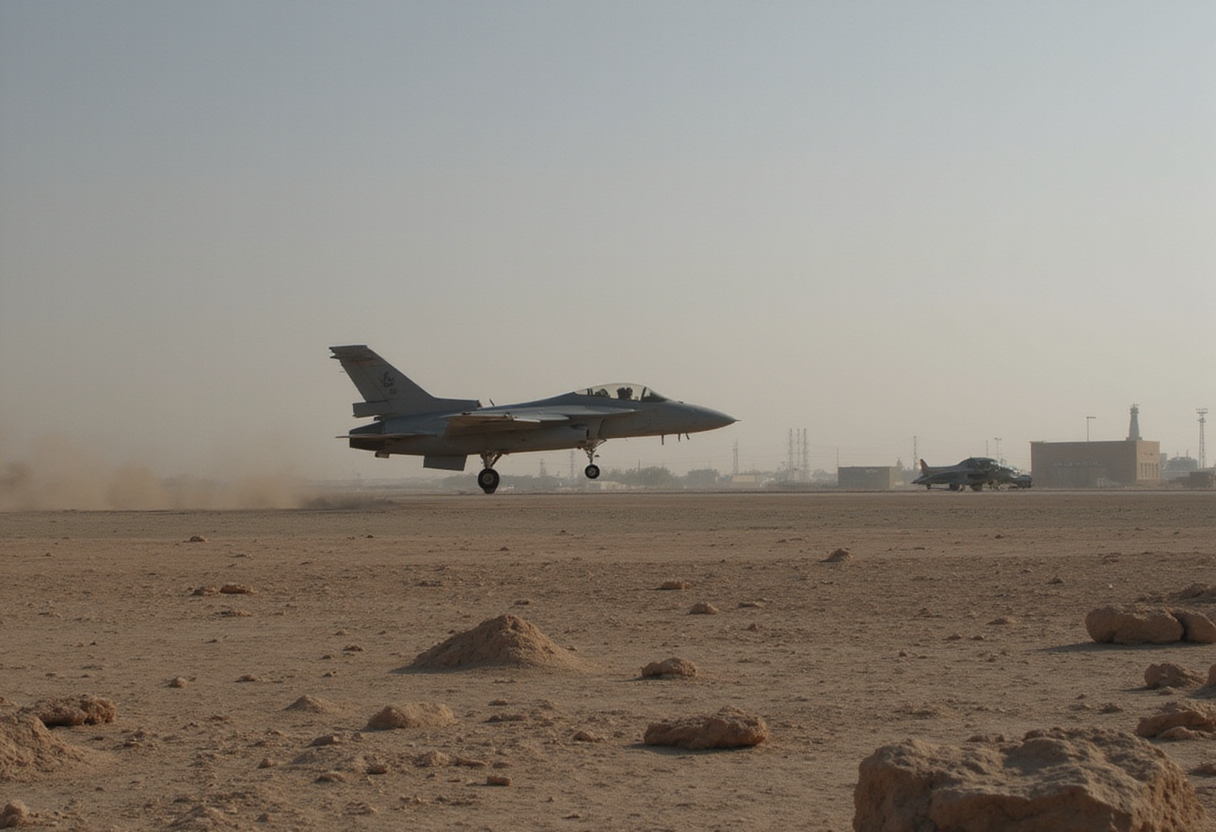
The Houthi movement has warned that Saudi Arabia's airspace "won't be safe as long as Riyadh's 'aggression' continues," according to a Times of Israel report, reframing a long-running regional conflict as a direct variable in commercial aviation planning across the Middle East.
For airlines, the practical question is not whether Saudi skies are formally closed but whether risk modelling, overflight permits and insurance pricing will treat them as such. Saudi Arabia sits beneath the main east-west corridor connecting Europe, the Gulf and Asia. Even a marginal reroute adds fuel burn, time and emissions.
What did the Houthis actually say?
The group framed Saudi airspace safety as conditional on Riyadh ending its military operations in Yemen. The language mirrors Houthi rhetoric throughout the war, where the movement has repeatedly tied de-escalation demands to the Saudi-led coalition's campaign. The Times of Israel carried the warning; the underlying statement has not been independently published in the reporting available.
Why Saudi airspace matters for aviation
Saudi territory sits across the most direct routing between European hubs and the Gulf, the Indian subcontinent and Southeast Asia. Airlines operating A350s, 777s and 787s on these corridors depend on overflight rights negotiated with Riyadh. The kingdom also hosts Saudia, flynas and flyadeal, whose networks rely on reliable access to Saudi airspace itself.
Disruption pushes traffic north through Turkish and Iraqi airspace, or south around the Arabian peninsula via the Indian Ocean. Both options extend flight time, increase fuel uplift and force payload trade-offs on long-haul sectors.
What is the Houthi track record?
The Houthis have demonstrated the ability to reach targets inside Saudi territory. A September 2019 strike on Saudi Aramco facilities at Abqaiq and Khurais briefly knocked out a significant share of global oil supply and showed the group could project force deep into the kingdom. Those strikes did not target civil aviation, but they reset assumptions about what Saudi airspace could absorb.
Since late 2023, Houthi action has expanded into the Red Sea and Bab el-Mandeb, where attacks on commercial shipping forced the largest container lines and several tanker operators to reroute around the Cape of Good Hope. Airlines have not reported comparable attacks on aircraft, but the pattern of the conflict keeps Saudi overflight risk on insurance underwriters' watchlists.
How do regulators and insurers respond?
European and Gulf aviation authorities do not issue blanket "do not fly" notices over sovereign Saudi airspace during periods of regional tension. Risk is priced through war-risk insurance, which carriers purchase separately for operations over conflict zones. Premium moves, not regulator action, typically determine whether a route stays commercially viable.
IATA and ICAO coordinate overflight safety through their member states. Neither has publicly flagged Saudi airspace as closed or restricted in response to the latest Houthi statement, and Saudi air traffic management continues to publish standard procedures.
What changes for airlines today?
In the short term, little. The warning is a political signal, not a new capability. Carriers continue to file normal flight plans through Saudi FIR. The question is whether insurance or security advisories shift in the days ahead, and whether Saudi Arabia reciprocates with airspace restrictions of its own.
If either side moves from rhetoric to action, the network consequences extend well beyond the Gulf. Carriers would face higher fuel costs and lower payload on long-haul sectors, and freight operators would absorb the bulk of any sustained rerouting.
What to watch
Three indicators will show whether the warning hardens into operational reality. First, any change in Saudi GACA notices to operators. Second, Lloyd's and broader war-risk syndicate pricing for Saudi overflight. Third, further Houthi statements that name specific targets or routes rather than general airspace. Until at least one of those moves, the headline changes the conversation more than the flight plan.
via Google News: Air traffic control and airspace (Source)
More from James Calloway
Show full bio
Staff writer covering industry trends and analytics at Flightdeck Report.
320 articles
Same bay
- FDR258Houthis Declare Intent to Close Saudi Airspace and Oil Facilities · October 9, 2026
- FDR779Houthis Warn Airlines Over Saudi Airspace as Yemen Strikes Intensify · October 9, 2026
- FDR845Houthis warn airlines Saudi airspace 'not safe' for civil operations · October 9, 2026
- FDR820EU Aviation Agency Issues Saudi Airspace Advisory After Houthi Attacks · September 30, 2026
- FDR699Houthis warn airlines Saudi airspace unsafe as Yemen offensive intensifies · October 9, 2026