Clearance CLR-8324 · AIR749
AIRIND
Airspace & RegulationClearance sheet
India Seeks China Overflight Route as Pakistan Extends Airspace Curbs
Pakistan's extended airspace closure pushes India to negotiate alternative overflight routings through China, raising costs and schedule pressure on westward sectors.
Read-back
- Pakistan has extended its airspace restrictions affecting Indian carrier routings
- India is seeking an alternative flight route via Chinese airspace, CNBC TV18 reports
- The closure raises fuel burn and block times on India–Europe, Gulf and North America sectors
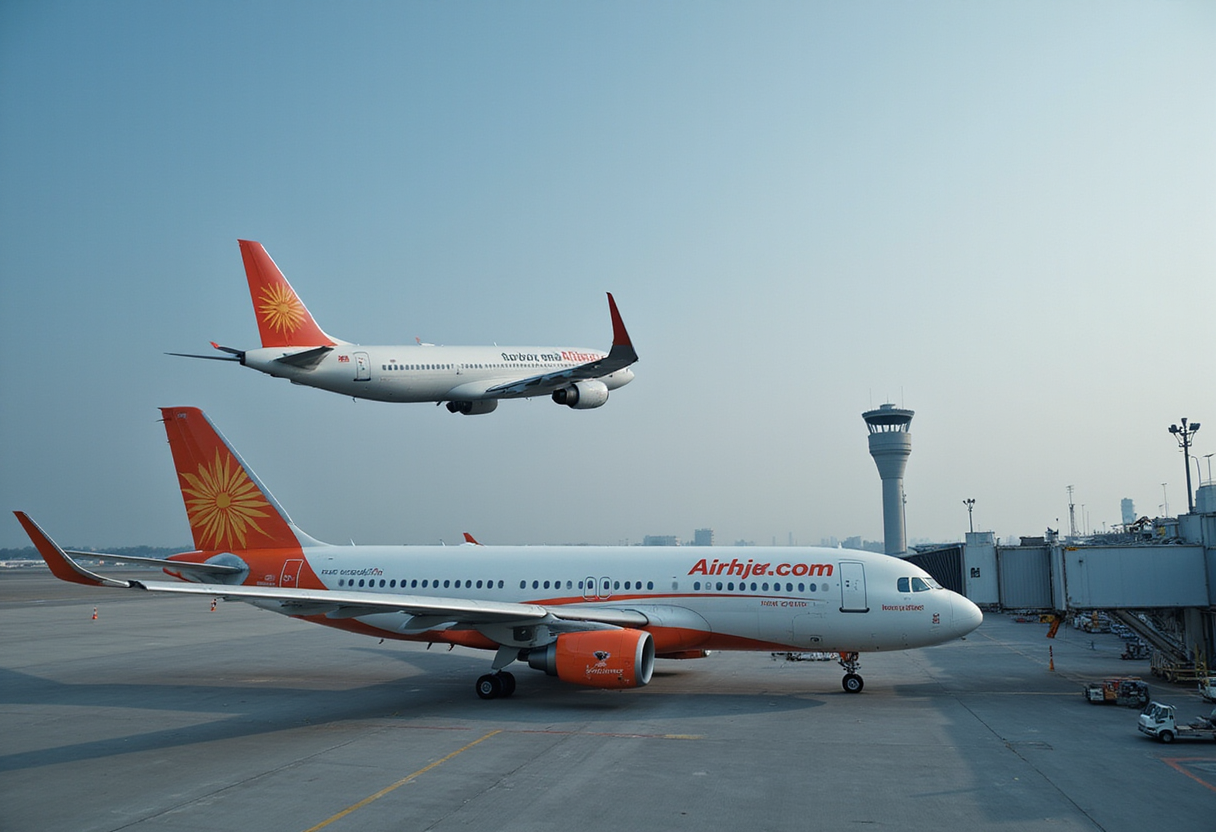
Pakistan has extended its airspace restrictions, and Indian authorities are now pursuing an alternative flight route through Chinese airspace, CNBC TV18 reports.
The extension prolongs a disruption that has already forced Indian carriers to fly longer routings on sectors westward, with direct consequences for fuel burn, block times and network economics. For airlines operating between India and Europe, the Gulf and North America, the closure of the most direct corridors over Pakistan adds hours to some sectors and removes flexibility from schedule planning.
Negotiating overflight rights through China would give Indian operators a workaround on northern routings. Any such arrangement requires diplomatic clearance and coordination between the Directorate General of Civil Aviation, its Pakistani and Chinese counterparts, and the airlines themselves. Securing a corridor through Chinese airspace is not a simple procedural matter; it depends on bilateral agreements and the state of political relations between New Delhi and Beijing.
The immediate commercial burden falls on the carriers. Longer flight times mean higher fuel consumption per sector, additional crew duty-time pressure and, in some cases, payload restrictions on affected routes. Airlines must decide whether to absorb the added cost, pass it to fares or trim capacity on routes where the economics no longer clear.
Pakistan's decision to extend the restrictions signals that the disruption is not a short-term measure. Carriers planning summer schedules will have to build routings on the assumption that the western corridors remain closed, and that any Chinese alternative arrives only after negotiation — if it arrives at all.
The outcome will shape competitive dynamics on India–Europe and India–North America traffic, where Gulf and European carriers with different routing options hold an advantage while Indian operators fly around the closure. A viable China route would restore some of that lost efficiency; without it, Indian carriers face a structural cost penalty on their longest sectors for as long as the restrictions hold.
via Google News: Air traffic control and airspace (Source)
More from James Calloway
Show full bio
Staff writer covering industry trends and analytics at Flightdeck Report.
156 articles
Same bay
- FDR215India Opens Talks With Beijing on Alternate Air Route · September 29, 2026
- FDR175Pakistan Airspace Shut as Indian Carriers Weigh China Routes · September 30, 2026
- FDR636India Weighs China Overflight Route to Bypass Pakistan Airspace Ban · September 30, 2026
- FDR778India Weighs China Overflight Route as Pakistan Airspace Ban Bites · September 29, 2026
- FDR103India Weighs Xinjiang Overflight Route to Bypass Pakistan Airspace Ban · September 30, 2026