Clearance CLR-7584 · AIR639
AIRIND
Aircraft & EnginesClearance sheet
Indian Carrier's 40-Aircraft Order Strains ATR Production System
An Indian carrier has committed to 40 ATR turboprops, a deal that lands on a Franco-Italian manufacturer still scaling its Toulouse line and leaves India's smaller airports dependent on a single supplier.
Read-back
- An Indian carrier has committed to 40 ATR turboprop aircraft
- ATR is a 50-50 joint venture between Airbus and Leonardo, headquartered in Toulouse
- India's UDAN scheme has subsidized more than 900 routes since 2017
- Pratt & Whitney Canada's PW100 and PW150 engines power both ATR product lines
- ATR has typically spread deliveries across 24 to 48 months for orders of comparable size
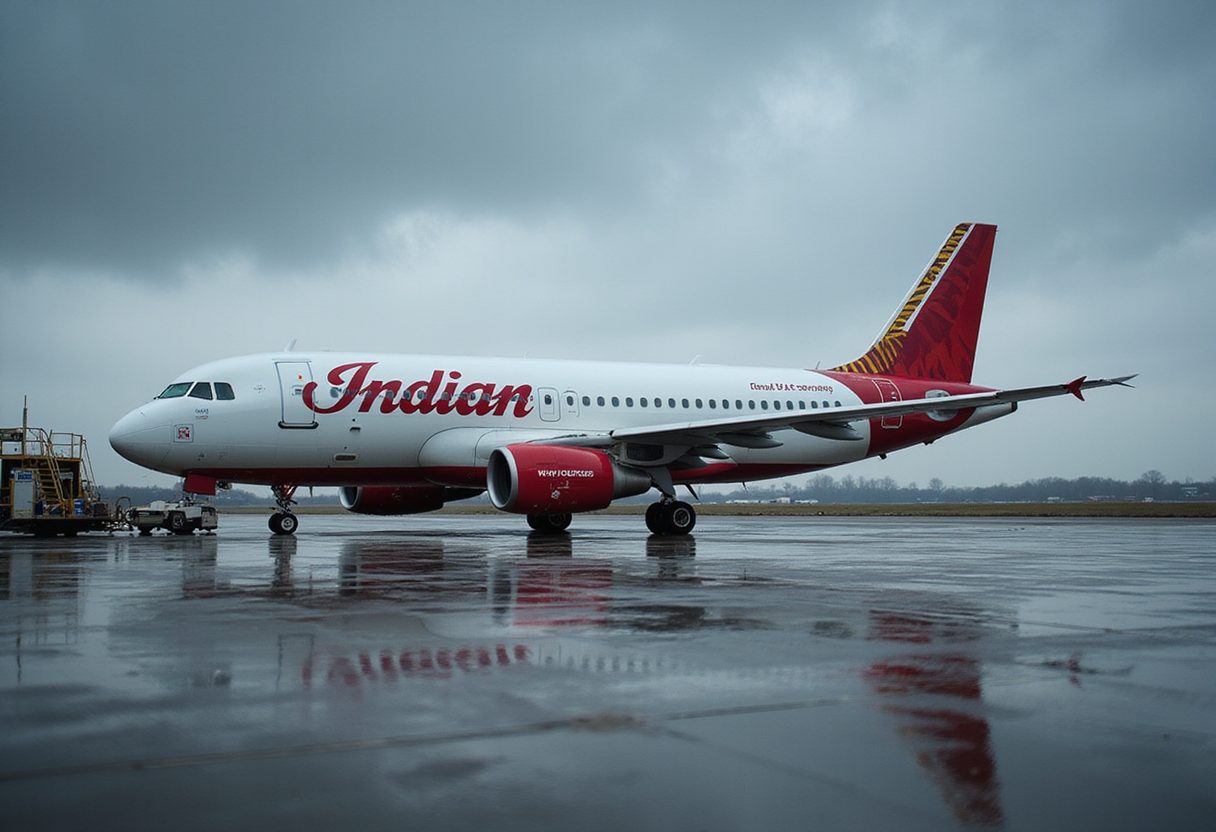
An Indian carrier has placed a firm order for 40 ATR turboprops, a commitment large enough to test the manufacturer's production system at a time when regional aviation demand in South Asia continues to build.
The order would represent a substantial share of ATR's annual output. The Franco-Italian manufacturer, a 50-50 joint venture between Airbus and Leonardo, runs a Toulouse final-assembly line around two product lines: the roughly 50-seat ATR 42-600 and the 78-seat ATR 72-600. Both serve short-haul, low-density feeder routes to India's smaller airports.
What does this order tell us about regional demand?
India's regional connectivity scheme, UDAN (Ude Desh ka Aam Nagrik), has subsidized more than 900 routes since its 2017 launch. Turboprops account for the bulk of new aircraft commitments supporting those services. The carrier behind this 40-unit order fits the pattern of operators preparing to scale capacity, not simply renew an existing fleet.
UDAN ties viability gap funding to operators willing to serve underserved Tier-2 and Tier-3 airports, with subsidies designed to phase out as routes mature. Aircraft commitments of this size typically target the post-subsidy phase, when the operator must stand on commercial economics alone.
Why is ATR's production system under strain?
ATR's recent delivery cadence has lagged its pre-pandemic baseline. Engine supply from Pratt & Whitney Canada — supplier of the PW100 and PW150 turboprop engines that power both ATR programs — has historically constrained output, alongside cockpit avionics lead times and a Toulouse labor market that limits line-rate expansion.
A 40-aircraft commitment cannot easily fit within twelve months. Even at an optimistic allocation, slots, engines, cabin interiors, and customer flight acceptance checks stretch across multiple years for orders of this scale. ATR has typically spread deliveries across 24 to 48 months for similar bookings, and operators generally accept that pacing when planning fleet growth.
What does this mean for lessors and competing operators?
Lessors holding ATR family aircraft — Nordic Aviation Capital, Avation, AerCap, and smaller specialists — have benefited from a market in which new deliveries remain scarce. Used ATR 72-600s have held residual values partly because replacements are queued rather than available. A 40-unit order execution that flows through ATR's system on schedule would signal a healthier production rate. Persistent delays would confirm that demand still outruns supply.
For the Indian carrier itself, the order positions it to capture UDAN's later phases and any successor scheme that emerges as the original subsidies taper. The competitive risk is delivery slippage. Aircraft committed today may not enter revenue service until late in the decade, by which time rival regional operators could have secured earlier slots.
What competition does ATR face in this segment?
ATR faces limited direct competition in the 50- to 78-seat regional category. The Embraer E175 sits above the turboprop class in both capacity and economics. The Bombardier CRJ family has effectively exited new production after its last delivery cycle. That monopoly position amplifies the production pressure: when ATR's Toulouse line slows, there is no realistic second source for a regional aircraft of this size.
What should industry observers watch next?
Two indicators will define the deal's outcome. ATR's next quarterly delivery update will show whether the line rate is trending up or sideways, and any subsequent communication from the Indian carrier on route auctions and revenue service entry will clarify network intent. Together they will tell whether the 40-unit headline represents measured expansion or a queue position that stretches beyond current planning horizons.
via Google News: Aircraft orders and fleets (Source)
More from Priya Raman
Same bay
- FDR834ATR moves toward Indian assembly line on new turboprop order · October 10, 2026
- FDR862ATR books $1bn FLY91 deal, eyes wider Asia-Pacific turboprop push · October 9, 2026
- FDR427IndiGo Weighs Regional Aircraft Order to Feed Delhi Hub · September 30, 2026
- FDR761ATR Brings 29-Foot Mock-up to RAA as It Presses US Case · September 30, 2026
- FDR900Bengal's four-airport UDAN bet confronts a 106-route attrition record · October 9, 2026