Clearance CLR-6752 · AIR833
AIRCOM
Aircraft & EnginesClearance sheet
COMAC C919 production ramp stalls as Chinese carrier fleets age
COMAC's C919 single-aisle output has failed to keep pace with the manufacturer's 2022 guidance, leaving Chinese carriers to absorb aging A320 and 737NG retirements through Airbus and Boeing order books.
Read-back
- COMAC delivered its first C919 to China Eastern in late 2022 and projected a steep subsequent ramp
- External estimates place C919 annual output in the low double digits, well below earlier COMAC guidance
- COMAC values the C919 order book at more than 1,000 aircraft
- China's in-service narrowbody fleet is approaching the 12-15 year retirement planning band
- The C919 is powered by CFM International LEAP-1C engines under a long-running joint venture
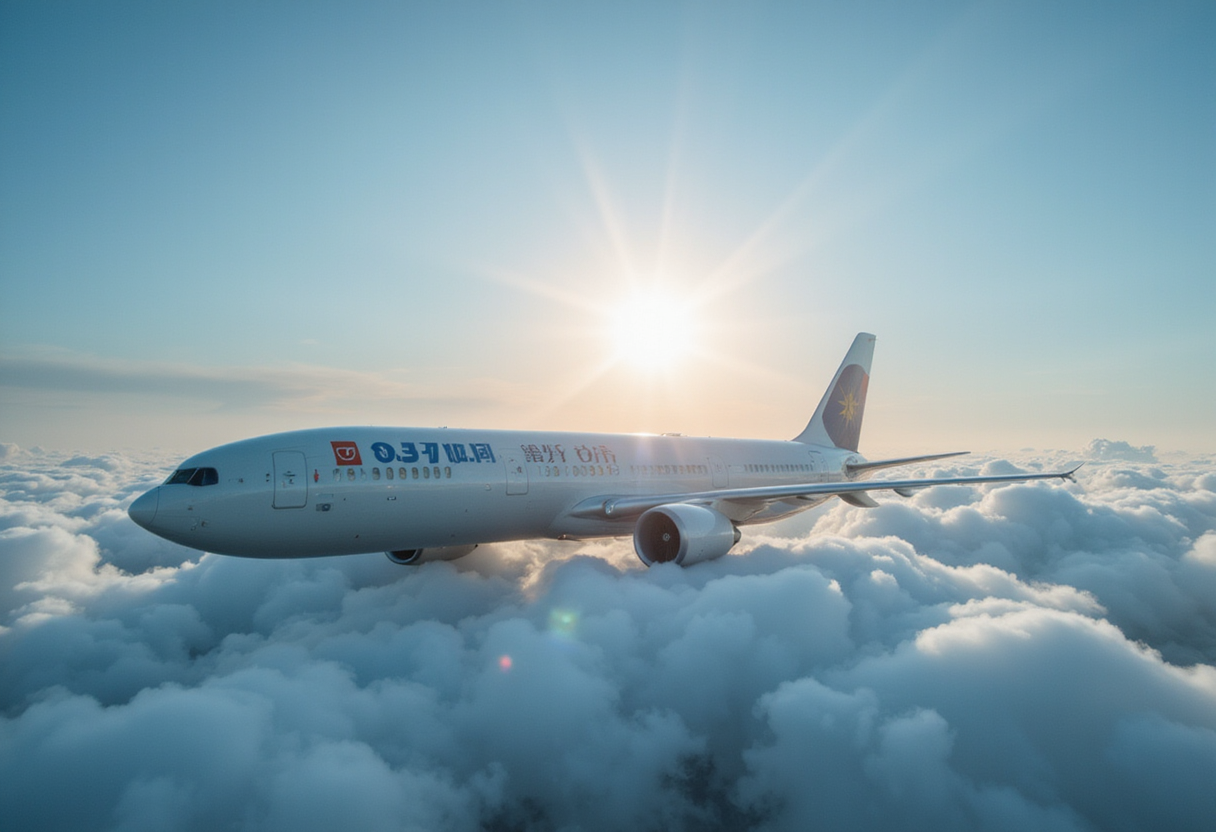
COMAC delivered its first C919 to China Eastern in late 2022 and committed to a steep production ramp intended to loosen Beijing's reliance on Airbus and Boeing. Three years later, the ramp has not materialised at the pace officials described, even as the average age of China's in-service narrowbody fleet climbs toward levels last seen in the early 2010s.
The mismatch sits at the centre of a structural dilemma for Chinese carriers. Domestic replacement demand for single-aisle jets runs well above what COMAC can produce, and Western alternatives face their own delivery backlogs. Public delivery figures for 2024 are unavailable, but industry observers tracking the program describe output as a fraction of the trajectory COMAC sketched in 2022 guidance.
Where the bottleneck sits
The C919 depends on a Western supply chain that COMAC has spent a decade trying to localise. CFM International's LEAP-1C powers the type under a long-running joint venture, and several avionics and hydraulic lines originate outside China. Indigenisation targets issued under "Made in China 2025" called for substantially higher domestic content in commercial aerospace by mid-decade, but certification of replacement systems has lagged.
By most external estimates, annual output has stayed in the low double digits. COMAC's own statements point toward higher single-aisle production, yet airlines placing follow-on orders have reported wait times stretching beyond the original 2022-2024 delivery window.
What is the fleet pressure?
Chinese carriers took delivery of hundreds of Airbus A320-family and Boeing 737NG aircraft during the 2010s expansion. Those jets now sit in the 12-15 year band when narrowbody cabin refurbishment and heavy maintenance dominate operating cost, and when retirement planning begins to bite.
Retirements accelerated through 2023-2024 as carriers trimmed capacity and offloaded older narrowbodies. Replacement orders went overwhelmingly to Airbus and Boeing — the two suppliers with the established global support network. The C919, despite an order book that COMAC values above 1,000 aircraft, has not absorbed a significant share of that retirement wave.
What does this mean for Boeing and Airbus?
For Boeing, the failure of the C919 ramp removes a near-term competitive pressure that had shaped commentary around 737 MAX sales campaigns in Asia. The 737 MAX 8 remains the workhorse of Chinese narrowbody growth, alongside the A320neo family, and both Western OEMs are positioned to absorb the bulk of replacement demand through the end of the decade.
For Airbus, the arithmetic is similar. A321neo slots in China carry multi-year waitlists, and the inability of COMAC to scale C919 output has not disrupted that order pipeline.
Can Beijing underwrite the gap?
COMAC chairman He Dongfeng has framed the C919 as a strategic priority for the country, describing the type in public remarks as essential to Chinese aerospace independence. That framing now carries an explicit cost: if Beijing wants faster output, it must either accelerate supplier indigenisation, fund a second final-assembly line beyond the Pudong site, or accept that Chinese airlines will fly Western metal through the end of the decade.
Independent dispatch-reliability figures for the C919 have not been published, but maintenance records from China Eastern and the smaller carriers flying the type suggest the aircraft remains on an extended stabilisation curve typical of a new program in its first years of revenue service.
What happens next
Whether COMAC can convert its order book into delivered metal depends on three variables: certification of local engine and avionics substitutes, expansion of final-assembly capacity, and the willingness of Chinese airlines to accept the operational risk of a still-immature type in high-utilisation service. The next twelve months will show whether the country's planners choose to underwrite those costs directly or accept a slower path to commercial aerospace independence.
via Google News: Aircraft orders and fleets (Source)
More from Grace Kim
Show full bio
News editor covering consumer brands and retail at Flightdeck Report.
341 articles
Same bay
- FDR292Duffy Presses for Faster FAA Certification, Citing China · October 1, 2026
- FDR745Boeing Secures Major China Aircraft Order After Trump-Xi Summit · October 10, 2026
- FDR982Boeing Shares Rise on Expected China Aircraft Order · September 27, 2026
- FDR770Airbus needs 108 deliveries a month to hit 870-aircraft 2026 target · October 9, 2026
- FDR603Airbus Points to New Routes as Engine of Asia-Pacific Narrowbody Demand · September 27, 2026