Clearance CLR-5800 · AIR379
AIRIRA
Air CargoClearance sheet
Iran Reconstruction Demand Lifts World's Largest Air Cargo Handler
Reconstruction demand following the Iran war is delivering a material volume boost to the world's largest air cargo handler, the Financial Times reports.
Read-back
- The Financial Times reports Iran war reconstruction demand has boosted the world's biggest air cargo handler.
- Post-conflict rebuilds typically generate charter-driven, outsize-cargo airfreight demand that favors large-scale handlers.
- Durability of the uplift depends on international reconstruction financing, security conditions and freighter capacity allocation.
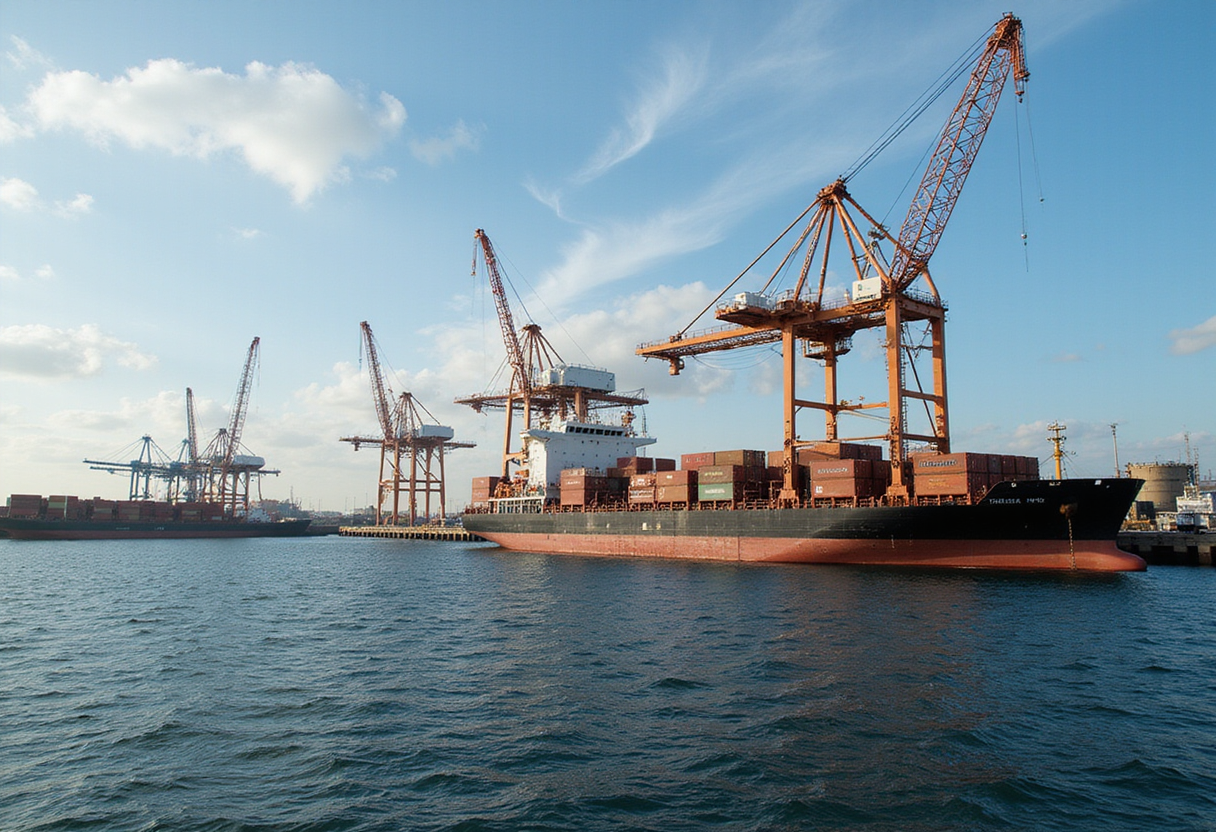
The Financial Times reports that reconstruction demand following the Iran war has delivered a commercial uplift to the world's biggest air cargo handler, tying a geopolitical recovery effort directly to freight volumes in a market still working through post-pandemic capacity adjustments.
The headline finding is straightforward: rebuilding a war-damaged economy requires heavy, urgent, high-value cargo — generators, telecoms equipment, construction machinery, medical supplies — and that demand moves by air when road and port infrastructure remain degraded. The world's largest air cargo handler is the first point of capture for those flows, and the FT's reporting positions the reconstruction effort as a material, not marginal, boost to its business.
The pattern is familiar from prior reconstruction cycles. Post-conflict rebuilds generate sustained airfreight demand because surface logistics recover far more slowly than commercial urgency. Iraq after 2003, Afghanistan across two decades of sustained airlift, and Ukraine's ongoing reconstruction planning all produced or are projected to produce freighter-heavy traffic profiles, charter activity, and outsized yields on routes that would otherwise not support dedicated cargo service.
For the handler at the center of the FT report, the boost arrives at a useful moment. Global air cargo demand has been uneven since the pandemic boom unwound, with belly capacity restored on passenger networks and freighter load factors fluctuating with e-commerce cycles out of Asia. A new, durable source of demand — reconstruction freight — diversifies the revenue base away from consumer-driven volatility.
The commercial mechanics matter. Reconstruction cargo tends to be charter-driven and project-based rather than scheduled, which benefits handlers with freighter ground-handling capability, heavy-cargo expertise, and ramp capacity for outsize movements. Handlers that can process abnormal loads — overlength steel, transformers, generators — capture premiums that standard palletized e-commerce freight does not command. The scale advantage of the world's largest handler, with the widest station network and the deepest equipment pool, concentrates that benefit.
There are operational constraints worth flagging. Reconstruction surges stress handler staffing and ground support equipment at a time when the industry is still reporting shortages of qualified ramp and cargo personnel. Aircraft availability is another variable: dedicated freighter capacity is finite, and operators will reallocate airframes only if reconstruction yields beat alternative deployments on transpacific or intra-Asian lanes.
The geopolitical dimension cuts both ways. Reconstruction demand is policy-dependent — it scales with international funding commitments, sanctions relief or their absence, and security conditions on delivery corridors. Sustained rebuild traffic assumes a stable financing pipeline and safe overland distribution beyond the airport boundary. Any of those inputs can stall, and cargo flows would follow.
What the FT's reporting establishes is that the uplift is real and already flowing through the largest handler's volumes. What it does not yet establish is durability: whether Iran's reconstruction generates a multi-year traffic base comparable to previous rebuild cycles, or a shorter spike that fades as surface logistics recover and donor funding cycles turn over.
The handler's forthcoming volume disclosures, and the freighter deployment decisions of the major cargo operators serving the region, will show whether reconstruction freight has become a structural component of the global air cargo market or a temporary reallocation. For now, the world's biggest handler is the clearest beneficiary of cargo that wars leave behind.
This report is based on a Financial Times headline and summary; the full FT article contains additional detail behind the figures cited.
via Google News: Air cargo (Source)
More from Grace Kim
Show full bio
News editor covering consumer brands and retail at Flightdeck Report.
138 articles
Same bay
- FDR285Global Air Cargo Volumes Recover While Middle East Capacity Lags · September 28, 2026
- FDR110Source Material Contains No Substantive Content · September 28, 2026
- FDR317Air Cargo Demand Up 4.4% in August as Capacity Stays Flat · October 1, 2026
- FDR374Air Cargo Demand Up 4.4% in August as Capacity Slips · September 30, 2026
- FDR310Cargo Handler Consolidation Could Squeeze Airlines' Ground Costs · September 30, 2026