Clearance CLR-1210 · AIR443
AIRLUF
Air CargoClearance sheet
Lufthansa Cargo moves into cargo handling with acquisition
Lufthansa Cargo has acquired an air cargo handling company, moving beyond freighter operations into ground handling in a consolidating European warehouse market.
Read-back
- Lufthansa Cargo has acquired an air cargo handling company, ch-aviation reports.
- Purchase price, acquired company identity and station scope have not been disclosed.
- The deal extends Lufthansa Cargo's 777F-based operation into owned ground handling amid European handling consolidation.
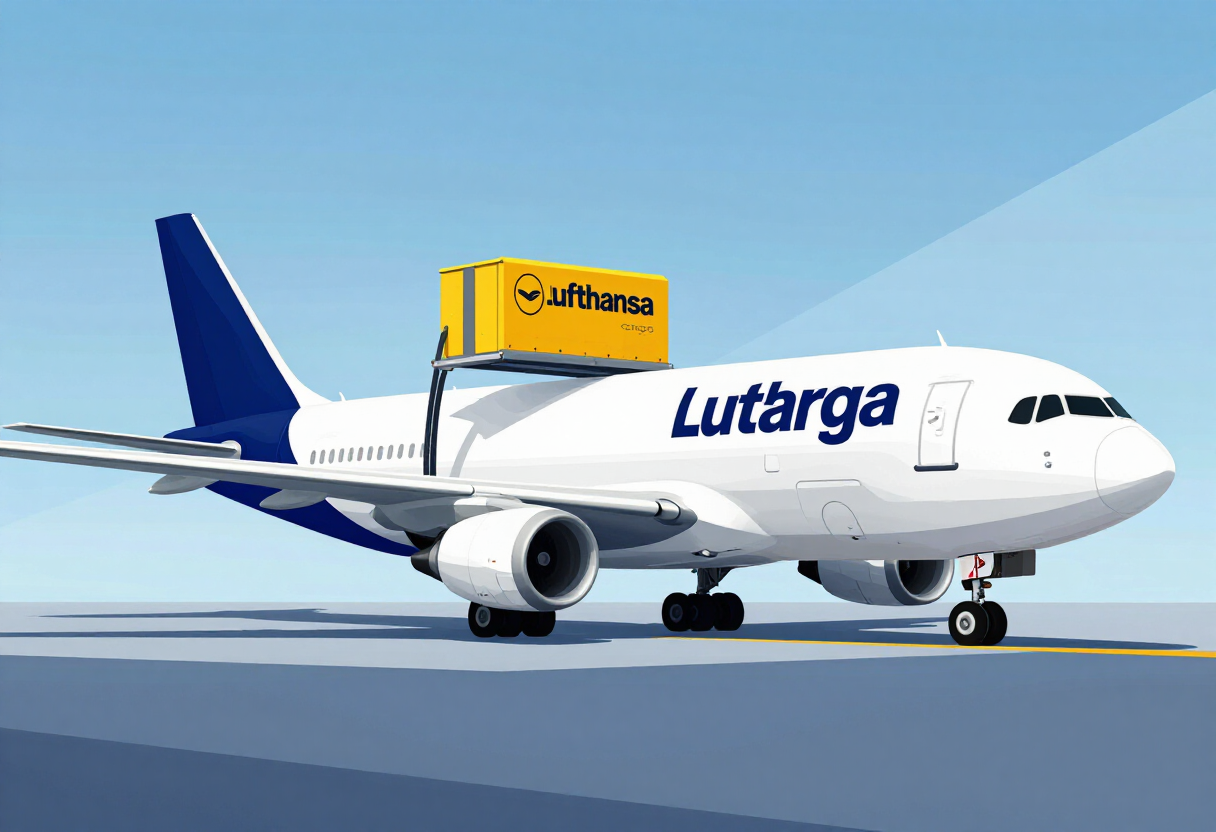
Lufthansa Cargo has acquired an air cargo handling company, according to ch-aviation, extending the Lufthansa Group freight arm beyond aircraft operations and into the warehouse and terminal business that underpins its freighter and belly-cargo product.
The carrier group has not yet disclosed the purchase price or the full commercial rationale, but the transaction places Lufthansa Cargo in direct ownership of a link in the chain it has until now contracted. For an airline that sells capacity on a fleet of Boeing 777 freighters and on the belly holds of Lufthansa, Swiss, Austrian and Brussels Airlines passenger aircraft, control of handling touches three cost lines at once: warehouse labour, trucking connections and the dwell time of freight between runway and customer.
Handling is where cargo airlines most often lose schedule integrity. A freighter can depart on time and still deliver late if pallets sit in a breakdown area waiting for staff. By internalising that function, Lufthansa Cargo gains operational visibility over the segment of the journey it has historically managed through service-level agreements rather than direct authority, and it gains a unit that can compete for third-party handling contracts of its own.
That last point matters for the economics of the deal. Owned handling operations at major European gateways have become dual-revenue businesses: they serve the parent carrier at transfer cost and sell surplus capacity to other airlines and forwarders. Lufthansa Cargo's Frankfurt hub operation already functions this way in its relationship with the group's freighter network. The acquisition extends that model to whatever stations and customer base the acquired company brings with it, details the parties have yet to publish.
The move also reads as a defensive one. Ground handling in Europe has consolidated rapidly, with a small number of large groups — among them Worldwide Flight Services and Swissport — controlling an increasing share of warehouse capacity at the continent's cargo airports. An airline that relies on third parties in a consolidated supplier market faces pricing pressure at contract renewal and capacity allocation risk during peak season. Vertical integration removes that exposure at the acquired company's locations and gives Lufthansa Cargo a fallback option elsewhere in negotiations.
For regulators, the relevant question is horizontal rather than vertical: whether the acquired handling company holds significant market share at any single airport where Lufthansa Cargo or its group carriers also dominate freighter operations. European competition authorities have reviewed cargo handling transactions on precisely this basis in past cases. No filing details or review timeline have emerged from the announcement so far.
Lufthansa Cargo has spent the post-pandemic period adjusting capacity to a freight market that has cooled from the 2021–2022 peak. The carrier operates a fleet of 777 freighters and has phased out its older MD-11F aircraft, finishing that retirement in 2023 and consolidating its long-haul freighter operation around the twin-engine type. Against that backdrop, a handling acquisition is a play for margin and control rather than capacity — the freighter fleet does not grow, but the revenue per tonne moved stands to improve if handling costs fall and product reliability rises.
The transaction's real test will be measurable in the operating figures Lufthansa Cargo reports over the coming cycles: handling cost per tonne, transfer connection performance at the affected stations, and any third-party handling revenue the acquired unit adds to the group's logistics income. Until the parties publish the transaction terms and the scope of operations acquired, the industry will judge the deal by the only fact on the table — Lufthansa Cargo now owns a handler — and by what the carrier chooses to disclose about integration timelines in the months ahead.
via Google News: Air cargo (Source)
More from James Calloway
Show full bio
Staff writer covering industry trends and analytics at Flightdeck Report.
156 articles
Same bay
- FDR310Cargo Handler Consolidation Could Squeeze Airlines' Ground Costs · September 30, 2026
- FDR368Air Canada Cargo doubles down on digital groundwork with Lödige · September 30, 2026
- FDR719Freight Giant Shifts Widebody Orders From Boeing to Airbus · September 29, 2026
- FDR372Ethiopian Airlines to Acquire 10 Boeing 777 Freighters · October 1, 2026
- FDR877Air Cargo Demand Grew 4.4% in August as Load Factor Reached 46% · September 30, 2026