Clearance CLR-5977 · AIR444
AIRLAT
Air CargoClearance sheet
Latam Cargo Triples Bogotá Footprint With New $46,400-Sq-Ft Terminal
Latam Cargo will triple its Bogotá workspace with a 46,400-sq-ft El Dorado terminal and lift cold storage 20% as it defends a 35% share of Colombia's flower exports.
Read-back
- Latam Cargo will build and finance a 46,400-sq-ft cargo terminal at Bogotá's El Dorado airport, tripling its workspace
- Cold storage capacity will grow about 20% to serve flower exports, where Latam claims a 35% market share
- Latam's freighter division operates 19 Boeing 767-300 converted cargo jets
- VR warehouse training at Miami covers about 550 employees, including 250 forklift operators
- Latam upgraded cargo handling at three regional Colombian airports with new warehouses, X-ray equipment and counter technology
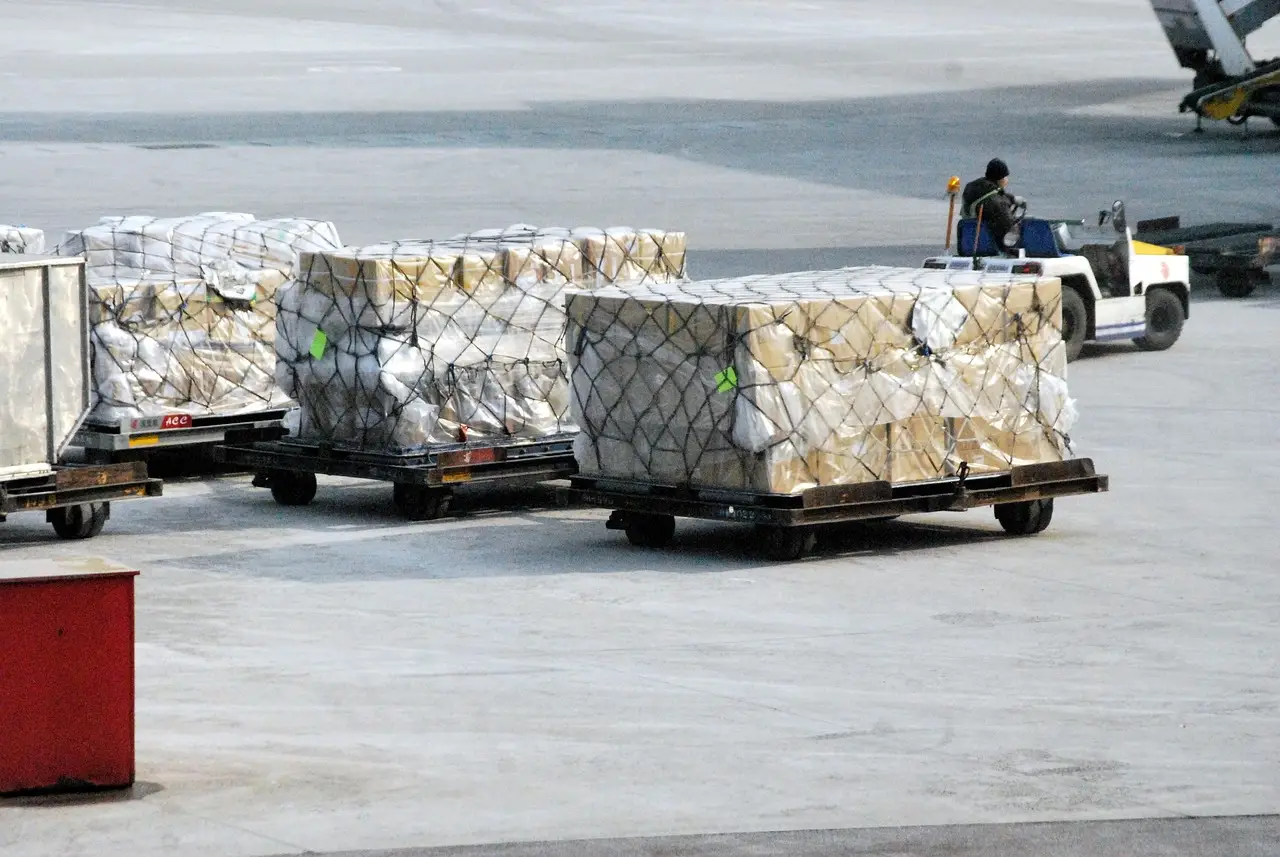
Latam Airlines Group will build and finance a new 46,400-square-foot cargo terminal at Bogotá's El Dorado International Airport, tripling its existing workspace as it chases Colombia's flower export market — a segment where the carrier says it already controls a 35% share.
The announcement, made Wednesday, anchors a broader plan to upgrade cargo handling infrastructure across Latam's primary operating hubs. The new El Dorado facility will speed up processing of both import and export shipments and expand cold storage capacity by roughly 20%, the capacity metric that matters most for cut flowers moving through Colombia's temperature-sensitive export chain.
"This investment is essential to leverage the airline's future growth plans in the Colombian market and represents a renewed vote of confidence by LATAM Group in the country," Santiago Álvarez, chief commercial officer of Latam Cargo, said in a news release.
Why the cold-chain bet matters
Latam is South America's largest airline, and its freighter division operates 19 Boeing 767-300 converted cargo jets. Flowers are a natural fit for that fleet: high-value, time-critical, and dependent on unbroken refrigeration from Bogotá grower to U.S. or European wholesaler. A 20% boost in cold storage at the region's premier flower-export gateway translates directly into how much perishable freight the carrier can accept, stage and turn around per night.
The terminal is only part of the physical build-out. Latam Cargo also plans to expand its domestic cargo facilities in Bogotá and open a new space dedicated to the growing inflow of imported cargo — an acknowledgment that Colombia's airfreight flows increasingly run in both directions.
Beyond the capital, the carrier has already upgraded three regional Colombian airports to move belly cargo off passenger flights more efficiently. The improvements include:
- Expanded warehouse space
- Upgraded X-ray screening equipment
- New counter technologies to speed cargo acceptance and drop-off
The digital layer running alongside the concrete
The physical expansion is paired with a digital transformation strategy. In Colombia, Latam has deployed artificial intelligence and RFID-based tracking tools specifically for flower shipments, plus the CargoLink platform for advance cargo acceptance. More broadly, the group is pushing to digitize end-to-end data exchange with industry stakeholders and customs authorities — the paperwork layer that often determines whether perishables clear a terminal in hours or sit overnight.
Virtual reality moves from Santiago to Miami
Last month, Latam Cargo disclosed a parallel investment in people rather than buildings: virtual reality training for warehouse staff at its Miami hub. The simulators, co-developed with the group's internal training arm, Academia LATAM, put personnel through scenarios spanning six warehouse pedestrian zones and three specialized modules for forklift drivers.
The initial phase covers about 550 employees, including 250 forklift operators. Trainees rehearse dangerous goods segregation, cargo handling, pedestrian traffic flow and machinery separation protocols. Unlike classroom instruction, the immersive platform captures precise behavioral metrics — contingency response times, and how quickly operators identify and mitigate hazards.
The program follows an earlier, narrower rollout for onboarding at the Fast Air warehouse in Santiago, Chile. The Miami launch scales it up with broader operational scenarios, and Latam said it is now assessing extending the VR system to other strategic hubs, including in Brazil.
Taken together, the Bogotá terminal, the regional airport upgrades and the Miami VR deployment sketch a carrier investing in capacity and process at both ends of its cargo network. Whether the 35% flower-market share grows accordingly will show up in the cold-storage throughput numbers at El Dorado once the new terminal opens.
via freightwaves.com (Source)
More from Nathan Brooks
Show full bio
Correspondent covering technology and product news in Commercial aviation industry coverage at Flightdeck Report.
674 articles
Same bay
- FDR996LATAM Cargo reports 150% surge in Europe–Brazil pharma volumes · October 15, 2026
- FDR350Colombia Air Cargo Market 'Absolutely Booming' as Ecommerce Squeezes Capacity · October 2, 2026
- FDR611LATAM and Delta lift South America-North America capacity 31% · October 10, 2026
- FDR497Ecommerce boom fails to fix Latin America air cargo imbalance · November 3, 2026
- FDR751Digital tools target air cargo delays and unused capacity · November 12, 2026