Clearance CLR-5027 · SUS318
SUSMIC
SustainabilityClearance sheet
Michigan Weighs Sustainable Fuel Facility Near Detroit Air Hub
Michigan will study a facility producing sustainable aviation and marine fuels near Detroit's hubs — a feasibility-stage step toward Midwest SAF capacity for airline offtakers.
Read-back
- Michigan has commissioned a study of a sustainable aviation and maritime fuel facility near Detroit's hubs.
- The project is at feasibility stage: no operator, capacity figure or construction timeline has been announced.
- The proposed facility would serve both aviation and marine fuel demand from one site.
- No airline or energy company partner is named in the state's announcement.
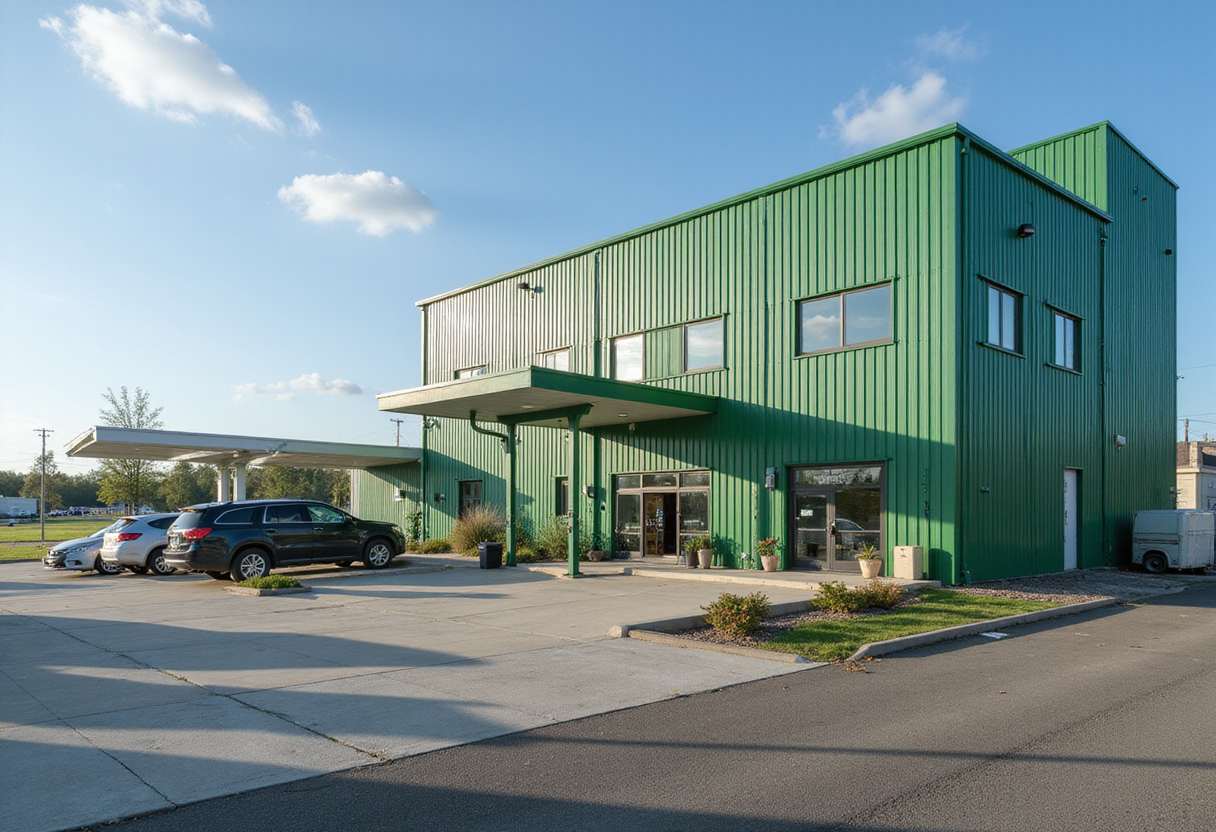
Michigan has launched a study into building a facility to produce sustainable aviation and marine fuels near Detroit's transport hubs, a move that ties the state's industrial base to the airline industry's most expensive decarbonisation problem.
The announcement names no production volumes, no operator and no timeline, so the proposal sits firmly in the pre-feasibility stage rather than on any project pipeline. What it does signal is state-level interest in capturing a share of a fuel category that US carriers are under growing regulatory and shareholder pressure to procure.
Why does this matter for airlines?
Sustainable aviation fuel (SAF) remains the only near-term drop-in substitute for kerosene on commercial aircraft, and supply is the binding constraint. Airlines worldwide have signed offtake agreements covering future years at prices well above conventional jet fuel, and production capacity in the US Midwest — close to both refining infrastructure and major hub operations — is scarce relative to stated demand.
Detroit sits within reach of heavy airline traffic, maritime freight movements on the Great Lakes, and existing industrial logistics. Co-locating aviation and maritime fuel production in a single facility would let a project serve two fuel-buying sectors from one capital base, improving the economics that have stalled similar ventures elsewhere.
What is actually on the table?
For now, a study — not a plant. Michigan officials have said they will examine the feasibility of a facility near Detroit, according to the announcement carried by SooLeader. The scope covers both aviation and maritime applications, which distinguishes it from purely airport-adjacent SAF proposals.
The study phase typically determines:
- feedstock availability and cost;
- preferred production pathway;
- site selection and rail, pipeline or barge access;
- capital cost and potential federal or state support;
- prospective offtakers among airlines, freight operators and fuel distributors.
No airline, refinery operator or energy company is named in the announcement as a partner, and no commitment of production capacity to Detroit-area carriers has been disclosed.
What are the cost and network implications?
For hub operators in the Detroit area, a local SAF source would shorten the supply chain for a fuel that currently moves long distances by rail and barge. Fuel is among the largest controllable cost lines for network carriers, and SAF carries a persistent premium over conventional jet fuel — a premium airlines have so far absorbed through offtake contracts, corporate demand programmes and government incentive schemes.
US federal policy, including tax credits for clean fuel production, has driven a wave of announced SAF projects nationwide. Delivery records show many remain unfinanced or behind schedule, which is why treating any study-stage announcement as capacity is premature.
Michigan's position as a manufacturing state gives the proposal a political dimension: fuel production would add industrial jobs alongside the automotive and aerospace supply chains already in the region.
What happens next?
The study's conclusions — on feasibility, cost and siting — will determine whether Michigan moves to solicit developers and offtake agreements. Until a production capacity figure, an operator and a construction date appear, Detroit-area airlines' SAF supply will continue to come from elsewhere.
via Google News: Sustainable aviation fuel (Source)
More from Grace Kim
Show full bio
News editor covering consumer brands and retail at Flightdeck Report.
360 articles
Same bay
- FDR357Minnesota Positions Itself as a Sustainable Aviation Fuel Hub · October 10, 2026
- FDR614$1.4B Sustainable Aviation Fuel Plant Planned for Louisiana · September 28, 2026
- FDR160Minnesota Sets Its Sights on Sustainable Aviation Fuel Hub Status · September 26, 2026
- FDR162Washington State University study weighs realistic SAF trajectory · September 30, 2026
- FDR225Minnesota SAF plant to supply 30 million gallons yearly to MSP · September 30, 2026