Clearance CLR-4411 · SUS504
SUSNES
SustainabilityClearance sheet
Neste flags Singapore base for sustainable aviation fuel
Neste has outlined a plan to supply sustainable aviation fuel to aircraft in Singapore, per an item carried by Singapore's Economic Development Board. Capacity, offtake and timing details remain undisclosed.
Read-back
- Neste has outlined a Singapore SAF plan via a release carried by the city-state's Economic Development Board.
- The release discloses no capacity, offtake, capex or commissioning details.
- ReFuelEU Aviation's 2% SAF blend mandate takes effect on flights departing EU airports from 2025, rising to 6% by 2030 and 70% by 2050.
- Certified SAF must meet ASTM D7566, which lists seven approved pathway annexes.
- SAF has historically traded at a 1.5x-to-3x premium over conventional Jet A1.
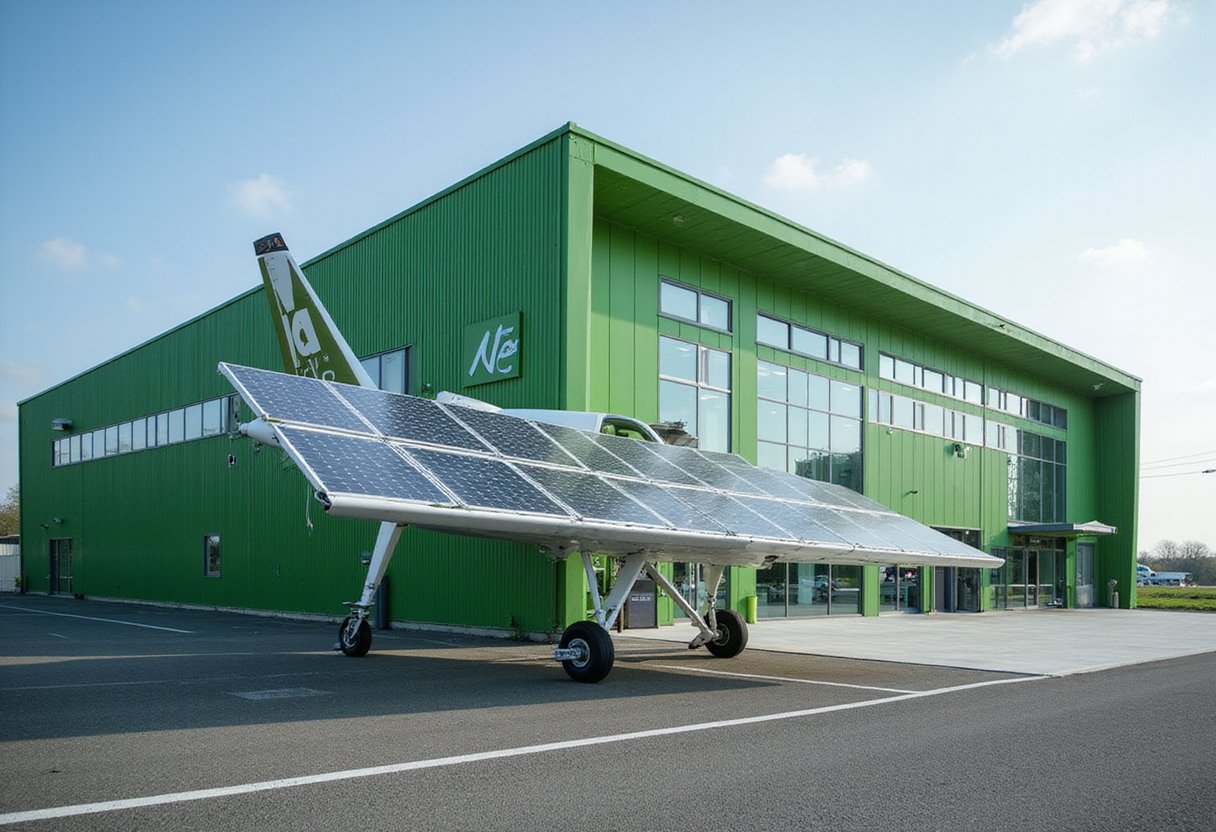
Renewable-fuels producer Neste has outlined a plan to supply sustainable aviation fuel (SAF) to aircraft operating from Singapore, according to a release carried by the Singapore Economic Development Board's news channel.
The Singapore project — flagged in an EDB-linked item aggregated via Google's news service — would extend Neste's renewable-fuels manufacturing footprint into a major Southeast Asian aviation market.
The headline release gives no detail on production capacity, capital outlay, offtake partners, certification or commissioning date.
What does the announcement actually contain?
Two elements sit in the source itself: the producer (Neste) and the geography (Singapore). Anything beyond those two facts — annual SAF volume, project capex, partner airlines, financing structure, feedstock origin — would require either Neste's own disclosure, an EDB statement, or a follow-up in the financial press.
Until then, the project registers as intent, not delivery.
How does SAF sit inside the regulatory map?
By industry convention, SAF refers to drop-in Jet A1 substitutes produced from non-fossil feedstocks:
- Used cooking oil and animal fats (HEFA pathway)
- Agricultural residues, municipal waste, forestry by-products
- Alcohol-to-jet routes (ATJ-SPK)
- Fischer-Tropsch synthetic paraffinic kerosene (FT-SPK)
- E-fuels synthesised from captured CO2 and green hydrogen
Each pathway must clear ASTM D7566, with seven annexes currently approved covering HEFA-SPK, FT-SPK and synthetic variants.
Aviation's regulatory pull for SAF is now structural. The EU's ReFuelEU Aviation regulation begins a 2% blend mandate on flights departing EU airports from 2025, climbing to 6% by 2030 and 70% by 2050. ICAO's CORSIA scheme adds parallel demand signals through its emissions-unit mechanism.
Singapore, through the EDB and its civil aviation authority, has signalled a domestic blending trajectory.
What does the cost picture look like?
SAF has traded at a premium to conventional Jet A1 — industry estimates place the gap in a roughly 1.5x-to-3x range historically, with wide swings tied to feedstock pricing, policy credits and production scale.
Global SAF output has consistently undershot demand forecasts published by IATA, Boeing and Airbus, with the shortfall most acute in Asia-Pacific.
What are the dispatch and network implications?
Because certified SAF is drop-in compatible with Jet A1 under ASTM D7566, fuel-system handling, range and dispatch reliability remain unchanged for operators that uplift it.
The consequences are unit-cost and emissions-accounting, not network planning. Carriers cannot claim SAF eligibility on a route without verified litres uplifted under documented offtake, putting pressure on producers to deliver physical volume rather than memoranda.
Why Singapore, and why now?
Singapore combines a flag-carrier hub with a dense route map into the Indian subcontinent, Greater China, Australasia and Europe — the corridors where SAF demand will concentrate as mandates bite.
For a producer like Neste, a Singapore base offers redundancy against European supply-chain disruption and proximity to feedstock pools in Southeast Asia and Australia. The city-state's port infrastructure also handles the bulky renewable-feed imports SAF production typically requires.
What's the next milestone to track?
The next milestone for readers: Neste's fuller project disclosure on Singapore — capacity, offtake structure, commissioning dates — alongside any confirmation from the EDB on policy support or infrastructure siting. Until those arrive, the announcement remains a foot in the door rather than throughput.
via Google News: Sustainable aviation fuel (Source)
More from Grace Kim
Show full bio
News editor covering consumer brands and retail at Flightdeck Report.
350 articles
Same bay
- FDR570Delta and Neste outline SAF roadmap as fuel collaboration extends · October 10, 2026
- FDR773Airbus, ASEAN Centre for Energy begin three-year SAF programme · October 10, 2026
- FDR942United Extends Sustainable Aviation Fuel Supply Deal With Neste · October 2, 2026
- FDR542Philippines Backs Asean Effort to Develop Sustainable Aviation Fuel · October 9, 2026
- FDR808SAF expansion ties agriculture, aviation and regional economic policy together · October 10, 2026