Clearance CLR-8346 · AIR953
AIROTT
AirportsClearance sheet
Ottawa Clears Path for Future Kelowna Airport Expansion
Ottawa has cleared the way for future expansion of Kelowna International Airport, removing a federal obstacle to capacity growth at the Okanagan Valley's main air gateway.
Read-back
- The federal government has approved the path for future expansion of Kelowna International Airport.
- Kelowna serves the fast-growing Okanagan Valley region and handles domestic links to Vancouver, Calgary, Edmonton and Toronto.
- No construction timeline, budget or project scope accompanied the decision as reported; it functions as a regulatory enabler rather than a capital commitment.
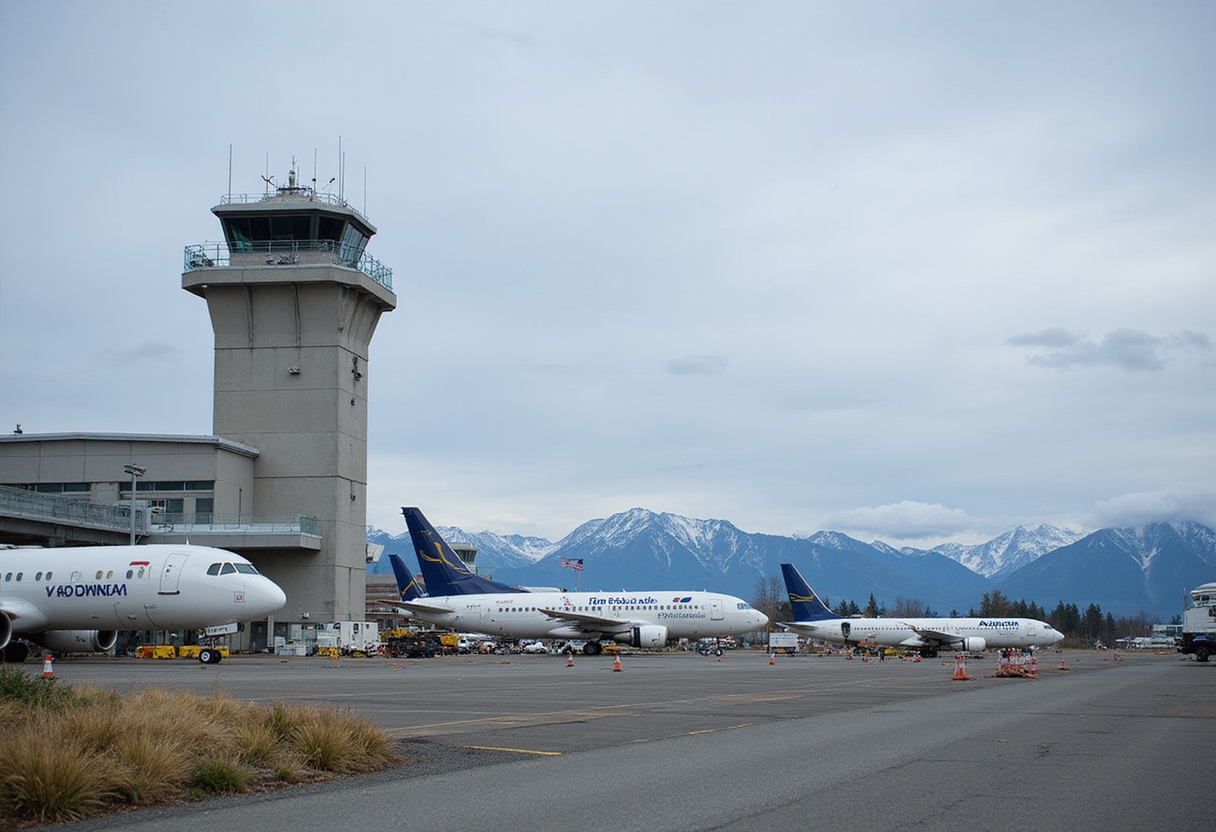
The federal government has cleared the way for a future expansion of Kelowna International Airport, removing a regulatory obstacle that had constrained long-term development planning at the Okanagan Valley's main air gateway.
The decision, reported by trade publication Open Jaw, signals that Ottawa is prepared to support capacity growth at aairport that serves one of western Canada's fastest-growing metropolitan regions. Kelowna has ranked among Canada's busiest non-hub airports by passenger volume, handling traffic that links the Okanagan's tourism, wine and agriculture economy with Vancouver, Calgary, Edmonton, Toronto and, seasonally, points beyond.
For an airport of its class, federal involvement matters. Airport expansion in Canada runs through Transport Canada lease arrangements, environmental assessment and, where land or infrastructure obligations apply, federal approval processes that can stretch timelines by years. A green light from Ottawa effectively moves a project from the conceptual shelf into the realm of the plannable.
The development carries weight for the carriers that serve the field. WestJet and Air Canada both operate into Kelowna, alongside regional partners, and the airport has supported seasonal transborder and leisure flying. Any expansion that lengthens runways, adds stands or enlarges terminal capacity feeds directly into what airlines can schedule: larger aircraft, more frequencies, or new routes that the current infrastructure cannot economically support.
The word "future" in the federal action deserves emphasis. This decision does not deliver shovels in the ground, and no construction timeline, budget figure or phased scope accompanied the announcement as reported. What it does is establish the precondition — federal willingness — without which municipal airport authority planning for terminal, apron or airside growth stalls. Readers should treat this as a regulatory enabler rather than a capital commitment.
That distinction matters in the Canadian regional airport context. Mid-sized fields from Kelowna to Victoria and Thunder Bay have spent the post-pandemic years managing recovered demand with infrastructure sized for a smaller market. Kelowna's catchment has grown steadily as domestic migration into the interior of British Columbia accelerated, putting pressure on peak-period terminal throughput and aircraft parking. Capacity that lags demand eventually shows up in airline economics: turn-time delays, constrained schedule banks and fares that reflect scarcity.
For the airport's operator, the federal posture also shapes the commercial picture. Expansion-readiness strengthens the case for route development conversations with carriers weighing new service, and it supports the airport's positioning with the tourism economy of the Okanagan — a region where summer and ski-season peaks already stress existing facilities.
What remains unknown from the available reporting is the specific scope of the expansion the decision anticipates: whether it concerns terminal space, airside infrastructure, land use, or a combination. The financial structure — whether the airport authority funds growth through its own capital program, with federal participation limited to approvals, or whether Ottawa contributes money — also remains outside what the announcement conveys.
The verification task now shifts to the airport authority's capital plan and to Transport Canada records, which will show whether the federal action translates into a defined project with dates and budgets. Until those documents surface, the development stands as an enabling decision: significant for what it permits, unmeasured in what it costs.
Watch for the airport authority's next capital plan update, which should reveal which expansion elements — terminal, apron or runway — move first, and on what schedule.
via Google News: Airport expansion (Source)
More from James Calloway
Show full bio
Staff writer covering industry trends and analytics at Flightdeck Report.
156 articles
Same bay
- FDR159Air Canada Unveils Seven New Routes in Record Network Expansion · September 30, 2026
- FDR315Air Canada Unveils Seven New Routes in Largest Network Expansion · September 28, 2026
- FDR625US Airport Expansion Programs Target Capacity Constraints · September 26, 2026
- FDR493North Texas's New Airport Opens Four Routes, First Flights in November · September 30, 2026
- FDR554Airport Capital Programs Deliver Measurable Passenger Satisfaction Gains · September 30, 2026