Clearance CLR-7557 · SAF692
SAFPAL
Safety & OperationsClearance sheet
PAL Airlines Grounds Dash 8-400 After Second Wheel Loss in Three Weeks
PAL Airlines grounded a Dash 8-400 after the same aircraft lost wheels on Oct. 30 and Nov. 12. Fleet-wide wheel assembly inspections are underway with De Havilland and Transport Canada.
Read-back
- A PAL Airlines Dash 8-400 lost a wheel twice in 14 days: Oct. 30 on flight PB901 at Wabush and Nov. 12 on flight 411 departing Goose Bay.
- PAL has withdrawn the aircraft from service and is inspecting wheel assemblies across its remaining Dash 8-400 fleet.
- De Havilland Aircraft of Canada and Transport Canada are working with PAL to identify the root cause.
- No passengers or crew were injured in either event; diverted passengers were rebooked.
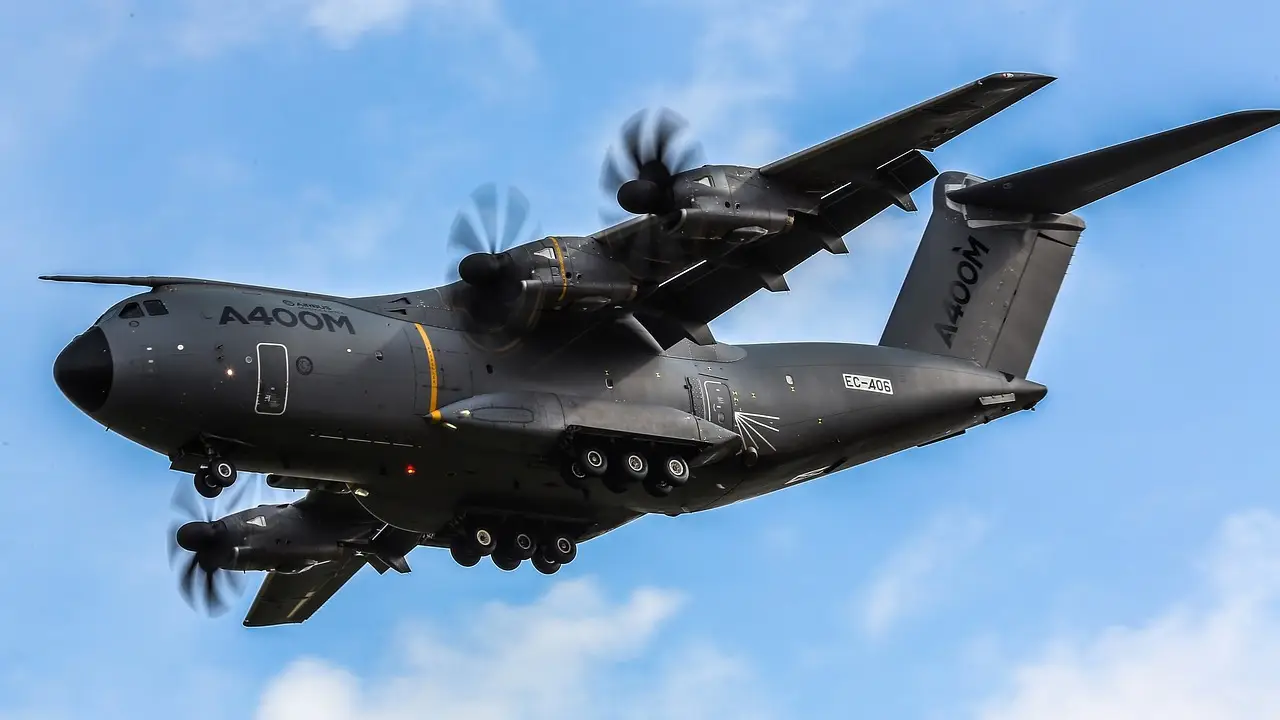
The same De Havilland Dash 8-400 lost a wheel twice in 14 days, and PAL Airlines has now pulled it from service. The Canadian regional carrier is inspecting every wheel assembly in its remaining Dash 8-400 fleet. Transport Canada and De Havilland Aircraft of Canada have joined the root-cause investigation.
The dates matter more than the drama. Two separations on one airframe, after documented post-incident inspections, point to a maintenance or assembly problem that inspections failed to catch.
What happened on each flight?
The first event came on Oct. 30. PAL Airlines flight PB901 operated from St. John's (YYT) to Wabush (YWK). Passengers watched the wheel detach completely during landing at Wabush. Emergency vehicles met the aircraft moments after touchdown.
The second event followed on Nov. 12. Flight 411 departed Goose Bay (YYR), Labrador, bound for Deer Lake (YDF), Newfoundland. The wheel fell off during departure. The crew diverted, and the aircraft landed at St. John's (YYT).
Nobody was injured in either event. PAL Airlines has rebooked all passengers affected by the diversion onto new flights.
What does this change for the fleet?
The grounded aircraft is the outlier so far. No other airframe in PAL's Dash 8-400 operation has reported a wheel separation. But the airline is not waiting for a third data point.
Joseph Galimberti, PAL's senior vice-president of public affairs, said in a statement:
"Out of an abundance of caution and in the interest of safety, PAL Airlines has initiated a process to complete wheel assembly inspections on the remainder of its Dash 8-400 aircraft to ensure the integrity of our fleet."
That is a broad response to a narrow problem. It is also the correct one. A single-airframe pattern is only reassuring until the inspection records from that airframe are examined, and those records have not been made public. What PAL has not said is what the post-Oct. 30 inspection found, who performed it, and whether the same wheel position failed twice.
Why two events on one aircraft raise questions
Detached wheels are rare in commercial aviation. Cabin items such as faulty seatbelts or seatback tables account for most reported cases of parts coming loose in service. Structured events, where a landing gear component separates during takeoff or landing, sit far outside the norm.
The Oct. 30 event triggered emergency response at Wabush and, by standard practice, an inspection of the affected assembly. The Nov. 12 event then occurred on the same aircraft. Two interpretations exist. Either the inspection missed the underlying cause, or the cause lay somewhere the inspection did not cover. Both place the burden of explanation on the maintenance process, not on chance.
De Havilland Aircraft of Canada, the type certificate holder for the Dash 8 series, faces its own question: whether a design, parts-supply, or service-bulletin issue contributes. No such finding has been announced. Transport Canada's role will determine whether this stays a carrier-level event or becomes a broader airworthiness question for the roughly 20 operators still flying the Dash 8-400 worldwide.
What remains unanswered
PAL has confirmed the withdrawal, the inspections, and the cooperation with the OEM and regulator. It has not disclosed:
- The wheel position involved in each event — main gear or nose gear, left or right
- Whether the same assembly or a replacement failed on Nov. 12
- The findings, if any, of the inspection that followed Oct. 30
- Any初步 timing for the aircraft's return to service
Each gap is understandable at this stage of an investigation. Each also shapes what the fleet-wide inspection can realistically deliver. If the root cause is a torque procedure or a supplier batch, the inspections will find it. If it is something subtler — fatigue, corrosion, or an undetected crack — a visual check may not.
The practical stakes
For passengers, the record shows two safe outcomes: no injuries, no evacuation injuries, flights completed or diverted without harm. For PAL, the stakes are operational. The Dash 8-400 is the backbone of its Labrador and Newfoundland network, serving thin routes where a single grounded aircraft cuts capacity measurably. Goose Bay, Deer Lake, Wabush, and St. John's all depend on that lift.
The investigation's findings, once Transport Canada releases them, will show whether PAL caught a maintenance lapse early or whether Dash 8-400 operators everywhere need to check their own wheel assemblies.
via travelradar.aero (Source)
More from James Calloway
Show full bio
Staff writer covering people, launches and day-to-day practice in Commercial aviation industry coverage at Flightdeck Report.
650 articles
Same bay
- FDR890TAIC finds systemic failures behind Air NZ Q300 low-altitude incident · September 30, 2026
- FDR989NTSB Finds Evidence of In-Flight Breakup Before Florida Learjet 60 Crash · November 2, 2026
- FDR921BFU: Vietnam Airlines 787-9 Braked Twice During Munich Takeoff Overrun · September 29, 2026
- FDR868Alligator Strike on Departure Diverts Wheels Up Phenom 300 · November 10, 2026
- FDR947British Airways A321neo Withdrawn After Heathrow Double Tail Strike · November 15, 2026