Clearance CLR-8167 · AIR660
AIRPCL
AirportsClearance sheet
PCL Finishes Kelowna Airport Expansion Ahead of Schedule
PCL Construction has completed the Kelowna International Airport expansion ahead of schedule, returning enlarged terminal capacity to the operator early.
Read-back
- PCL Construction completed the Kelowna International Airport (YLW) expansion ahead of schedule
- The early handover gives the airport operator additional time to commission and phase in new terminal space
- Expanded terminal capacity at YLW supports added airline frequencies in peak summer seasons
- The project was delivered within an operating airport, where construction must work around live aircraft and passenger movements
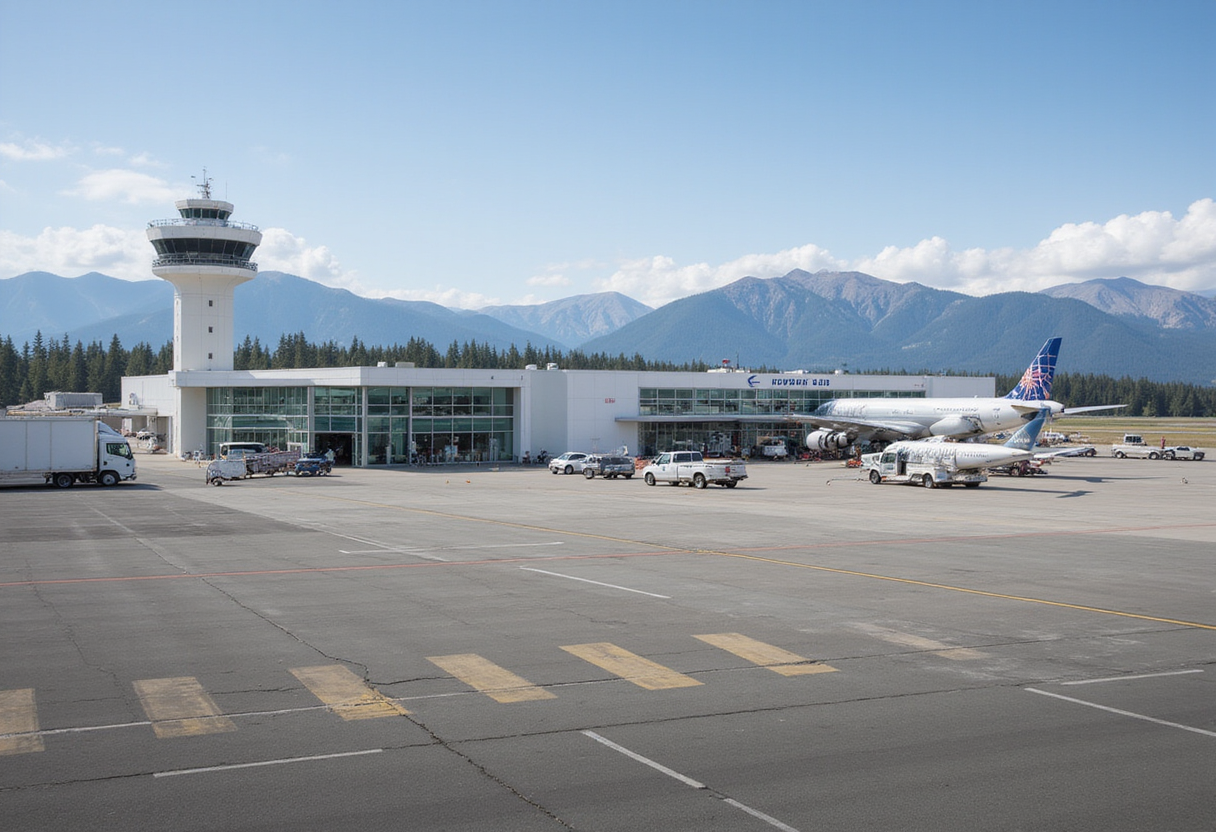
PCL Construction has completed the expansion project at Kelowna International Airport (YLW) ahead of its contractual schedule, the contractor's project announcement confirmed.
The early handover matters at a practical level. Airport terminal expansions rarely finish ahead of schedule; delayed completions routinely push airline capacity planning, gate assignments and seasonal schedule decisions into the following year. When a contractor returns a terminal project early, the airport operator gains time to commission systems, train staff and complete airline move-ins before peak traffic periods.
What does the completion change for passengers and airlines?
For passengers, the immediate effect is operational rather than dramatic: expanded terminal space means shorter processing queues at security and check-in during peak waves. For airlines serving Kelowna, an enlarged terminal removes a ceiling on schedule growth. Terminal capacity, not runway capacity, is the binding constraint at most mid-size Canadian airports; gate availability and holdroom (waiting-area) space determine how many departures an operator can add.
Kelowna sits in the Okanagan Valley, a market driven by tourism, wine-region travel and a growing permanent population, plus seasonal peaks that compress into summer months. Air Canada, WestJet and their regional partners operate into YLW alongside transborder and leisure carriers. Any added terminal throughput therefore translates directly into the airport's ability to hold — and attract — summer capacity.
How an early finish happens
Contractors deliver ahead of schedule when sequencing works: long-lead equipment arrives on time, trades are staggered so no crew waits on another, and the airport keeps the operating terminal live during construction. Building inside a functioning airport is slower and more constrained than greenfield work, because construction must pause around aircraft movements and passenger flows. An early completion under those conditions signals disciplined coordination between the contractor, the airport operator and the consultants involved.
PCL, one of North America's largest contractors, has an extensive aviation portfolio, and airports often select firms on that record specifically to protect schedule certainty.
What comes next
The airport's next steps are commissioning and phased occupancy — bringing concession tenants, airline counters and security lanes into the new space in stages rather than all at once. Once the expanded areas reach full operation, Kelowna's capacity ceiling moves outward, giving carriers room to add frequencies and routes in subsequent scheduling seasons.
via Google News: Airport expansion (Source)
More from Sophie Lindqvist
Show full bio
Senior reporter covering people, launches and day-to-day practice in Commercial aviation industry coverage at Flightdeck Report.
490 articles
Same bay
- FDR953Ottawa Clears Path for Future Kelowna Airport Expansion · September 29, 2026
- FDR859Expanded Airport Terminal Faces First Holiday Weekend Test · September 30, 2026
- FDR625US Airport Expansion Programs Target Capacity Constraints · September 26, 2026
- FDR472Airport Construction Triggers New Road Shifts, Detours and Closures · September 30, 2026
- FDR438Oklahoma City Airport Expansion Plan Signals Growth Ambitions · October 13, 2026